Posts Tagged ‘401(K)’

I am 26 and Behind in the Investing Game. My Bank Offers a ROTH IRA and I’m Going With That. I Was thinking About Going with Edward Jones for a 401(k). Is this a Good Idea?

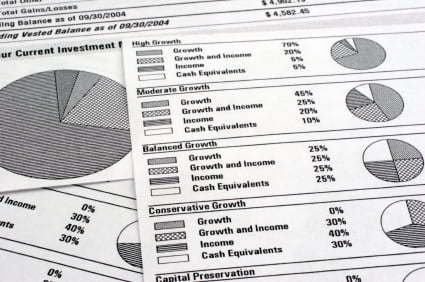
Congratulations on getting started investing. You’re not too late to the investing game: you’re right on time. A lot of 36, 46 and 56-year olds wish they’d started when they were 26, as you are. So don’t beat yourself up at all about your age. Glad to hear you’re starting a Roth IRA. It’s a great way to save for retirement. Regarding the 401(k), your investment options will be dictated primarily by the offerings that your employer has available. I can tell you in general that Edward Jones has a good reputation and is known for quality financial advice. However, the mutual funds you choose are equally important. So the main question you need to find out tackle is: based on my investment objectives, how much of my 401(k) should be in stocks, bonds, and cash? Then you can think about what funds or stocks to buy to match those objectives.

If you don’t have an adviser helping you, I’d strongly suggest that you get a professional to create a financial plan for you and offer you some specific recommendations based on your goals, risk tolerance and personal circumstances. You can get good help from the National Association of Personal Financial Advisors (www.napfa.org) or from the Financial Planning Association (www.fpanet.org).

Post to Twitter Post to Yahoo Buzz Post to Facebook

I’m 57 Years Old With Serious Arthritis. I Work With Severely Emotionally Disturbed Boys. I am Considering Resigning from This Position, Taking Money Out of my 401(k) Plan and Rolling it Over, Minus a Small Deduction for my Use and to Pay Off Debt. First I will Apply to Work in Education as a Teacher Assistant Making Less Money But Not As Difficult As My Current Job. I Have No Savings and am Struggling. What Should I Do?

Well, only you know whether or not it’s time for a major career shift. But based on what you said, you seem to be a bit overwhelmed in dealing with such an emotionally demanding job. You said you’ve worked there since 1997 and have been in the special education field since 1990, so the good news is that it’s not too much of a stretch to take the skills and experiences you’ve amassed over 20 years and apply them in the general education arena. From a financial standpoint, however, since you have no savings and described yourself as struggling to make ends meet, I would advise you to be cautious about taking money out of your 401(k) plan. You said you planned to roll it over. But into what? Your message didn’t indicate specifics. Into an IRA or something else? Read this post about Roth IRAs and this one as well about the benefits of having a 401(k), as well this item on the drawbacks of taking money from your 401(k) before you are age 59 1/2.

Post to Twitter Post to Yahoo Buzz Post to Facebook

What is the Best Way to Save Money and Get a Good Return on it?

I recently wrote the following article that answers your question about saving money and getting a good return on it. Here is the article, entitled, Three Ways to Save More Money By Getting Paid to Save.

Three Ways to Save More Money By Getting Paid to Save

Everyone wants to save more money. Yet many cash-strapped people feel like they “can’t afford” to save. One way to make saving each month a little easier is by super-charging your savings – and making your money work as hard as you do. Here are three special ways to turbo-charge your savings. Try them and watch your savings grow faster than ever.

Strategy #1: Open an Individual Development Account or IDA

An Individual Development Account, or IDA, lets low-to-moderate income earners save money for a specific goal – such as a down payment on a house or starting a business – and receive matching funds from non-profit groups, corporations, and government agencies. Many IDAs provide a $3 to $1 match, meaning for every dollar you save, you get $3 in contributions. What’s the catch? You must agree to save money for a set period of time, usually at least one year. Some IDAs require you to set aside money for two or three years. Whatever the term, it’s worth it – because you’ll get rewarded with a huge cash bonus in the end.

The Payoff: If you save $100 a month, or $1,200 in one year, and your IDA has a $3 to $1 match, at the end of a year, you’ll receive a $3,600 contribution.

Resource: Visit www.IDAnetwork.org to find an institution in your area that offers Individual Development Accounts.

Strategy #2: Open a High-Yield Savings Account

Are you frustrated by savings accounts that are paying a paltry 0.5% or less in interest? Don’t despair. There are better yielding options available – if you shop around online. For example, the new InterestPlus Online Savings Account from Capital One currently carries a 1.45% Annual Percentage Yield (APY) – well above the national average. Plus, you can get a quarterly bonus equal to 10% of the interest you earned in the previous quarter. That’s a fantastic deal because you’re basically getting paid twice to save.

The Payoff: Keep $2,500 in your Capital One savings account each month, and you’ll earn an APY that’s roughly three times the amount that’s being offered elsewhere with other savings accounts.

Resource: Go to www.CapitalOne.com/directbanking to learn more about the no-fee InterestPlus Online Savings Account.

Strategy #3: Enroll in Your Company’s Retirement Savings Plan

If your company has a 401(k) or a 403(b) retirement savings plan, and you’re not contributing to it, you’re making a big financial mistake. Not only are you missing out on the opportunity to set aside money for your Golden Years, you’re also likely forgoing one of the best perks available to workers these days: a corporate match on your retirement contributions. Some companies offer a dollar for dollar match on the money you save for retirement, up to a certain percentage. Other firms offer 50 cents on the dollar. No matter the amount, it’s free money, so it’s foolish not to grab it.

The Payoff: Getting a dollar for dollar matching contribution from your employer’s 401(k) plan translates into a 100% return on your money. Guaranteed. You’ll never get that on Wall Street, or anyplace else.

Resource: Head to your company’s Human Resources Department today, and get the enrollment papers you need to sign up immediately for your 401(k) or 403(b) plan. If you’re already in the plan, consider boosting your contribution slightly. Also, read up on the benefits of having a retirement plan at the Employee Benefit Research Institute (www.ebri.org).

By using these three savings methods, you’ll become a more diligent saver, you’ll watch your money grow quickly, and you’ll make the process of saving money pain free. Best of all, pretty soon you’ll feel cash rich instead of cash-strapped.

Post to Twitter Post to Yahoo Buzz Post to Facebook

I am a Single Mother who Makes About $28,000 a Year. I Try to Save Around $200 From My Paycheck Every Second Pay Period Each Month, But It’s Hard. Do You Think $200 is Enough? And If I Want to Save More Where Should I Start?

Even though $200 a month in savings might not sound like a lot to some people, you’re actually doing quite well on the savings front, given your salary. Saving $200 a month translates into $2,400 a year, which means you’re tucking away about 9% of your $28,000 annual income. That’s pretty good, so be encouraged about that. I know it’s hard to stretch a modest income, especially as a single income. So if you want to save a bit more, start by knocking out some of the credit card debt you mentioned, namely that $3,800 Discover Card or that $380 balance you’re carrying on your Gap store card.

On your credit cards, pay two to three times the minimum payment required to more quickly eliminate those bills. When the credit card debt is paid off, you can start putting into savings the money you had been putting toward those credit card debts. Also, if your employer has a 401(k) plan or another retirement savings plan, make sure you contribute to it. You may be able to get a matching contribution from your job, which would add to your savings in a pain-free way. Lastly, look at every area of your budget to see if there are areas where you may be inadvertently overspending, perhaps on food, goodies for the kids (i.e. clothes, toys, etc.) or even certain “luxuries” for yourself, like hair and nail appointments. Don’t totally change your lifestyle just to save a few more bucks. But where possible, cut back on a few categories of your existing spending in order to keep more of your hard-earned dollars.

Post to Twitter Post to Yahoo Buzz Post to Facebook

I am a 50-Year-Old Retired Male. I Worked in Law Enforcement for 28 Years. My Question is: Is it a Wise Idea to Take Money Out of My 401(k) to Pay off a High Balance (Over $10,000), High Interest (21%) Rate Credit Card? I also Receive a Pension from My Previous Employer

I don’t think it would be a good idea to tap your 401(k) to pay off that high rate credit card debt because it would be very costly to do so. For starters, since you are under 59 ½ years of age, that 401(k) distribution would be considered “premature” by the IRS. This means your $10,000 would be subject to ordinary income taxes – along with a 10% penalty by the IRS. I don’t know what tax bracket you are in currently. But let’s assume you are in the 25% tax bracket. You would have to pay the federal government $2,500 in ordinary income taxes, plus a $1,000 penalty. So all in all, your $10,000 is effectively reduced to $6,500 – because you’ll have to fork over $3,500 to Uncle Sam. That’s the equivalent of paying 35% interest (in the form of taxes) in order to access that $10,000. That’s too high a price to pay. I know you want to get rid of that high-rate credit card debt. But I’d recommend using some savings (not retirement savings), or finding an alternative source of cash to pay the credit card debt. If that’s not possible, try two other strategies: Call your credit card company and ask for a lower rate. Depending on your payment history, they may say yes. Also, start tripling the payments you’ve been paying on your credit card. If you can be even more aggressive, using some of the pension income you receive from your former employer, that will knock out your credit card debt even faster.

Post to Twitter Post to Yahoo Buzz Post to Facebook

Categories
Archives