Posts Tagged ‘Capital One’

What Credit Card Should I Get to Help Build My FICO Credit Score?

Q: I Became Debt Free This Month. I Have $4,000 Saved and No Bank Account. Where Should I Go? Also What Credit Card Should I Get to Help Build My FICO Credit Score?

A: Congratulations on eliminating your debt. You should be proud of that accomplishment – and of saving $4,000. As of early 2010, Capital One is offering an attractive savings account that you should investigate. It’s the InterestPlus Online Savings Account. For those who keep $2,500 in the account, It pays a very competitive Annual Percentage Yield and it gives you the opportunity to earn a 10% quarterly bonus. Get more information online at http://www.CapitalOne.com/DirectBanking.

To find a good credit card, also take advantage of the power of the Internet. Go to http://www.CardRatings.com to find a competitive credit card that fits your needs. There are all different types of cards: for students, frequent travelers, people with excellent credit, those with bad credit, etc. The “best” credit card is the one that suits your spending habits and financial profile. Only you know how often you will use the card. No matter what card you choose, only charge what is absolutely necessary and what you can reasonable pay off quickly – ideally every month. This will be the single best thing you can do to boost your FICO credit scores.


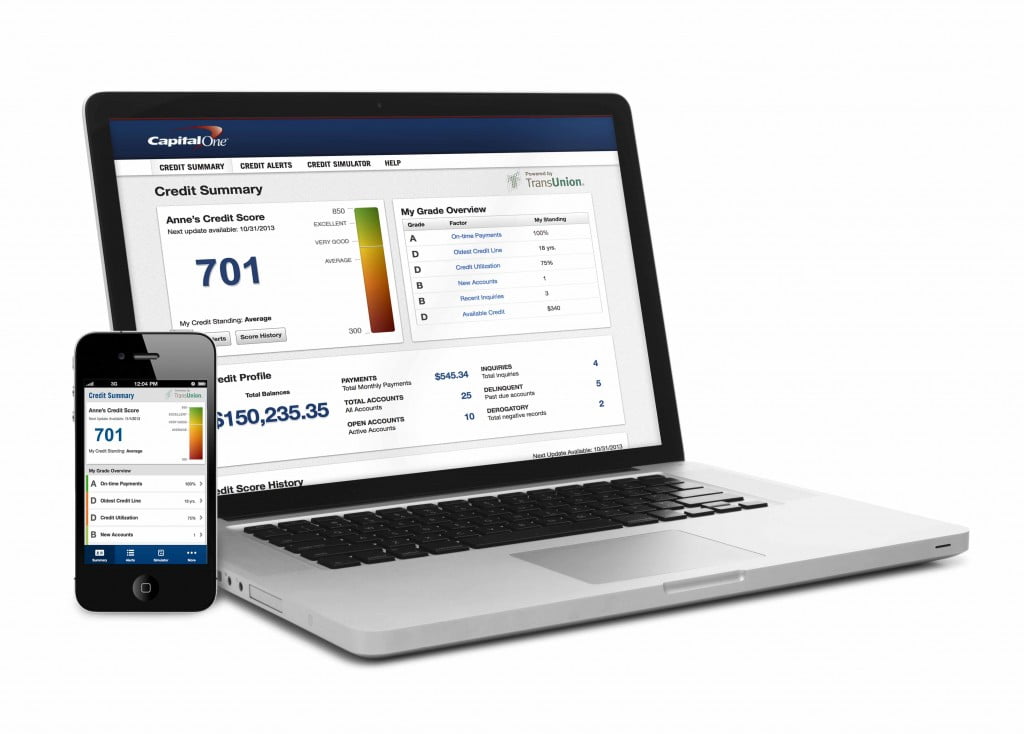
What’s Your Credit Score?

Enhanced by Zemanta

Related Questions:

I Can’t Afford to Pay Off My Credit Card Debt. Can I Still Lower My Credit Utilization?

Q: I Can’t Afford to Pay Off My Credit Card Debt. Can I Still Lower My Credit Utilization?

A: To raise your credit scores, it’s always best to pay down debt, as opposed to shifting it around. However, for most people trying to boost their credit rating, it’s not always possible to instantly pay off all their credit card debt. So what can you do in that case? You can shift debt around in order to strategically lower your credit card utilization rate.

Remember that 30% of your FICO credit score is based on the amount of credit card debt you’re carrying versus the amount of credit card debt you have available (i.e. your credit utilization rate). For example, if you have $15,000 in available credit on all your cards, and you’ve charged $10,000 on those cards, you’ve used up two-thirds of your available credit and your credit utilization rate is 67% – not good.

What Is The “Ideal” Credit Utilization Rate

To increase your credit scores, it’s imperative that you slash your credit utilization ratios. No one knows the precise magic number when it comes to credit utilizations rates; FICO doesn’t reveal the exact “ideal” credit utilization rate. However, we do know that higher credit utilizations rates generally translate into lower FICO scores. And statistically speaking, those with lower credit utilization rates have higher FICO scores. Therefore, conventional wisdom is that it’s best to keep your credit utilization rates at a maximum or 25% to 35% for an optimal FICO score. If you maintain zero credit card debt, by paying off your credit card bills in full each month, realize that you may not have a 0% credit utilization rate simply because of three timing factors:

  • the date when you pay your bills,
  • the date when your creditor reports your payment history to the credit bureaus;
  • the date that your credit report is pulled to generate a credit score

Besides, you need not worry about having a 0% credit utilization rate simply because, believe it or not, individuals with a 0% credit utilization rate actually have lower credit scores – an average credit score of just 678, versus average credit scores of 745 for those with credit utilization rates ranging from 1% to 10%, according to data from CreditKarma.com, which analyzed a random sample of 70,000 credit scores.

How is it possible that those with a 0% credit utilization rate have average credit scores of only 678 points? CreditKarma.com suggests a few likely causes. First, it’s possible  that individuals with a 0% credit utilization rate have no credit cards at all. This could actually hurt their credit rating, because remember that 10% of your credit score is based on the mix of credit that is contained in your credit files. Having a credit card, along with different forms of credit, shows that you can responsible manage various types of credit simultaneously. Another plausible reason for that 0% credit utilization rate is that those individuals never use their credit cards at all. (Another reason to use your credit cards on occasion, just to keep them active).

No Money … No Problem?

If you don’t have the money to pay down debt, here are the four chief strategies that you can use to lower your credit card utilization rates:

  • Use a Home Equity Loan

Getting a home equity loan or an equity line of credit can be a smart strategy for a few reasons. The interest rate on home equity loans (currently in the 6% range) is far less than what you’re probably paying on your credit cards (likely in the 15%-plus range). Additionally, the interest on home equity loans is tax deductible up to $100,000; the interest levied on your credit cards is not. Finally, from a credit-scoring standpoint, mortgage debt is treated more favorably than credit card debt, so converting that consumer debt is likely to positively impact your FICO score, by helping you reduce your credit card utilization rates.

A Strong Caution To Those Using Home Equity Loans to Pay Off Credit Card Debt

If you decide to consider this strategy, I have to issue a very serious word of caution: Don’t pay off those credit card bills, and put your home at risk with an equity loan if you’re just going to go back out and run up your charge cards again. The decision to take out a home equity loan is one that should not be made lightly. I believe that you should only use your home equity to pay off debt under two circumstances:

1)   You got into credit card debt because of what I call “The Dreaded D’s: (downsizing, divorce, death (i.e. a main winner in the family died), disability, disease, or some other disaster, like a business failure or lawsuit); and

2) The situation that threw you into debt has now been rectified. (For instance, you were downsized, but now you have a job, or you faced a disease or a disability, but now you’ve bounced back from your medical problems).

If you got into debt for other reasons of your own doing, such as over­spending, and if you haven’t learned how to get those impulses under control, I urge you to refrain from tapping the equity in your home to pay off credit card debt. I’ve heard heart-breaking stories of people who paid off their credit card debts by converting those obligations into mortgage debt – only to keep spending, not change their financial habits, and ultimately wind up losing their homes in foreclosure. I don’t want this to happen to you.

  • Shift Balances From One Card to Another Existing Card

Shifting debt from one credit card to another is more art than science, but done properly, it can boost your credit scores, and also save you lots of money (particularly if you’re taking debt from one high interest rate card and putting it on another lower interest rate card).  The key here is to minimize the debt you’re carrying on a card that has a high credit utilization and transfer that debt onto a credit card with a zero balance or a low balance. For example, if you have two cards, and each has a $5,000 credit limit but one has a $3,000 in charges, and the other one only has $500, your current credit utilization rate is 35% ($3,500 divided by $10,000). You may be able to positively impact your credit scores, however, if you spread out some of that $3,000 in credit card debt from the first card. By shifting $1,000 of that balance onto the other card, your overall credit utilization rate will still be the same: 35%. However, the credit utilization rate for the first card will drop from 60% to 40%. Meanwhile, the second card will have a new credit utilization ratio of 30%.

  • Open A New Credit Card Account

Opening a new credit card account can lower your overall credit utilization ratio, even if you don’t charge anything additional on that new credit card. Yes, the inquiry will appear on your credit report, and you will likely take a hit to your credit as a result. But having that additional line of credit can make up for the ding you take from the inquiry. After all, your credit utilization ratio comprises 30% of your credit score, and inquiries only account for 10% of your score. Using the same example above, assume you have those two credit cards with a total of $10,000 in available credit, and $3,500 in charges made, for a current credit utilization rate of 35%. If you open a new credit card account with a $5,000 credit limit, now your overall credit utilization rate drops to just 23% because you’ve charged $3,500 and you have a grand total of $15,000 in available credit.

  • Secure an Increase in Your Existing Credit Card Line(s)

A fourth and final strategy to bolster your credit utilization rate is to simply ask your existing creditors for an increase in your credit lines. The principle behind this is the same as opening a new credit account. Essentially it boils down to you having more available credit in order to improve your standing in the eyes of the credit scoring world. Amid the credit crunch, it’s likely that your current creditors may do a “hard” pull of your credit reports. Or perhaps they won’t if they’ve already been reviewing and monitoring your credit files – as many of them routinely do. You’ll never know until you call and ask for a credit line increase. In the process of doing so, you can flat-out ask the customer service representative if it’s necessary for them to pull your credit record. That way you’ll know whether or not an inquiry will be generated, and if it’s worth it for you to use this strategy.

Before you try this option, some more research from CreditKarma.com is worth examining. CreditKarma.com wanted to see whether there was a correlation between people’s credit scores and the credit limits set by banks and other credit card issuers. And sure enough, there is. Credit Karma samples more than 500,000 credit card accounts in June 2009, and compared average user credit limits with their credit scores. The results showed that across all credit score ranges – from bad credit to great credit – consumers with higher credit scores had higher credit limits.

Credit Scores and Credit Card Limits

601 to 620

For example, those with credit scores ranging from 601 to 620 had an average credit limit of $1,765.

661 to 680

Individuals with credit scores ranging from 661 to 680 had an average credit card limit of $3,305.

701 to 720

Those with scores ranging from 701-720 had average an average credit limit of $5,449.

761 to 780

Meanwhile, those with credit scores from 761-780 had an average credit limit of $7,464.

801 and higher

And those with credit scores of 801 and higher had an average credit limit of $12,175.

What’s more Credit Karma found striking differences among the average credit card limits set by various companies. Credit Karma said that based on its data of the top 5 credit card issuers, Bank of America had the highest average credit card limit at $11,288, while Capital One had the lowest average credit limit at $3,524.

Related Questions:

What is the Best Way to Save Money and Get a Good Return on it?

Q: What is the Best Way to Save Money and Get a Good Return on it?

A: I recently wrote the following article that answers your question about saving money and getting a good return on it. Here is the article, entitled, Three Ways to Save More Money By Getting Paid to Save.

Three Ways to Save More Money By Getting Paid to Save

Everyone wants to save more money. Yet many cash-strapped people feel like they “can’t afford” to save. One way to make saving each month a little easier is by super-charging your savings – and making your money work as hard as you do. Here are three special ways to turbo-charge your savings. Try them and watch your savings grow faster than ever.

Strategy #1: Open an Individual Development Account or IDA

An Individual Development Account, or IDA, lets low-to-moderate income earners save money for a specific goal – such as a down payment on a house or starting a business – and receive matching funds from non-profit groups, corporations, and government agencies. Many IDAs provide a $3 to $1 match, meaning for every dollar you save, you get $3 in contributions. What’s the catch? You must agree to save money for a set period of time, usually at least one year. Some IDAs require you to set aside money for two or three years. Whatever the term, it’s worth it – because you’ll get rewarded with a huge cash bonus in the end.

The Payoff: If you save $100 a month, or $1,200 in one year, and your IDA has a $3 to $1 match, at the end of a year, you’ll receive a $3,600 contribution.

Resource: Visit http://www.IDAnetwork.org to find an institution in your area that offers Individual Development Accounts.

Strategy #2: Open a High-Yield Savings Account

Are you frustrated by savings accounts that are paying a paltry 0.5% or less in interest? Don’t despair. There are better yielding options available – if you shop around online. For example, the new InterestPlus Online Savings Account from Capital One currently carries a 1.45% Annual Percentage Yield (APY) – well above the national average. Plus, you can get a quarterly bonus equal to 10% of the interest you earned in the previous quarter. That’s a fantastic deal because you’re basically getting paid twice to save.

The Payoff: Keep $2,500 in your Capital One savings account each month, and you’ll earn an APY that’s roughly three times the amount that’s being offered elsewhere with other savings accounts.

Resource: Go to http://www.CapitalOne.com/directbanking to learn more about the no-fee InterestPlus Online Savings Account.

Strategy #3: Enroll in Your Company’s Retirement Savings Plan

If your company has a 401(k) or a 403(b) retirement savings plan, and you’re not contributing to it, you’re making a big financial mistake. Not only are you missing out on the opportunity to set aside money for your Golden Years, you’re also likely forgoing one of the best perks available to workers these days: a corporate match on your retirement contributions. Some companies offer a dollar for dollar match on the money you save for retirement, up to a certain percentage. Other firms offer 50 cents on the dollar. No matter the amount, it’s free money, so it’s foolish not to grab it.

The Payoff: Getting a dollar for dollar matching contribution from your employer’s 401(k) plan translates into a 100% return on your money. Guaranteed. You’ll never get that on Wall Street, or anyplace else.

Resource: Head to your company’s Human Resources Department today, and get the enrollment papers you need to sign up immediately for your 401(k) or 403(b) plan. If you’re already in the plan, consider boosting your contribution slightly. Also, read up on the benefits of having a retirement plan at the Employee Benefit Research Institute (http://www.ebri.org).

By using these three savings methods, you’ll become a more diligent saver, you’ll watch your money grow quickly, and you’ll make the process of saving money pain free. Best of all, pretty soon you’ll feel cash rich instead of cash-strapped.

Related Questions:

Is It OK to Close My Secured Credit Card Since I Can Get a New Credit Card from Capital One?

Question:

Someone had a question that they posed regarding closing one of their credit card account, and here’s what they asked me. They said, “Lynnette, I have a credit card for bad credit that I opened several months ago. I did it to help me build credit. I paid a one‑time fee and an annual fee, the whole thing was about $100. Now I’ve got an offer from Capital One and I got approved for a traditional credit card. Should I go ahead and cancel the first card and activate the Capital One card?”

Answer:

My answer is, yes, you should go ahead and open the new account with Capital One, especially since it’s a traditional credit card that will help you establish a more solid credit history. Make sure you pay those credit card bills on time to Capital one, and only charge a modest amount, an amount that you can reasonably pay off every single month, so that you don’t hurt your credit.

Now the first credit card that you say you opened for “bad credit,” this sounds to me like you had a secured card. In other words, you paid the one‑time fee, as you indicated, you put up a certain amount as a deposit, and then that amount essentially became your credit limit.

A secured card can also help you to build credit, so no, do not go ahead and cancel that credit card. The idea here is that you want to start to build a lengthy credit history. And typically what happens when people close out a credit card, it does the exact opposite of what they think its’ going to do.

Many people erroneously think that closing a credit card account will boost their credit scores. In reality, you frequently hurt your credit rating by closing out accounts. So the short answer is, no, do not close out your initial card that you opened. Just either refrain from using it if you don’t need to use it, but do pay off any balance that you have on it on a regular basis.

And then, yes, go ahead and accept the traditional mainstream MasterCard or Visa or whatever that card was that you got approved from, from Capital One, and just be diligent in its usage, don’t overextend yourself, and pay that bill every single month.

If you do that, you definitely will start a rebound from your past credit mistakes, and you’ll see your credit rating and your FICO credit scores improve over time.

Related Questions:

Get Free Financial Advice

Enter your email address:

Delivered by FeedBurner

Follow The Money Coach
Disclaimer

All information on this blog is for educational purposes only.  

Lynnette Khalfani-Cox, The Money Coach, is not a certified financial planner, registered investment adviser, or attorney.

If you need specialty financial, investment or legal advice, please consult the appropriate professional.

Per FTC guidelines, this site may accept advertising, affiliate payments or other forms of compensation from companies mentioned.

Details of any products, services, prices or offers highlighted on this site may change, so check with the company or provider for up-to-date terms.