
Posts Tagged ‘college debt’
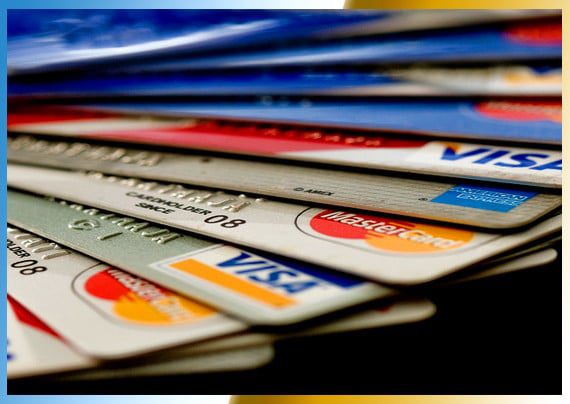
Attn College Grads: Credit Cards and Student Loans Are Not Free Money
Millions of college students and college graduates blow it big time when it comes to taking on credit card debt and student loans.
I know I did when I was an undergraduate at the University of California, Irvine.
When I walked on campus and got tempted by those credit card hawkers saying things like, “Hey, want a free T-shirt?” it was almost like I’d lost my mind.
All I heard, pretty much, was the word “free.”
Unfortunately I wasn’t any more discerning, and didn’t handle credit and debt any better while I was a graduate student earning my Master of Arts degree in Journalism from the University of Southern California.
Thank God I’ve finally learned the secrets to having Zero Debt and Perfect Credit.
Sure, I knew – like most students do – that you’ve got to pay back the bank for all those charges you make.
But for most students, that’s a distant concern.
They’re enchanted by the idea that they can (in their own minds) get something free today, simply by slapping down a piece of plastic at a department store or retailer of their choice.
But credit cards are anything but free—and neither, of course, are student loans.
In fact, using the word “credit” for people in college is a particularly egregious misnomer.
The word credit often has a positive connotation for college students.
You’ve all heard the expression “I give him credit for doing this or that.” And what about college students who love to get “extra credit” from professors?
As you can see, in most contexts, the word “credit” gets used positively among students, and that’s the time at which many people are most unsophisticated, vulnerable, and likely to get tripped up by using credit the wrong way.
But it might help you to think about a credit card as what it really is: an IOU card. I had a wise retiree tell me recently, in fact, that credit cards should be renamed “debt” cards. That’s an interesting thought.
Are Credit Cards Inherently Evil?
But none of this is to suggest that credit is inherently a bad thing or that you should not have credit at all.
For many people, having credit allows them to function in society in a seamless way, and to use credit as a convenient method of payment.
Credit cards enable us to do everything from shop online to rent automobiles to avoid carrying around a wad of cash.
So the idea isn’t to say, “I’m never going to use credit cards again,” especially if you have had a financial problem.
The challenge is determine: “How can I manage my credit cards well and what should I be doing to make sure that I am a smart and savvy consumer in order to leverage my credit standing in a way that gives me the most benefits?”
In my opinion, credit cards aren’t inherently evil or bad to have and use. What’s bad is when we overuse or abuse credit and when we take on unnecessary or excessive debt. That’s what gets you into trouble.
Ideally, of course, you should try to live as debt free as possible. If you owe no one – no mortgage, no student loans, no credit cards and so one – more power to you.
But that’s not always feasible or realistic for every person all the time.
So it’s imperative that we look at credit and debt in the proper context.
Not only are credit cards and student loans not free money, these are borrowed funds that can actually be quite costly if not properly managed or if allowed to linger on year after year.
With credit cards, you’re really getting an up-front loan to pay for various purchases, so in this manner, credit card debt and student loans aren’t that different. They’re both fundamentally loans.
And for the privilege of receiving that loan, you’ll pay dearly in most cases. The typical student credit card has an interest rate of about 20%, according to CardRatings.com, a great free resource that helps consumers comparison shop for the best credit card deals available.
At 20% interest that means for every $100 you charge, you’ll pay an extra $20 on top of that, if you take a year to pay the bill.
If you miss a credit card payment, you could find yourself in the unfortunate predicament of having a “default” interest rate, which now runs as high as 35% on some cards. While most federal student loans offer single-digit interest
rates at less than 9%, if you stretch out your student loan payments (as most college grads do), you can wind up paying two to three times your original student loan amount because of interest charges alone!
With that credit card, you’ll also face a slew of charges, such as annual fees, cash-advance fees, finance charges on the outstanding part of your bill, late payments, and over-the-limit penalties.
So don’t ever accept a credit card offer or student loan without a very good idea about how you will repay it and how long that repayment will take.
Too often, however, students simply think, “Oh well, I’ll take the loan or use a credit card now, and worry about paying the bill later.”
That’s not smart financial planning, and it’s the easy way to financial ruin.
One reason that mindset could land you in trouble is because you’ll probably take on more student loans and more credit card debt than you anticipate. Why? For starters, everything always costs more than you think it will.
And the same thing is true with your educational costs too.
Why would higher education cost more than you estimate?
A big reason is that many students mistakenly think (or thought) they’d finish school in just four years.
In truth, those days are long gone.
Students take an average of 6.2 years to complete their degrees in public universities, and 5.3 years to graduate from a private school, according to the College Board.
For those who aren’t conscientious about the debts they take on, this means additional student loans and more credit card debt racked up along the way.
Don’t let that be your fate.
Instead, learn how to manage credit and debt wisely and you’ll be financially ahead of the game – while you’re in school and once you get into the “real” world.
Related Questions:
- credit cards
- card credit
- college credit cards
- college grads and credit card debt
- Kredi kartı
- do students thinkg credit is free money
- Credit-Card/Check Credit Loans
- credit kart
- credit cards and college students
- College word used for extra credit
- college students and credit cards
- college grads more vulnerable for credit cards
Where Can I Find the Government Agencies That Pay Your Student Loans?
As you probably read in one of my previous articles on this topic, the program in which the government will pay off your federal student loans is called The Federal Student Loan Repayment Program. It’s run by the Office of Personnel Management (http://www.OPM.gov). Here is a direct link to more information about the program.
http://www.opm.gov/oca/pay/studentloan/index.asp
Fact Sheet, Q&As and Annual Report to Congress
At the website, be sure to click on the Fact Sheet and the Questions & Answers on the left side of the page for additional details. But to answer your question, in a nutshell, any participating federal agency for which you might work can help pay your student loans through this program, as long as that agency participates in this program. Each year, participating agencies report to Congress about their activities in paying off employees’ loans. The 2008 Report to Congress from the Federal Student Loan Repayment Program is the most recent report available. Here is a link to that 38-page report. http://www.opm.gov/oca/pay/studentloan/html/CY2008StudentLoanRepaymentReport.pdf. In it, you will find listings of every single government agency that participated in the Federal Student Loan Repayment Program for that year.
For more information about this program and about paying off student loans, be sure to read a copy of my book, Zero Debt for College Grads: From Student Loans to Financial Freedom.
Related articles by Zemanta
- 5 Facts You Don’t Know About Student Loans But Should (askthemoneycoach.com)
- Student loan horror stories: What’s the worst than can happen? (walletpop.com)
- Are there any personal government grants that I could apply for that will help me pay off personal debt? (askthemoneycoach.com)

Related Questions:
- government pays student loans
- organizations that pay for college
- organizations that pay off student loans
- government agencies that pay student loan
- which government agencies pay student loans
- federal agencies that pay student loans
- agencies that pay off student loans
- government agency that pays off school loans for qualifiny
- govt agencies that pay back student loans
- list of agencies that the government help to pay off school loans government
- how to collect debit payments for governmental agencies
- how to get the federal government to pay off up to $60 000 worth of your federal student loans
Can a bill collector tack on additional fees to the original debt owed?
Question: I have an outstanding debt of $750 with a college which is currently handled by a collection agency. The agency is telling me my debt is now $1,000. Is it legal for the debt collector to add fees and refuse to settle for my original amount?
Answer: What debt collectors can and can’t do sometimes depends on the laws of your own state, as well as the types of debts in question. For example, debt collectors can’t legally do anything to you (such as sue you in court or get a judgment against you) once the statute of limitations has expired on a credit card debt. But with student loans, there is no statue of limitations, so bill collectors can pursue you forever over those debts. I assume your debt fits into the latter category, since you said your $750 bill was with a college.
Federal law prohibits debt collectors from charging you any thing above the amount you actually owe, unless that’s permitted by the laws of your own state or the terms of your original agreement with your creditor. You said you signed no such contract with your creditor. Double-check the fine print of any agreement or paperwork you have. There are often clauses that give creditors or bill collectors the right to impose additional “collection” costs on borrowers. The federal Fair Debt Collection Practices Act is the national law that governs bill collectors. This law is enforced by the Federal Trade Commission, so if you have any complaints about a debt collector, reach out to the FTC (http://www.ftc.gov).
Also, although there is no federal requirement that collection agents be licensed or registered, many states to require this. Check the laws in your state and see if they require debt collection agencies to be licensed or bonded. A good place to start is this document from the PrivacyRights.org. If your state isn’t on the list, contact your state Attorney General via the National Association of Attorneys General (http://www.naag.org). Ask for the collection agency to show you in writing that it’s licensed and put everything else in writing too, as opposed to just calling you on the phone and demanding payment.
Related Questions:
- privacyrights org
- can debt collectors increase the amount owed
- can a collection agency tack on fees
- collection fees added to debt
- adding fees to collection amounts
- do I have to pay my debt collector
- maximum amount of intrest a medical collector can charge on a past medical bill in georgia?
- naag rog
- privacyright org
- tack on additional fees
- what questions can i ask a bill collector
- what to do if bill collectors add interest to payments
I filed bankruptcy but still owe my student loans. What should I do?
Question: I Went to Culinary School Not Realizing My Student Loans Would Cost Me Around $1,000 a Month. We Had to File a Chapter 13 Bankruptcy to Hold Them Off for 5 years, But I Will Still Be Hurting When It Is Over and Sallie Mae Will Not Even Consolidate the Loans Anymore. I am Now a Police Officer Because Cooking Jobs in Alabama Will Not Support My Family, Much Less Pay My Loans. Any Tips?
Answer: Since you are now working as a police officer, your best option may be to investigate whether you will qualify for student loan forgiveness. This is granted to certain individuals who work in public service fields. To be specific, look into the debt-forgiveness provisions of the College Cost Reduction and Access Act, which became effective July 1, 2008. Its purpose is to help eliminate the student loan burden of public services employees, ranging from school teachers and social workers to fire fighters and police officers like yourself.
I don’t know many key facts about your situation, like whether or not you had federal loans or private loans, the exact total of all your college loans, and how long you may have been paying on them in the past. Nor do I have any idea about your income and expenses, or how long ago it was that you filed for bankruptcy protection. So it’s hard for me to give you more individualized guidance. In any event, you can get additional information and advice about your
loans online from the federal government at: http://www.studentaid.ed.gov. Also, even though Sallie Mae appears to have told you that you can’t consolidate, I wouldn’t rely solely on their word. To find out if you are eligible for a federal direct consolidation loan (which would also help you qualify for loan forgiveness) call the Department of Education at 800-557-7392 or visit their loan consolidation page.
Related Questions:
- culinary student loan forgiveness
- student my files - sardis school
- Sallie mae loan payoff for police officers
- student loan forgiveness and chapter 13
- student loan forgiveness for culinary
- student loans on hold bankruptcy
- do I still owe student loans if company changes
- loan forgiveness for police officers
- my school filed for bankruptcy now what
- loan repayment police
- loan forgiveness program for Alabama police officers
- loan forgiveness for culinary


