Posts Tagged ‘credit card debt’

The Zero Debt Kit MP3 Downloads

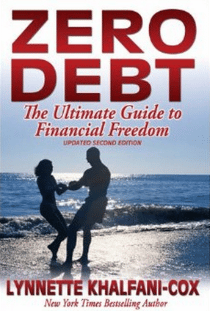
Do you need financial coaching? The Zero Debt Kit covers 10 critical topics for anyone who would like to have great credit and Zero Debt – not just zero credit card debt, but all kinds of debt: taxes, mortgages, auto loans, student loans, everything!

Each 1 hour course is available for immediate download and playable on any MP3 player including your iPod or your personal computer.

1. How to Budget Properly, Spend Less and Save More

2. How to Make or Find Extra Money

3. How to Improve Your Credit and Manage Your Credit Cards Well

4. How to Negotiate with Creditors

5. How to Deal with Collection Agencies

6. How to Reduce Mortgage and Auto Debt

7. How to Pick a Credit Counseling or Debt Management Firm

8. How to Pay Off Student Loans

9. How to Slash Your Taxes or Settle an Old Tax Bill

10. How to Keep Your Finances on Track and Build Wealth


Related Questions:

4 Dumbest Things to Do If You’re Deep in Debt

Getting into debt is easy. It’s getting out of debt that’s the tricky part.

Unfortunately, many people who would like to eliminate their debt shoot themselves in the foot by making bone-headed mistakes that actually compound their debt problems.

Here are the four dumbest things you can do if you’re already deep in debt:

1. Keep spending recklessly.

You’d be surprised at the number of people with credit card bills up to their eyeballs who nevertheless keep on spending carelessly. Some are shopaholics who need help ending their shopping addictions. Others need to learn to budget – or haven’t even bothered trying.And a big group of consumers in debt have basically given up mentally when it comes to adjusting their spending habits. They already have $5,000, $10,000, maybe even $20,000 or more in credit card debt. So when they see something they want to buy, have or do, they think, “I’m already in debt, so what’s ‘X’ more dollars?”

But that’s the wrong mindset. If you’re in debt because of your spending ways, you’ve got to get that spending under control if you’re ever going to become debt-free. (Read my tips on creating the right mindset to become debt-free).

Also, check out the free online version of my book, Zero Debt, to learn how I paid off $100,000 in credit card debt in just three years. Needless to say, to eliminate my debt, I had to get my own reckless spending under control.

2. Use a home equity loan to “fix” a deeper debt problem.

So you’ve got a house with some equity in it and you’re thinking about using a home equity loan or home equity line of credit to pay off your mounting credit card debt, huh? Maybe you should re-think that strategy.

On the surface, it may seem like a smart move to get rid of credit card debt with a high interest rate in favor of lower-rate mortgage debt. In reality, though, this is often a terrible idea.

For starters, if your credit card bills resulted from a spending problem or from you generally mismanaging your finances, a home equity loan is a disaster waiting to happen.

When over-spenders or poor money managers take out home equity loans, it does make their credit card bills go away – but only temporarily. Then the lure of credit cards with zero balances proves to be all-too-tempting, and those chronic spenders go right back out there and charge up more credit card debt. The home equity loan hasn’t fixed the underlying issue, which is a general mishandling of one’s finances; it only served as a band-aid to cover up the deeper problem.

Even if your spending habits aren’t the problem, taking out a bigger mortgage to reduce your credit card debt could still be ill-advised if the issue that got you into debt hasn’t been resolved.

Many people get into debt because of what I call “The Dreaded Ds” – downsizing, divorce, death (i.e., a main breadwinner in the family died), disability or disease. If you were driven into debt because of one of these circumstances and the issue hasn’t yet been rectified – say, you were downsized and still don’t have a job, or you faced a disease or disability and haven’t yet bounced back from your medical problems – then tapping the equity in your home to pay off your credit card debt may wind up exacerbating your financial troubles.

Unfortunately, there are many heart-breaking stories of people who paid off their credit card debts by converting those obligations into mortgage debt – only to continue experiencing financial hardship. So they were forced to use the credit cards yet again to stay afloat and also had to pay bigger mortgages. For those who can’t keep up with all the new payments, many wind up in foreclosure.

3. Borrow money haphazardly from family members.

We’ve all heard the phrase “Desperate times call for desperate measures.” And when people are desperate for cash, they’ll do anything – even borrow money from relatives despite the huge risks involved.

Getting a loan from a family member – or even a close friend – is always a dicey proposition at best. But when you’re already in debt and are borrowing to repay another obligation, you’re just begging for trouble.

The worst times to borrow from a relative? When you have no definitive income source to repay a loan; when you have no specific date you know you can expect to get your hands on future cash; or when a family member agrees to float you some money and says, “OK, but I really need the money back soon to pay my own bills.”

Without a specific game plan on exactly how and when you’ll repay the loan, you’re setting yourself up for a major relationship rift if you don’t keep up your end of the bargain. And it’s such a shame when family squabbles erupt or relationships deteriorate over money issues. (Read these tips on how to establish proper financial boundaries with relatives and friends).

4. Ignore the warning signs of debt.

Some people in debt are living in a fantasyland when it comes to the potential dire implications of their debt or how severe their debt problems may already really be. In many cases, those who pay their bills on time or who have good credit ratings may be in denial about their debt levels – or about how that debt may impact other areas of their lives. As long as they’re making minimum payments and bill collectors aren’t calling, they think they’re doing OK.

But those with debt may ignore how that debt may be causing them to argue with their spouse about money, or how the debt gives them a gnawing feeling in their pit of their stomach when they have to open their credit card bills.

In reality, whenever you owe a creditor money of any kind – whether it’s small debts or large ones – you should be alert to the warning signs that you have too much debt. Some of those signs: You can only afford minimum payments, you constantly use credit card balance transfers to keep up with your debts, and you’re maxed out on one or more credit cards.

If you fail to heed the red flags that you might have too much debt, it’s easy for your debt to quickly spiral out of control when unexpected setbacks happen or your life circumstances change. Lynnette’s article originally appeared on WalletPop.

Related Questions:

New Era of Responsibility: 5 Tips for Getting Your Financial House in Order

By Lynnette Khalfani-Cox, The Money Coach

The inauguration of Barack Obama as the 44th President of the United States ushered in a new era.  As he said in his speech on Tuesday, January 20, 2009:

“What is required of us now is a new era of responsibility — a recognition, on the part of every American, that we have duties to ourselves, our nation, and the world, duties that we do not grudgingly accept but rather seize gladly, firm in the knowledge that there is nothing so satisfying to the spirit, so defining of our character, than giving our all to a difficult task.”

For each of us to help Obama fulfill his goal for America, we can start by taking responsibility for our own personal debt.  Here are 5 tips to get your financial house in order.

1) Use more cash than plastic.
Before you go shopping for anything, even groceries, hit the ATM first – armed with your budget and your “need” list so that you don’t buy more items than you planned, or purchase items priced higher than you should be spending.  Take out exactly the maximum amount you’ve determined you can afford and will need to purchase your items of necessity (not just the items you want, but the items you “need”). Later, when you are out of cash, that’s it. Leave the mall or whatever store you’re in. Resist the temptation to whip out plastic to buy more stuff.

2) Write down all your debts.
To get a clear sense of your finances, you really need to know how much you owe, to whom, and how much interest you’re paying on your debts. You don’t want to guess about debts. Do you owe $5,100 or is it more like $9,100? Getting your bills listed in black-and-white is a sure-fire way to start simplifying your finances and seeing where your cash is going. To get a jumpstart on this process, go to the Free Info area of  http://www.themoneycoach.net and download the form called “I Debticate Myself to Being Debt Free.”

3) Pay your bills online.
Online bill payment is a great service for busy people. Use it as a time saver to pay those fixed monthly expenses, such as your mortgage, car note, or insurance payments. Online bill payments also helps ensure that you don’t forget to pay bills, which can result in late payments or negative marks on your credit report.

4) Pay more than the minimum amount due.
Don’t fall into the minimum payment trap. Minimum payments in the short run really mean maximum payments in the long run. To avoid paying exorbitant amounts of interest and being in debt for life, you must pay more than the minimum balance due. If possible, try to pay 2 to 3 times the minimum payment.

5) Call up your creditors and negotiate down your interest rate.
Every six months or so, starting today, call up your creditors and ask for lower interest rates. Often, credit card companies will lower your rate on the spot, simply because they don’t want to lose your business to another company offering lower rates. If you can knock down the interest rate on a card with a 21% interest rate to 12% or so, you’ll be saving yourself a lot of money. Your minimum payments will also be less each month. If you’re successful, however, don’t lower your payments to match, see Tip 4.

Enhanced by Zemanta

Related Questions:

Get Financial Coaching With The Zero Debt Kit

Do you need financial coaching? The Zero Debt Kit covers 10 critical topics for anyone who would like to have great credit and Zero Debt – not just zero credit card debt, but all kinds of debt: taxes, mortgages, auto loans, student loans, everything!

Each 1 hour course is available for immediate download and playable on any MP3 player including your iPod or your personal computer.

1.      How to Budget Properly, Spend Less and Save More

2.      How to Make or Find Extra Money

3.      How to Improve Your Credit and Manage Your Credit Cards Well

4.      How to Negotiate with Creditors

5.      How to Deal with Collection Agencies

6.      How to Reduce Mortgage and Auto Debt

7.      How to Pick a Credit Counseling or Debt Management Firm

8.      How to Pay Off Student Loans*

9.      How to Slash Your Taxes or Settle an Old Tax Bill

10.  How to Keep Your Finances on Track and Build Wealth

*Note:  Some information in the How to Pay Off Student Loans audio is outdated due to the passage of the Student Loan Reform Bill in 2010 and other changes in the student loan industry. However, the majority of the tips and advice herein will be beneficial to anyone with student loans.

Related Questions:

Get Free Financial Advice

Enter your email address:

Delivered by FeedBurner

Follow The Money Coach
Disclaimer

All information on this blog is for educational purposes only.  

Lynnette Khalfani-Cox, The Money Coach, is not a certified financial planner, registered investment adviser, or attorney.

If you need specialty financial, investment or legal advice, please consult the appropriate professional.

Per FTC guidelines, this site may accept advertising, affiliate payments or other forms of compensation from companies mentioned.

Details of any products, services, prices or offers highlighted on this site may change, so check with the company or provider for up-to-date terms.