Posts Tagged ‘Foreclosure’

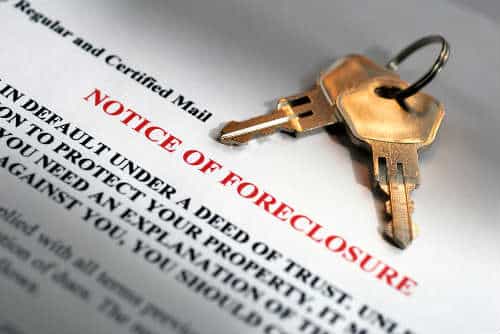
Foreclosure Rescue Scams: How to Recognize Bogus Mortgage Help

Despite the bona fide assistance out there, it’s harder than ever for many consumers to separate trustworthy foreclosure assistance companies from the bogus ones. And with unemployment and mortgage delinquencies remaining stubbornly high, con artists from coast to coast are increasingly preying upon Americans going through hard economic times.

This year, for instance, officials in California indicted two San Diego men on charges of illegally collecting $900,000 from desperate homeowners looking to avoid foreclosure. Authorities said the men billed people $2,500 to $3,000 for loan modification services, then did nothing.

The duo made their operation appear official by pretending that their offices were located near the White House, and sending out letters marked with the seal of the U.S. Capitol. They also claimed that they had forensic accountants and lawyers on staff. In reality, the two men worked out of Southern California and had no accountants or attorneys on the payroll.

Meanwhile, in New York, Attorney General Andrew Cuomo recently sued two loan modification companies, and shut down two other foreclosure rescue firms for alleged illegal practices.

Red Flags on a Foreclosure Rescue Scam

As mentioned, there are some surefire ways to spot a fraudulent – or potentially bogus – mortgage modification or foreclosure rescue offer.

According to Loan Scam Alert (a national program from NeighborWorks which is designed to help homeowners avoid scams and report them), here are six red flags that indicate you may be dealing with a scammer. Read the rest of this article on Housingwatch


Related Questions:

I owe more than my house is worth and I have bad credit. What should I do?

Q: I am a Single Woman Sharing a Mortgage with my Mother. I Purchased the House From her in 2004 to Prevent Her from Filing Bankruptcy and Losing her Home. We’ve Refinanced Twice and Now the Loan is Twice the Amount of What the House is Worth. My Credit is Not Great. I’m in Debt Minus the Loan on the House of About $15,000. The Bulk of That is a $10,000 Loan I Applied for an got (Surprisingly) While I was Unemployed. Isn’t That Called Predatory Lending. I Would Love to Leave Here and Find My Own Place But I Need to Get My Credit in Order. Some of My Debts are 5 Years Old. I Don’t Want to Pay These If I Really Shouldn’t. What’s the Best Thing to do? Also, Re: the $10,000 Loan, I Know I Should Not Have Applied for the Money But I was Desperate As Our Mortgage Was 3 Months In Arrears and In Danger of Being Foreclosed On. Is There a Way That I Could Get This Debt Removed as it was a Predatory Situation?

A: It sounds like you and your mother can not only not afford your home, but the house itself is also severely underwater. I understand your desire to improve your credit and get your own place, but honestly, you must fix problems A, B, and C before you can move on to issues D and E. In this case, problems A, B and C are: getting realistic about your financial past and present, learning how to create and live with a budget, and dealing with your home dilemma. Until you first do those things, you won’t be able to pay off your debts (issue D) or improve your credit (issue E). Without tackling first things first, you’ll also put yourself at risk of losing another home simply because you’ve neglected to learn certain financial lessons.

So let’s start with the first thing: a reality check. You seem to have attempted to throw your mother a lifeline, only to wind up nearly drowning yourself. Your email said you bought the home from her back in 2004 to help her avert bankruptcy and foreclosure. Despite your best intentions, you also stated that you and her wound up 3 months behind on the mortgage and in danger of being foreclosed upon anyway. That’s what led you to seek out the $10,000 loan you’re not saddled with. What happened to during the time of your unemployment? Your message indicated that you were twice laid off and that you “made some not so smart money decisions?” Whatever those decisions were, you have to truly acknowledge them, and make sure that you don’t repeat them.

It sounds to me as if you had your mother have been stuck in a cycle of making repetitive bad decisions. I hope you don’t think I’m being too harsh on you. Because I’m telling you these things honestly out of care and concern for your situation. I can sense your struggle and I know it’s very hard to be in such a tough predicament. I’m just giving you a bit of “tough love,” however, because I’ve seen cases like this time and time again. The only way people get out of these dilemmas is by actively breaking the cycle and ending the behavior that landed them in hot water.

Now let’s move on to the second issue: having a proper budget. Unfortunately, most of us grow up never having learned to create a realistic budget. This is likely true of your mother, and it’s probably true for you as well. Read this article I’ve written on budgeting and this post too, to get some ideas on how to budget to better manage your finances. Additionally, read this post about budgeting and financial planning when you go thorugh a layoff or have reduced income.

So what about the house? The fact that you’ve both faced foreclosure at least twice, and have even refinanced twice since 2004, yet you have still wound up deep in debt and deeply underwater tells me that you can not truly afford this home. I assume you refinanced in recent years to take advantage of relatively low interest rates. But I also suspect that you took cash out of your home as well. I could be wrong. But that’s certainly what many people did during the heydey of the housing market. How was that money used? Did you pay off debt, set aside any savings, or do something else with it? I recognize, of course, that part of the reason your house is likely under water is because home prices have fallen greatly in many parts of the country. But the fact that you owe twice as much as your home is worth signals that something else was going on.

If I were you, I would investigage the prospects of a short sale or a deed in lieu of foreclosure. I don’t know where you live, but it’s highly doubtful that your home will “come back” in value anytime soon. Unfortunately, short sales and deeds in lieu of foreclosure do have negative ramifications for your credit. But these are short-term hits from which you can recover, if you’re prepared to move on and do the right thing financially in the future.

You asked about the loan you got while you were unemployed. I don’t know of any way to legally get this loand eliminated or removed from your credit reports. Just because someone loaned you money at a time when you weren’t working doesn’t make the loan a “predatory loan.” Unfortunately, scores of lenders all across the country did this — both reputable lenders and not-so-reputable ones. Honestly, I don’t know which camp your lender falls into.

Nevetheless, again, I want you to be willing to take responsibililty for your own actions, and not put the blame elsewhere. You stated to me that you knew you shouldn’t have applied for the loan in the first place but that you were “desperate.” Plus, the reason you applied for the loan was because you were in arrears on your mortgage. That’s certainly not the fault of the lender that gave you the $10,000 loan. So it’s not fair to now accuse them of “predatory” lending. Predatory loans are characterized by unreasonably high interest rates, abusive pre-payment penalties, or excessive loan fees including enormous commissions for lenders or mortgage brokers.

Don’t worry about paying off 5-year-old debts at this point. You’ve got enough on your plate to try to pay your current bills. And trust me: In the long run, you will be far better off if you take my advice and deal first with these issues before you attempt to pay off old debts or improve your credit rating in order to try to get another place to live.

Related Questions:

Homeowners Who Fail to Heed Fine Print Face Disaster

During the foreclosure crisis it was very common to hear homeowners lament that the home loans they received were misrepresented to them. Tales of woe abounded. Some people thought they were getting fixed-rate loans but wound up in adjustable-rate mortgages. Others decried punitive clauses that seemed to come out of nowhere, such as a hefty pre-payment penalty that made it impossible to sell or refinance or a balloon clause that meant a big lump sum was due just a year or two after getting the mortgage. There were even homeowners who got scammed into illegal transactions, such as selling a property at an inflated price to “straw buyers”—people who just wanted to deceive a bank and had no intention of ever taking possession of the homes they “bought.”

I don’t doubt for a minute that untold numbers of homebuyers were duped into signing on the dotted line by unscrupulous mortgage brokers and others trying to make a quick buck on a house deal. However, it would be foolhardy to suppose that all the homeowners out there with sob stories were simply the unwitting victims of con artists. A more likely scenario is that many of these homebuyers were thrilled at the prospect of buying a home, glad of approval for a mortgage, and never read the fine print of their home loans. Or if they did read them, they clearly didn’t understand what they were reading and therefore should have asked more questions. Unfortunately, many of these homebuyers, including well intentioned people with good values, wound up in foreclosure. They learned the hard way a lesson that I hope you can learn without experiencing it directly: You should always read the fine print and fully comprehend the terms and conditions of any agreement you make. It can have enormous implications for your credit and your overall finances.

Excerpted from Perfect Credit: 7 Steps to a Great Credit Rating

U.S. Foreclosure Rate Jumps 25% as Banks Step Up Home Repossessions

America’s foreclosure crisis got especially ugly last month.

According to RealtyTrac, lenders repossessed more homes in August 2010 than in any other month since the housing meltdown and recession began back in December 2007.

All told, banks took back 95,364 properties in August, a 3% rise over July figures, and a 25% increase over year-ago levels.

Unfortunately, we’re on track to see more than four million homeowners get a foreclosure notice in 2010. Of those, an estimated one million property owners will actually lose their homes.

All this stepped up foreclosure activity suggests that banks are accelerating their foreclosure proceedings and getting more aggressive about evicting past-due homeowners.

One possible reason for this is that no bank wants to look like a scrooge by putting individuals and families on the street during the November and December holiday season. So I expect that lenders will likely try to get a lot more foreclosures done this fall, especially in September and October.

Facing foreclosure? Read these tips to see if you can save your home.

Related Questions:

Head of Philadelphia Housing Agency Winds Up in Foreclosure

Liberty Bell

Image by zoonabar via Flickr

Carl Greene, the executive director of the Philadelphia Housing Agency, has found himself like millions of other cash-strapped Americans: he is facing foreclosure.

Greene’s salary last year was $306,000, plus a $44,000 bonus. But he is still several months behind on his payments to Wells Fargo on his $615,000 condo.

The irony is that the Philadelphia Housing Agency is supposed to help people become homeowners, successful ones at that. But the head of this organization can’t even hang on to his own residence.

“My lack of attention to my personal financial dealings is a failure on my part,” Green said in a press release.

Hmmm. Somehow I doubt that mere inattention to his finances are behind Greene’s money woes. How do you not pay attention to the fact that your mortgage has to be paid every month? That’s not particularly complex.

Just goes to show you that anyone can wind up in a financial mess.

Related articles by Zemanta

Categories
Follow The Money Coach

Enter your email address:

Delivered by FeedBurner

Disclaimer

All information on this blog is for educational purposes only.  

Lynnette Khalfani-Cox, The Money Coach, is not a certified financial planner, registered investment adviser, or attorney.

If you need specialty financial, investment or legal advice, please consult the appropriate professional.

Per FTC guidelines, this site may accept advertising, affiliate payments or other forms of compensation from companies mentioned.

Details of any products, services, prices or offers highlighted on this site may change, so check with the company or provider for up-to-date terms.