
Posts Tagged ‘savings account’

Online Savings Accounts Pay 5 Times More Than Offline Accounts

If you’re not getting enough interest on your money, maybe it’s because you’re stashing your cash in a brick-and-mortar bank, as opposed to using an online savings account. That could be a costly financial mistake.

Go check out MoneyRates.com, which helps consumers comparison shop for the best rates on everything from savings and checking accounts to CDs, money market accounts and more.

MoneyRates recently did a survey, which found that online savings account rates are more than five times greater than the savings account rates offered offline.

For example:

  • For a $10,000 savings account balance, online banks offered an average rate of 0.87% APY, compared to just 0.15% APY for traditional offline savings accounts
  • Online savings accounts averaged 0.76% and 0.86% APY at the $1 and $1,000 account balance levels, respectively – barely lower than the average rate offered for a $10,000 account balance

The banks offering the best online savings account rates for a $10,000 account balance, according to the survey by MoneyRates.com, are:

1. SFGI Direct: 1.21% APY
2. Discover Bank: 1.15% APY
3. (tie) Capital One Bank: 1.10% APY
3. (tie) Chesapeake Bank: 1.10% APY
3. (tie) Colorado Federal Savings Bank: 1.10% APY
3. (tie) Sallie Mae Bank: 1.10% APY
3. (tie) SmartyPig: 1.10% APY
8. (tie) First Trade Union Bank: 1.05% APY
8. (tie) OneWest Bank: 1.05% APY
10. Ally Bank: 1.04% APY

Even though the fed is keeping interest rates low, there are some ways to get a little better return on your money. Having an online savings account is one of them.

Related Questions:

Do’s and Don’ts for Starting a New Business in 2011

African-Americans are starting new businesses in record numbers.

If you’re planning to launch a company in 2011, here are seven do’s and don’ts to help ensure your entrepreneurial success.

1. Do plan to start with your own money, not someone else’s
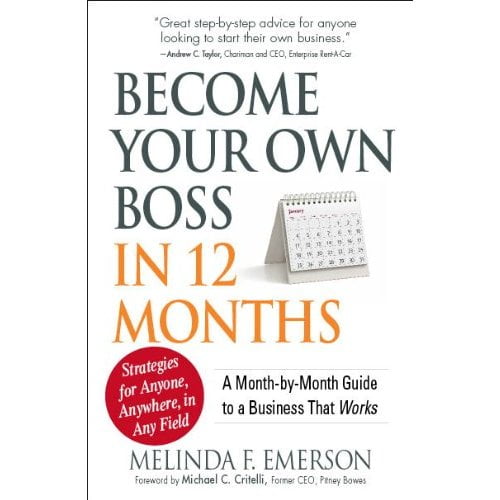
“Unless you win a business plan contest or inventors’ competition, for the most part there’s no such thing as finding a grant to start a business,” says Melinda Emerson, author of “Become Your Own Boss in 12 Months: A Month-by-Month Guide to a Business That Works.”

“The money to start your business will come from your right or left pocket. In fact, there are three pools of money you should have before your start a business: an emergency savings account, enough budget to go from 12 to 24 months without a paycheck, and the first year of operating capital to run your business.”

Thinking of buying a franchise? “There are some franchises that provide funding,” Emerson notes. “But 20 percent to 30 percent of the loan must come from your resources.”

2. 
Do request major funding long before you need it
Maybe you recently saw “The Social Network,” the movie about the launch of Facebook, and thought that you could score big dollars fast from venture capitalists? Think again.

Realize that getting money from “VCs” and “angel” investors can be a longer-than-expected process, sometimes more like 6 to 12 months to secure.

Plus, if you’re seeking money from more traditional sources, like a bank, “You need to be in business for two to three years to qualify for even a line of credit,” Emerson says.

3. Do seek “trade credit” from vendors and suppliers
Too many entrepreneurs dream of going to a bank and getting a business loan or line of credit for their enterprise. But maybe you don’t need a traditional bank loan at all to launch or grow your business. If you can get your vendors and suppliers to agree to provide you with trade credit — i.e. the ability to pay for goods and services over time — you can creatively and more frugally run your operations.

4. Do get “buy in” from your spouse/partner
Many new (and veteran) entrepreneurs will tell you one of the biggest dream killers they’ve encountered is an un-supportive spouse. Make sure your partner is on board with your entrepreneurial ambitions. If not, you’ll face a host of financial arguments and money-battles that will be counter-productive to you building a business.

5. Don’t feel compelled to buy everything
Ask yourself: Do I really need to purchase equipment, furniture, computers, etc? You may be able to get by, temporarily, by bartering, or even by renting and leasing equipment. And that’s OK!

6. Don’t let your personal credit rating lapse
Amid the current environment, your credit standing is more important than ever. Guard it jealously. Pay all bills on time. Only take out loans/credit when you truly need it. The higher your FICO credit scores, the better loan rates and terms you’ll get when it is time to do business with a bank — or even just getting a corporate credit card. To check your credit report at no charge, go to AnnualCreditReport.com. If you haven’t seen your credit scores lately, read this article on how to get your FICO credit score free.

7. Don’t “bet the farm”
Smart entrepreneurs don’t “roll the dice” and risk everything. They take risks — but they’re calculated risks. Don’t gamble everything: 100 percent of your savings, your credit, putting your home up, etc. in the hopes that you’ll create a successful business. Be willing to invest in your business of course, but not foolishly, and not at the expense of everything else.

Making the leap from employee to entrepreneur is a challenging feat. But you can make your transition a lot less financially stressful and a lot more realistic by following these tips and preparing yourself for economic success.

Related Questions:

What Credit Card Should I Get to Help Build My FICO Credit Score?

Q: I Became Debt Free This Month. I Have $4,000 Saved and No Bank Account. Where Should I Go? Also What Credit Card Should I Get to Help Build My FICO Credit Score?

A: Congratulations on eliminating your debt. You should be proud of that accomplishment – and of saving $4,000. As of early 2010, Capital One is offering an attractive savings account that you should investigate. It’s the InterestPlus Online Savings Account. For those who keep $2,500 in the account, It pays a very competitive Annual Percentage Yield and it gives you the opportunity to earn a 10% quarterly bonus. Get more information online at http://www.CapitalOne.com/DirectBanking.

To find a good credit card, also take advantage of the power of the Internet. Go to http://www.CardRatings.com to find a competitive credit card that fits your needs. There are all different types of cards: for students, frequent travelers, people with excellent credit, those with bad credit, etc. The “best” credit card is the one that suits your spending habits and financial profile. Only you know how often you will use the card. No matter what card you choose, only charge what is absolutely necessary and what you can reasonable pay off quickly – ideally every month. This will be the single best thing you can do to boost your FICO credit scores.


What’s Your Credit Score?

Enhanced by Zemanta

Related Questions:

Can a Credit Card Help You Buy a Home?

First 4 digits of a credit card

I’ve heard of saving your way to a new house, but spending your way to one? That’s the point behind a new card being marketed by a Connecticut entrepreneur named Jack Loop.

Loop is a proponent of homeownership, but he thinks that a lot of people are locked out of buying a place of their own because they don’t have enough money saved up for a down payment. His solution: The HomeCard, which is being marketed as a “savings tool” to help consumers stash cash for a down payment, closing costs or home repair expenses.

Under his plan, the more you spend with your HomeCard, they more you’d save – because you’d get up to 25% cash back on your purchases. That money would then go into a savings account for your future home.

Problem is: Loop needs a bank to partner with him and so far, no financial institutions have stepped up. This is Loop’s fourth try to bring the HomeCard to market.

It’s not hard to see why his card – which will be either a debit card or a credit card – is a tough sell. Coming out of the foreclosure crisis and the mortgage meltdown of recent years, I don’t think we really want to send the message that having a home is as easy as spending your way to get there.

Get Free Financial Advice

Enter your email address:

Delivered by FeedBurner

Follow The Money Coach
Disclaimer

All information on this blog is for educational purposes only.  

Lynnette Khalfani-Cox, The Money Coach, is not a certified financial planner, registered investment adviser, or attorney.

If you need specialty financial, investment or legal advice, please consult the appropriate professional.

Per FTC guidelines, this site may accept advertising, affiliate payments or other forms of compensation from companies mentioned.

Details of any products, services, prices or offers highlighted on this site may change, so check with the company or provider for up-to-date terms.