
Posts Tagged ‘Social Security Administration’
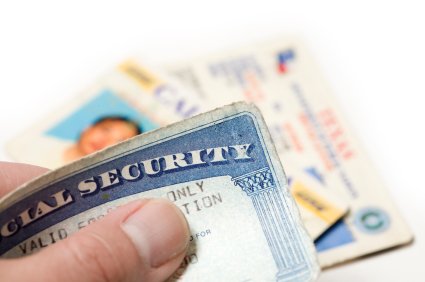
Will the SSA Place a Fraud Alert on My Social Security Number?
The Social Security Administration, Office of the Inspector General cannot place a fraud alert on your SSN but they do manage a fraud hotline to investigate instances of fraud. You can contact the U.S. Department of Health Services Office of Inspector General to report various types of fraud, including medical identity theft, Social Security disability fraud and allegations of identity theft unrelated to Department programs. Filing a report may lead to further investigation by law enforcement agencies.
Reporting Social Security Number Fraud
The Office of the Inspector General Fraud Hotline manages situations where there has been fraud, waste or abuse within the Social Security Administration’s programs. In most cases, however, you will need to follow the steps for reporting identity theft.
You can call the Office at 1-800-269-0271 from 10 a.m. to 4 p.m. EST or submit a Fraud Reporting Form online here.
Reporting Identity Theft When Someone is Using Your Social Security Number
If you are concerned that someone is using your Social Security number and see suspicious activity on your credit card statements or banking activities, you can take action immediately by doing the following:
1. Check your Social Security earnings record. Verify the accuracy of this report to make sure someone hasn’t been using your number for employment. You will need to contact the Social Security Administration directly to order a copy of this report. As of March 2011, the Request a Social Security Statement service has been suspended for budget reasons.
2. Report theft to the Federal Trade Commission. Call 1-877-ID-THEFT to report the incident and visit the FTC Identity Theft website to educate yourself about the process.
3. File a complaint with the Internet Complaint Center (IC3). The IC3 makes it easy to give cyber crime victims a chance to report violations associated with their Social Security number and will contact law enforcement and regulatory agencies as needed.
4. Monitor your credit report. Check for suspicious activity on your credit report, such as the appearance of accounts that you don’t know about or reports of employment where you haven’t worked. Any changes in your credit report may serve as evidence of a compromised account and could be used to trace the activities of the identity thief.
5. Review your bank and credit card statements regularly. Keep a close eye on your bank and credit card statements to determine whether someone else is using your account. The moment you detect something suspicious, report the incident to your bank or creditor so that they can take action immediately.
Read: Is Credit Monitoring Right For You?

Related Questions:
- social security fraud alert
- fraud alert social security
- social security number alert
- social security alert
- social security number fraud alert
- how to put alert on social security number
- how do i put an alert on my social security number
- how to put an alert on social security number
- who do i contact to put a fraud alert on my social security number
- how to put an alert on your social security number
- how to place a fraud alert on your social security number
- fraud alert SSA
At 63 years old I am ready for retirement. What should I do?
Q: I am Almost 63 Years of Age and Thinking of Retirement. What Should I Do at the Present Time to Make this a Reality in 2 or 3 Years? I am a Registered Nurse Working Full Time in a Hospital.
A: Retiring in two to three short years from now means you’ve got to ensure that your financial affairs are in good shape, and that you will have enough money on hand to last you another two or three decades. Many financial planners create plans for their clients on the assumption that the client will live until 90 or 100 years old. So you have to consider whether, if you retired at age 65 or 66, you would have enough money to last for potentially another 30 years.
Max Out that Retirement Plan at Work
Start by looking at what you’ve saved in your retirement plan at work. If you haven’t been aggressively saving in a 401(k) or 403(b) plan, by all means start doing so. Perhaps your employer offers a match to boost your retirement plan. Under federal law, most employees can put up to $16,500 into a qualified retirement plan in 2010. However, since you are over 50 years of age, you can also put into another $5,500 in “catch up” payments if you’ve been a late starter, in terms of saving. You can also sock money away into an IRA, or Individual Retirement Account. The 2010 limit for regular IRAs and Roth IRAs is $5,000, plus another $1,000 in allowable contributions for those 50 and above. Assess also any pension income or retirement benefits that will be provided directly by your employer. Then find out how much money you will be entitled to from Social Security. You can find out your expected Social Security payments by visiting the Social Security Administration’s website (http://www.ssa.gov).
Two Steps To Assessing Your Retirement Readiness
In summary, to make sure you are on track to retire when you want, you should follow these two steps:
Step 1: Calculate Your Retirement Needs
Think about what how much money you’ll need in retirement, on a monthly and annual basis. Take into account your projected monthly expenses, any debts you’ll have, along with the possibility of healthcare or medical costs, travel, as well as inflation. A good tool to use is the “Ballpark Estimate” retirement calculator from the American Savings Education Council at: http://www.icief.org/retirement/illustrations/ill_ballpark.html
Step 2: Estimate Future Benefits
After consulting your Human Resources Department or taking a look at any employer-provided pension income you may be expecting, go get an estimate of your Social Security benefits at http://www.ssa.gov./estimator.
If you don’t like what you see in the results, all is not lost. You have the option of working a bit longer, perhaps investing slightly more aggressively if you are comfortable doing so, or even using products like annuities that can offer you a steady income stream or make up for any financial shortfalls you may face.
Related articles
- Making the Most of Your Social Security Benefits (askamoneyexpert.com)

Related Questions:
What Does it Mean to Have a “Thin” Credit File or “No Credit File”?
If you have been told that you have a “thin” credit file, “no credit file” or “no credit score,” it is likely due to one of three causes:
1) You’ve Never Had Credit
This would be the case if you’ve never had a traditional credit account, such as a car loan or credit card. Or perhaps you opened one many years ago, but you’ve long since stop using it and your entire credit history has been dormant for many years.
2) You’ve Just Recently Established Credit
Another possibility: you may have actually had credit extended to you, but it was established so recently that the account is not yet being reported by your creditor nor tracked by the bureaus. Sometimes, it can take as long as four to six months for newly-opened accounts to be reported to TransUnion, Equifax and Experian, according to the bureaus.
3) Someone Thinks You’re Dead
I’m not kidding. Read on for an explanation below.
If you recently opened a credit account, it couldn’t hurt to contact your creditor to make sure they have, indeed, reported your newly-opened account. But frankly, there’s not much you can do besides wait for the information to start being supplied by the credit furnisher and monitored by the bureau. Try not to worry too much about it at this point; it should happen soon.
If Your Thin File Isn’t Due To a Lack of Credit, Check Your Pulse ….
There’s another circumstance, however, in which you should be concerned about having “no credit file” or no credit score. It’s when you have, in fact, opened a credit account or multiple accounts, but you’re not showing up on the credit bureaus’ records. The likely problem? Somebody probably believes that you’re dead. No, seriously.
The “Master Death Index”
The Social Security Administration supplies something called a “Master Death Index” to credit bureaus, other businesses and government agencies. If your social security number somehow winds up on that list, you are presumed to be deceased. Obviously, that makes it pretty tough to get a Visa card. Even if you have multiple credit accounts, if one of them suddenly includes a notation that references you as a person who is dead, that can literally kill your whole credit file. If you suspect that this has happened to you, contact the Social Security Administration (http://www.ssa.gov) to get help fixing the problem.
Who Typically Has a “Thin” Credit File?
And who fits into the category of having a “thin” credit file? Traditionally, young adults, immigrants, and women who have not had credit in their own name all fit the classic profile of individuals with “thin” credit files.
Fortunately, all these individuals can boost their credit rating by adding positive information to their credit files. This can be an especially valuable step for those trying to establish credit, those who’ve been told you have a “thin” credit file, or anyone who may have been denied credit simply because you have “no credit file” at all.


