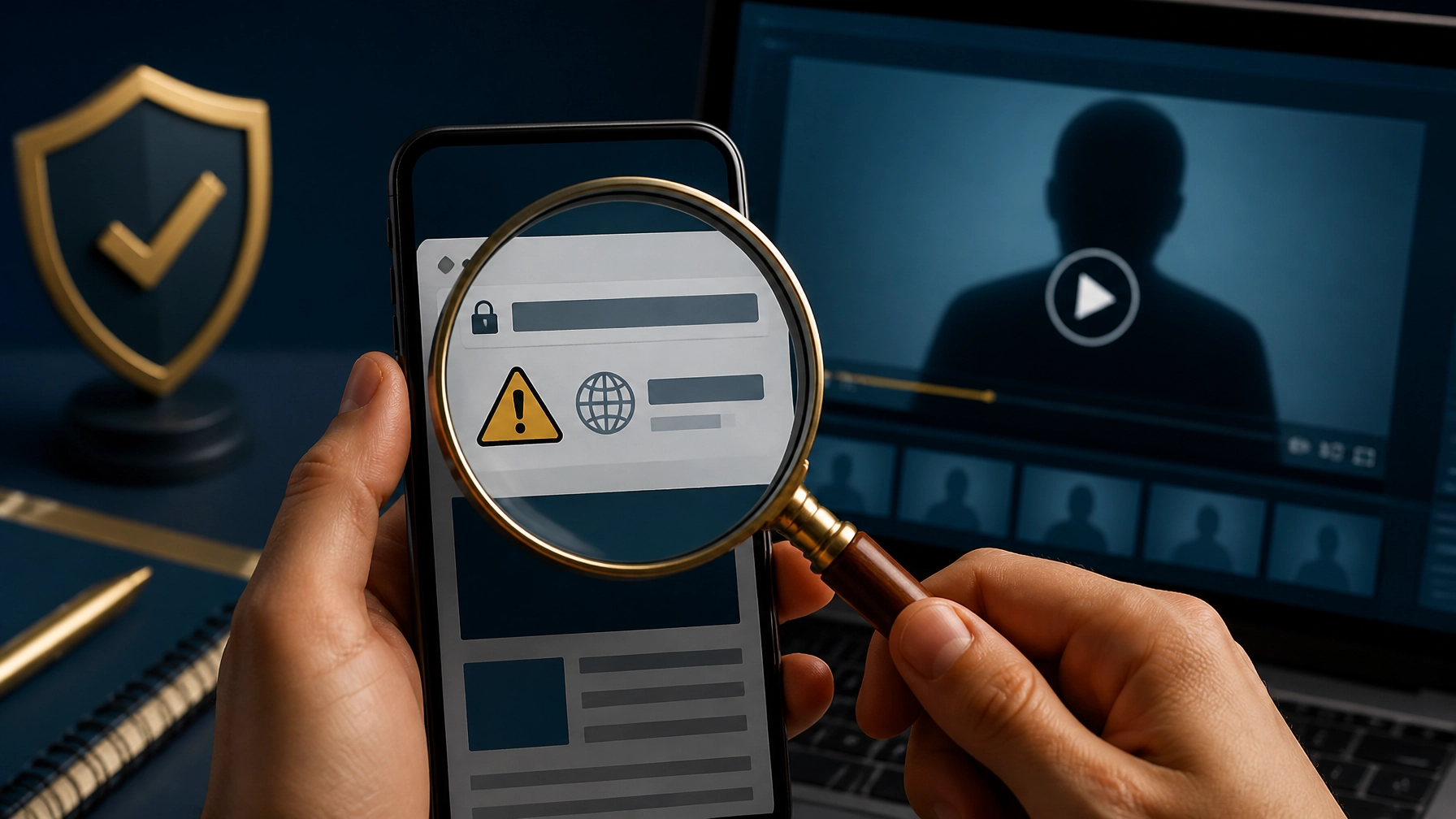
A familiar face appears in a polished video. The person seems to be describing a breakthrough investment platform, an exclusive trading opportunity, or a “secret” method for building wealth.
The video looks authentic. A news article appears to confirm the story. The website displays an account balance and rising profits.
But none of it may be real.
In deepfake celebrity endorsement investment scams, fraudsters use artificial intelligence to imitate celebrities, business leaders, financial commentators, politicians, and other trusted public figures. They then use those fake endorsements to send people toward fraudulent investment websites.
The goal is not to help you invest. It is to convince you to transfer money before you have time to investigate.
What Is a Deepfake Celebrity Investment Scam?
A deepfake is digitally altered or AI-generated audio, video, or imagery designed to make a person appear to say or do something that never happened.
In this scam, criminals may create:
• A video of a familiar TV personality promoting a trading platform
• An audio track that makes a public figure appear to recommend cryptocurrency
• A fake interview about a supposedly “leaked” investment opportunity
• A fabricated news article that appears to come from a legitimate media outlet
• Social media advertisements featuring AI influencers or fake influencers
The apparent endorsement is the hook. The fraudulent investment platform is where the money is collected.
The Australian Securities and Investments Commission, or ASIC, has warned about a sharp rise in scams using deepfake videos and fake websites. ASIC recently reported removing more than 19,400 online scams in a single financial year, an increase of 182% from the previous year. The activity included fake websites, social media advertisements, phishing scams, and cryptocurrency investment scams.
ABC News and SBS News have also reported on ASIC’s warnings about deepfake endorsements and fake news pages.
ASIC has said that scammers are often using a broader network of fabricated reviews, articles, advertisements, websites, and videos to make an investment appear legitimate. Recent reporting cited losses of billions of dollars to scams in Australia, including millions linked to impersonated public figures.
The numbers are important, but the practical lesson is even more important: A professional-looking video is no longer proof that an investment is genuine.
How the Scam Works
Deepfake investment scams usually follow a recognizable sequence.
-
A fake endorsement captures your attention
You may see a sponsored social media post, short video, online advertisement, or message featuring a well-known public figure.
The person appears to explain how they earned money through a new trading platform, artificial intelligence system, cryptocurrency opportunity, or other investment. The offer may be described as exclusive, secret, or available only to a limited number of people.
-
A fake news article provides “proof”
The advertisement may lead to a page designed to resemble a legitimate news website. It may use familiar colors, navigation menus, headlines, and article formatting.
The article might describe a supposed interview with the public figure and include fabricated comments, testimonials, or claims about the investment’s performance.
This creates social proof. You may think, “If a respected news organization covered it, it must have been checked.”
That assumption is exactly what the scam depends on.
-
You are directed to a polished fake platform
The article or video sends you to an investment website. The platform may display charts, account balances, customer service details, and simulated profits.
You may be asked to provide your name, phone number, email address, identification documents, and bank information before making a deposit.
-
Small withdrawals may build trust
Some victims are allowed to withdraw a small amount at the beginning. This does not prove the platform is legitimate.
The payment may be a calculated cost of acquiring a larger victim. Once trust is established, the scammer may encourage increasingly large deposits.
-
Withdrawals stop
When you try to withdraw a larger balance, the platform may demand additional taxes, account verification fees, insurance payments, or security deposits.
Those demands are usually another part of the fraud. If you refuse to pay, the account may be frozen, the contact person may disappear, or the website may go offline.
Why Deepfakes Are So Effective
Most people do not evaluate an investment based on one piece of evidence. They form an overall impression.
A familiar face creates trust. A fake news article creates credibility. A polished dashboard creates the appearance of activity. A small successful withdrawal creates reassurance.
Together, these elements can bypass normal skepticism.
The old warning, “If it looks real, it must be real,” no longer works. Deepfake technology can imitate appearance, voice, facial movement, and conversational style well enough to fool people who are otherwise careful with money.
Do not blame yourself if a deepfake looks convincing. The right response is not to become suspicious of everything. It is to use a verification process that does not depend on appearance.
Use the Synthetic Authority Framework
When an online investment appears to have the backing of a public figure, use this four-part Synthetic Authority framework.
Identity
Who is actually making the recommendation?
Do not assume the person in the video is the person speaking. Look for the endorsement on the public figure’s verified official website or official social media account. If the endorsement appears only in an advertisement, private message, or unfamiliar website, treat it as unverified.
Proof
What independent evidence supports the investment?
A video, testimonial, account dashboard, or news-style article is not independent proof. Search for the investment company through official regulatory sources. Look for licensing information, business records, risk disclosures, and credible reporting that you locate independently.
Channel
Where did the offer reach you?
A legitimate investment opportunity should not depend on a random social media advertisement, an unexpected direct message, or a private messaging group.
Be cautious when someone moves you to WhatsApp, Telegram, or another messaging app and discourages you from using official channels. The communication channel is part of the scam’s design.
Pressure
Are you being rushed?
Promises of limited availability, guaranteed profits, or a one-time opportunity are warning signs. A legitimate investment does not need to prevent you from taking time to research it or speak with someone you trust.
Common Warning Signs
Be especially cautious if you see several of these signs together:
• A celebrity or public figure endorsing an investment you did not search for
• Claims of guaranteed returns or high profits with little risk
• A promise of passive income from an AI trading system
• Pressure to deposit money immediately
• Requests for cryptocurrency, wire transfers, gift cards, or payments to unfamiliar individuals
• A fake news website with an odd domain name, spelling errors, or missing editorial information
• Contact only through messaging apps
• Requests for identification documents before you can learn basic information about the company
• A trading dashboard showing profits that you cannot independently verify
• Demands for additional fees when you try to withdraw funds
Do not rely on spotting a visual flaw in the video. Some deepfakes have noticeable lip-sync problems or unnatural facial movements, but others may not. Verification is safer than visual inspection.
Prevention Checklist
Before sending money to any investment opportunity:
• Stop and do not respond to pressure.
• Search the public figure’s name plus “scam,” “fake endorsement,” or “investment.”
• Visit the person’s official website or verified social media accounts independently.
• Check the exact website address. Do not trust a link simply because the page uses familiar branding.
• Search for the company through an official financial regulator.
• In Australia, verify the Australian Financial Services Licence, including the licence holder’s name and number, through ASIC’s Professional Registers Search. Make sure the website and contact details match the register.
• Review ASIC’s Moneysmart Investor Alert List.
• In the United States, research investment professionals through Investor.gov, the SEC, FINRA BrokerCheck, or your state securities regulator.
• Never assume an ASIC licence number or other registration detail is genuine because it appears on a website. Scammers may misuse another firm’s information.
• Never send cryptocurrency to a stranger or an investment platform you cannot independently verify.
• Discuss the opportunity with a trusted person before making a large financial decision.
What to Do If You Were Targeted
If you sent money or shared personal information, act quickly and calmly.
-
Stop communicating with the scammer
Do not argue, negotiate, or send more money to unlock a withdrawal. Additional payments usually increase the loss.
-
Contact your bank or payment provider
Explain that you were deceived by an investment scam. Ask whether the transaction can be stopped, recalled, or reviewed. If you used a card, bank transfer, payment app, or cryptocurrency exchange, contact that provider immediately.
-
Preserve evidence
Save screenshots of the advertisement, video, fake article, website address, account dashboard, messages, phone numbers, emails, payment records, and claimed licence information.
Do not rely on the website remaining online.
-
Protect your identity
If you shared passwords, change them immediately and do not reuse them on other accounts. Enable two-factor authentication. If you provided sensitive identity information, consider a credit freeze or fraud alert and monitor your credit reports.
You can also review Ask The Money Coach’s guidance on how to protect your identity from AI scams.
-
Report the scam
In the United States, report investment fraud to the Federal Trade Commission at ReportFraud.gov and online crime to the FBI Internet Crime Complaint Center.
In Australia, report scams through Scamwatch, review ASIC’s investment scam alerts, and report relevant financial misconduct to ASIC.
Reporting may not guarantee recovery, but it helps financial institutions and authorities identify connected websites, payment accounts, and scam patterns.
Suggested Internal Links
Continue building your fraud-prevention toolkit with these Ask The Money Coach resources:
• The Most Common Scam Red Flags Everyone Should Know
• How to Protect Your Identity From AI Scams
• Identity Theft and Consumer Protection Library
• How to Protect Your Bank Account From Unauthorized Charges
• Identity Theft Prevention: Essential Steps to Protect Your Finances
The Bottom Line
A celebrity endorsement is not investment research. A realistic video is not proof. A professional-looking platform is not evidence that your money is being invested.
Use the Identity, Proof, Channel, and Pressure test before taking action. Verify the company through an official regulator, slow down when someone wants an immediate deposit, and never send money simply because a familiar face appears to recommend the opportunity.
When your savings are involved, taking a pause is not missing out. It is part of protecting your financial future.
Frequently Asked Questions
Can deepfake videos be detected by looking for lip-sync problems?
Sometimes, but not reliably. Some videos may have unnatural facial movement, strange pauses, or audio that does not quite match the speaker. However, deepfake quality varies. Independent verification is safer than trying to identify technical flaws.
Are all celebrity investment endorsements fake?
Not every public figure endorsement is necessarily fraudulent, but you should never treat celebrity involvement as proof that an investment is appropriate or legitimate. Verify the investment independently through official sources.
What are AI influencers?
AI influencers are computer-generated or AI-enhanced personalities used to create social media content. They may be legitimate marketing tools, but scammers can also use AI influencers to promote fake financial opportunities or create the appearance of popularity.
What are fake influencers?
Fake influencers may be real people whose identities have been copied, altered, or impersonated. They may also be fabricated profiles designed to appear knowledgeable, wealthy, or connected to financial experts.
Why do scammers use fake news websites?
A fake news website gives a fraudulent offer the appearance of independent coverage. Scammers use familiar layouts, logos, headlines, and fabricated interviews to make victims believe the opportunity has been reviewed by a reputable media organization.
Can a fake investment platform show real profits?
Yes. A fraudulent platform can display any balance the scammer chooses. A visible account balance is not proof that funds exist or that trades occurred.
Why would a scammer allow a small withdrawal?
A small withdrawal can build confidence and encourage a larger deposit. It is one of the reasons you should verify the company before increasing your investment, even if an early payment was successful.
Should I send cryptocurrency if the investment platform has a licence number?
No, not without independent verification. A licence number can be copied or misused. Confirm the licence through the regulator’s official registry and make sure the legal entity, website, contact details, and investment product all match.
Can I recover money lost in a deepfake investment scam?
Recovery is difficult, but immediate action may improve your options. Contact your bank, payment provider, cryptocurrency exchange, and relevant authorities as soon as possible. Be cautious of anyone who later promises to recover your money for an upfront fee. That may be a second scam.
Avoid This Scam™
Avoid This Scam™ is the consumer protection and scam awareness desk of AskTheMoneyCoach.com. We help readers recognize, avoid, and respond to financial scams, fraud, identity theft, deceptive business practices, and online threats.
This article is for educational purposes only and is not investment, legal, or tax advice. Investment rules and reporting procedures differ by country. Use official government and regulator websites when checking a financial professional or reporting suspected fraud.
Avoid This Scam™ is the consumer protection and scam awareness desk of AskTheMoneyCoach.com. We help readers recognize, avoid, and respond to financial scams, fraud, identity theft, deceptive business practices, and online threats.
Our coverage includes scam alerts, fraud prevention strategies, consumer advocacy, practical safety guides, and expert analysis designed to help individuals and families protect their money, personal information, and financial well-being. We also explain what to do if you’ve already been targeted, because knowing how to respond can be just as important as avoiding a scam in the first place.