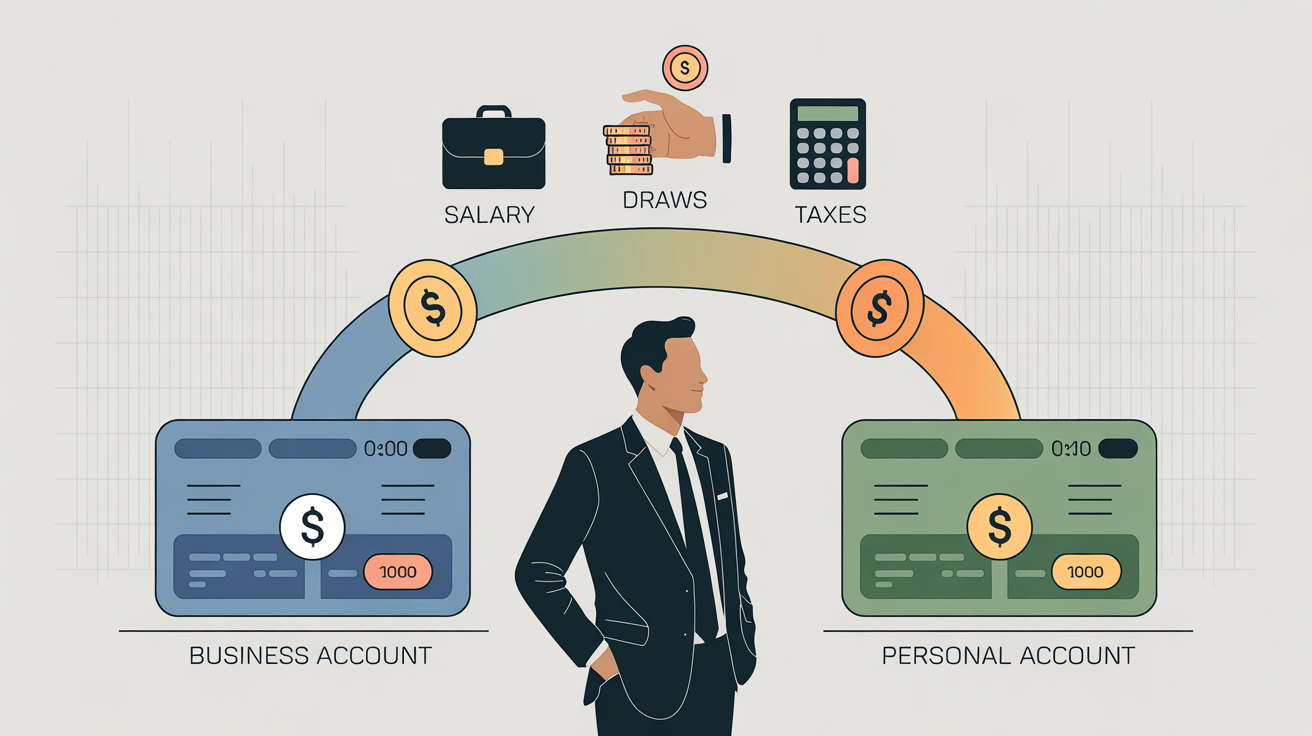
How you pay yourself as a small business owner impacts your taxes, cash flow, and long-term financial stability. Whether you run a sole proprietorship, LLC, or corporation, the right pay method depends on your business structure and available profits.
In this guide, you’ll learn the methods for paying yourself, how to determine the right amount, and the steps to follow for a compliant, stress-free process.
Key Takeaways
-
Small business owners typically pay themselves through an owner’s draw, a salary, or a combination of both.
-
Your business structure determines which payout method is allowed under tax rules.
-
LLCs and sole proprietors use draws; S-corps and C-corps must run payroll for the owner.
-
You should only pay yourself from profits after expenses, taxes, and reinvestment needs are covered.
-
Accounting tools like QuickBooks simplify payments, tracking, and tax preparation.
-
There is no fixed universal percentage—most owners pay themselves 30–50% of profits.
-
Separating personal and business finances is essential for bookkeeping and compliance.
What Is “Pay Yourself as a Small Business Owner”?
Paying yourself as a small business owner refers to transferring money from your business to your personal finances in a way that follows tax rules and maintains healthy cash flow. The type of payment you take depends on how your business is legally structured.
The Three Main Ways Owners Pay Themselves
-
Owner’s Draw – A withdrawal from business profits into your personal account.
-
Salary – A consistent paycheck run through payroll with taxes withheld.
-
Combination Method – A base salary plus extra draws during profitable months.
Why Business Structure Matters
Sole proprietorships and single-member LLCs are taxed as pass-through entities, so owners typically take draws. Corporations must run payroll and pay owners a “reasonable salary,” as outlined by the IRS.
Why Paying Yourself as a Small Business Owner Matters
How you pay yourself affects everything from taxes to long-term sustainability. Many new owners either underpay themselves or withdraw too much too fast, leading to cash flow issues.
Supports Personal Financial Stability
Your business should pay you enough to cover personal bills, which reduces stress and supports better decision-making.
Ensures Business Health
Paying yourself responsibly ensures you leave enough cash in the business to operate smoothly and reinvest in growth.
Complies With IRS Rules
The IRS requires corporation owners to pay a “reasonable salary” before taking distributions. Failure to follow the rules can result in fines or reclassification of income.
How to Pay Yourself as a Small Business Owner
Each business type has its own rules for paying the owner. Here’s how the three methods work.
1. How to Pay Yourself with an Owner’s Draw
Ideal for:
-
Sole proprietorships
-
Single-member LLCs
-
Partnerships (each partner takes a draw)
What an Owner’s Draw Is
An owner’s draw is a direct withdrawal of funds from your business to your personal account. No taxes are withheld at the time of withdrawal.
How to Take an Owner’s Draw
-
Transfer money from your business account to your personal account.
-
Record the draw in your accounting software.
-
Set aside taxes manually since they aren’t withheld automatically.
Tax Considerations
Draws are not payroll—they are taxed as part of your net business income when you file your return. According to the IRS, sole proprietors and LLCs pay taxes on the profit the business generates, not the amount withdrawn.
How to Pay Yourself with a Salary
Ideal for:
-
S-corporations
-
C-corporations
-
LLCs taxed as corporations
What a Salary Is
A salary is a fixed paycheck you pay yourself through payroll. Taxes—including income tax, Social Security, and Medicare—are withheld automatically.
How to Run Payroll for Yourself
-
Choose a payroll provider (Gusto, ADP, QuickBooks Payroll).
-
Set your salary amount.
-
Run payroll on a regular schedule (weekly, biweekly, or monthly).
-
Maintain records and file payroll taxes quarterly.
The IRS “Reasonable Salary” Rule
The IRS requires S-corp owners to pay themselves a reasonable salary based on industry standards and job duties. The Bureau of Labor Statistics (BLS.gov) is commonly used to find market-rate salary data for similar roles.
How to Pay Yourself Using a Combination Method
Ideal for:
-
Stable businesses with occasional profit surges
-
S-corp owners who want additional distributions
How the Hybrid Method Works
-
You take a regular salary through payroll.
-
You take additional draws or distributions during profitable periods.
Benefits of the Combination Method
-
Provides predictable income.
-
Allows flexibility during high-profit seasons.
-
Ensures taxes are handled correctly.
How Much Should You Pay Yourself as a Small Business Owner?
There’s no universal amount, but there are reliable ways to calculate it.
Step-by-Step Method to Determine Your Pay
-
Calculate your business profits (Revenue – Expenses).
-
Set aside taxes (typically 25–30% depending on your state).
-
Budget for business reinvestment (marketing, tools, hires).
-
Determine your personal needs (rent, groceries, insurance).
-
Pay yourself the remaining sustainable amount.
Common Percentages Owners Use
Many small business owners pay themselves 30–50% of profits, depending on seasonality and cash flow.
Using a “How Much Should I Pay Myself” Calculator
Online calculators help estimate your ideal owner’s pay by plugging in revenue, profit, and tax data. These tools offer quick guidance but should be paired with real financial planning.
Examples and Scenarios for Paying Yourself
Scenario Table
| Business Type | Pay Method | Tax Treatment | Difficulty Level |
|---|---|---|---|
| Sole Proprietor | Owner’s Draw | Taxed on net profit | Easy |
| Single-Member LLC | Owner’s Draw | Taxed on net profit | Easy |
| Multi-Member LLC | Partner Draws | Each partner taxed on their share | Moderate |
| S-Corp | Salary + Distributions | Salary taxed; distributions not subject to payroll tax | Moderate |
| C-Corp | Salary + Dividends | Salary taxed; dividends taxed again | More Complex |
Mistakes to Avoid When Paying Yourself
1. Mixing Business and Personal Funds
Always keep a separate business account. Blending finances creates tax problems and messy bookkeeping.
2. Paying Yourself When Cash Flow Is Low
Draws and payroll must come from profits—not borrowed funds or negative balances.
3. Ignoring Taxes
Sole proprietors and LLC owners need to set aside quarterly estimated taxes.
4. Not Using Accounting Software
Tools like QuickBooks simplify tracking draws, salaries, and taxes.
Long-Term Benefits of Paying Yourself Correctly
1. Better Financial Stability
A consistent pay method helps with personal budgeting and long-term planning.
2. Stronger Business Cash Flow
Paying yourself responsibly ensures the business stays financially healthy.
3. Tax Compliance
Following IRS rules protects you from audits, penalties, and reclassification issues.
4. Easier to Secure Loans
Banks want proof of owner income and stable business cash flow.
Conclusion + Next Steps
Knowing how to pay yourself as a small business owner is essential for managing taxes, protecting business cash flow, and supporting your personal finances. Start by understanding your business structure, then choose the method—draw, salary, or hybrid—that aligns with your taxes and goals.
Next, set up accounting tools, estimate your ideal pay, and revisit the numbers each quarter to stay aligned with your business performance.
FAQs
How do I pay myself as a business owner with an LLC?
Most LLC owners take an owner’s draw unless the LLC elects S-corp taxation, which requires payroll.
What percentage should I pay myself as a business owner?
Many owners pay themselves 30–50% of business profits, depending on taxes and cash flow needs.
How do I pay myself in QuickBooks?
You can record an owner’s draw manually or use QuickBooks Payroll to run a salary if required.
Do I pay taxes on an owner’s draw?
Owner’s draws are not taxed when withdrawn, but you pay taxes on total business profit at tax time.
Can I pay myself as a small business owner online?
Yes. Apps like QuickBooks, Gusto, and banking platforms allow digital transfers or payroll payments.