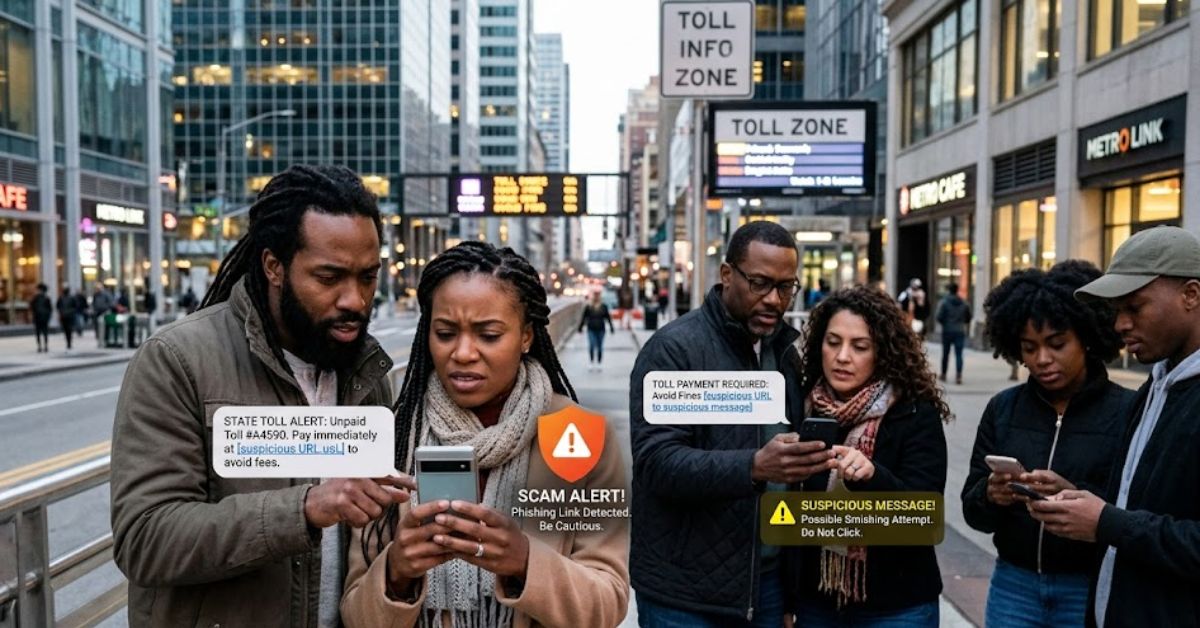
A toll scam text is a fraudulent message that pretends you owe unpaid road tolls and tries to trick you into paying or sharing personal details. These fake messages are part of a growing wave of mobile phishing attacks targeting drivers across the U.S. and beyond. In most cases, scammers impersonate systems like E-ZPass to appear legitimate.
This guide explains how these scams work, how to recognize fake toll messages, and how to protect yourself from financial and identity theft.
Key Takeaways
- A toll scam text is a form of SMS phishing (smishing) targeting drivers.
- Scammers impersonate toll agencies like E-ZPass or TxTag.
- Legitimate toll agencies never demand immediate payment via text links.
- Clicking links in these messages can lead to fake payment pages.
- Always verify toll charges through official websites or apps.
- Reporting suspicious messages helps reduce scam activity.
- Knowing how to identify fake messages prevents financial loss.
What Is a Toll Scam Text and Why Do Scammers Use It?
A toll scam text is a type of phishing message designed to create panic and urgency. It typically claims that you have unpaid toll charges and must pay immediately to avoid penalties.
Scammers use this method because many drivers regularly pass toll roads, making the message believable. They often copy branding from real systems such as TxTag scam messages or E-ZPass notifications to increase trust.
According to the Federal Communications Commission, these scams fall under “smishing,” which is SMS-based phishing used to steal sensitive data or money.
Why Are Toll Scam Messages So Dangerous?
These fraudulent messages are dangerous because they are designed to pressure users into acting quickly without verification.
Common risks include:
- Fake payment link scams that steal credit card data
- Identity theft through stolen personal information
- Malware downloads from malicious websites
- Unauthorized charges on financial accounts
The Federal Trade Commission warns that scammers often make these messages look nearly identical to official notices, making them harder to detect.
A toll scam text often uses urgency phrases like “final notice” or “pay immediately,” which is a major red flag.
How Can You Identify and Avoid Toll Scam Texts?
Learning how to spot a toll scam text is the most effective protection against fraud.
Warning Signs
- Unexpected message about unpaid tolls
- Suspicious or shortened links
- Urgent threats of fines or penalties
- Poor grammar or unusual wording
- Requests for personal or financial details
Safe Actions to Take
If you receive a suspicious message:
- Do not click any links
- Do not reply to the message
- Check your toll account directly
- Delete the message
- Report it as spam
Safe Verification Method
Always verify through official channels:
- Official toll websites
- Verified mobile apps
- Customer service phone numbers
This helps you avoid smishing toll scams and fake toll violation text messages.
What Do Fake Toll Scam Messages Look Like?
Understanding patterns helps you recognize fraud quickly.
| Feature | Legitimate Toll Message | Scam Message |
|---|---|---|
| Sender | Official agency | Unknown number |
| Link | Official domain | Suspicious URL |
| Tone | Informational | Threatening/urgent |
| Payment method | Secure portal | Instant link payment |
| Data request | None via SMS | Requests sensitive info |
A typical scam SMS payment request might say:
“You have an unpaid toll. Pay now to avoid extra charges.”
Real toll agencies do not operate this way.
What Mistakes Help Scammers Succeed?
People often fall victim due to small but critical mistakes:
- Clicking links without verifying
- Paying small “penalty” amounts
- Ignoring official account dashboards
- Trusting urgent language
- Not reporting suspicious messages
The FBI’s Internet Crime Complaint Center (IC3) encourages users to report suspicious messages to help track road toll fraud messages and other phishing text message scams.
What Are the Long-Term Risks of These Scams?
A toll scam text can lead to serious long-term consequences:
- Stolen identity used for financial fraud
- Damaged credit history
- Continued phishing attempts
- Loss of trust in mobile notifications
These scams continue to grow because they rely on mobile urgency and human error rather than technical hacking.
Conclusion: How to Stay Safe
A toll scam text is easy to avoid once you know what to look for. The key is to stay calm and always verify independently before taking action.
Remember:
- Never click unknown links
- Always verify through official sources
- Report suspicious messages immediately
- Be cautious of urgent payment demands
Staying alert is the most effective defense against fake toll violation text scams and broader phishing attacks.
Expert Insight
The Federal Communications Commission reports that SMS phishing attacks have become one of the fastest-growing mobile fraud methods in recent years. This reinforces the importance of recognizing a toll scam text before interacting with it.
FAQs
1. What is a toll scam text?
It is a fraudulent message claiming you owe unpaid tolls and trying to trick you into paying through fake links.
2. What should I do if I receive one?
Do not click or reply. Delete it and verify your toll account through official websites.
3. Are E-ZPass messages always scams?
No, but many fake E-ZPass scam text messages exist, so always verify before acting.
4. How do I report these scam messages?
Forward them to 7726 (SPAM) or report them to the FBI IC3 portal.
5. Can these scam links harm my phone?
Yes. They may lead to phishing pages or malware designed to steal personal data.
This article is part of our Avoid This Scam series, published by AskTheMoneyCoach.com to help you spot and avoid financial fraud.
Avoid This Scam™ is the consumer protection and scam awareness desk of AskTheMoneyCoach.com. We help readers recognize, avoid, and respond to financial scams, fraud, identity theft, deceptive business practices, and online threats.
Our coverage includes scam alerts, fraud prevention strategies, consumer advocacy, practical safety guides, and expert analysis designed to help individuals and families protect their money, personal information, and financial well-being. We also explain what to do if you’ve already been targeted, because knowing how to respond can be just as important as avoiding a scam in the first place.