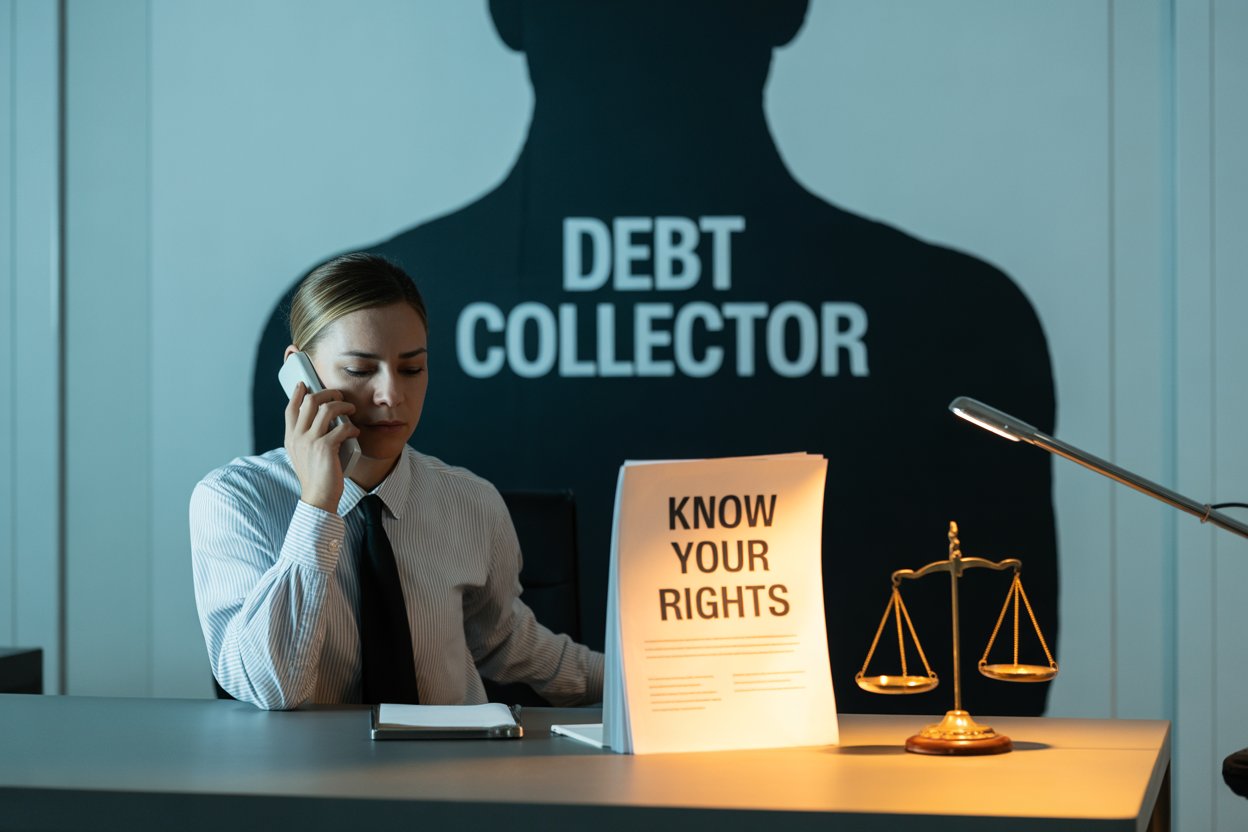
Your phone rings. You see a number you don’t know. Your heart starts to beat fast. You know who it is. It is a debt collector.
These callers can be very mean. They use big words to scare you. They want your money right now. But here is a secret: many things they say are just not true. They tell lies to make you pay fast. They hope you don’t know the rules.
At Ask The Money Coach, we want you to be the boss of your money. Knowing the truth is like having a shield. If a collector breaks the law, you might even be able to sue them and win $1,000! That is a big deal.
Let’s look at the six biggest lies these bullies tell and how you can stop the shakedown.
1. “Paying this today will fix your credit score instantly.”
This is a very common trick. The collector says that if you pay the bill today, your credit score will jump up tomorrow. They might say they will “erase” the bad mark from your report.
The Truth:
Paying a debt is good, but it does not work like magic. Most of the time, the “bad mark” stays on your credit report for seven years. Even if you pay it, it might just say “Paid Collection.” That is better than “Unpaid,” but it doesn’t always make your score go up right away.
The law that protects your credit is called the Fair Credit Reporting Act (FCRA). It says reports must be true. Collectors often don’t have the power to just “delete” things because you paid. They are just trying to get you to open your wallet.
2. “Just send me a post-dated check to show you are serious.”
A collector might say, “I know you don’t have the money today. Just send me a check dated for next Friday when you get paid.” They act like they are your friend. They act like they are trying to help you stay out of trouble.
The Truth:
Never, ever send a post-dated check. This is a trap! Once that collector has your check, they have your bank account numbers. Many collectors will cash that check immediately. They won’t wait until next Friday. If the check bounces, your bank will charge you a fee. Then the collector might use that “bad check” to scare you even more.
If you want to pay, use a money order or a pre-paid card. Never give them direct access to your main bank account. Keeping your bank info safe is a key part of affordable financial planning.
3. “We are going to call your boss and your family.”
This is one of the meanest lies. They tell you that they will call your employer. They say they will tell your boss you are a “deadbeat.” Or they say they will call your parents or neighbors to tell them about your debt. They want you to feel ashamed.
The Truth:
There is a law called the Fair Debt Collection Practices Act (FDCPA). This law says collectors cannot tell other people about your debt. They can only call your boss or family to ask for your phone number or where you live. They cannot say you owe money.
If they tell your boss you owe a debt, they are breaking the law. If they do this, you can report them to the Consumer Financial Protection Bureau (CFPB). You might even be able to get that $1,000 we talked about.
4. “We are going to garnish your wages tomorrow!”
The collector screams that they will take 25% of your paycheck starting tomorrow morning. They make it sound like they can just push a button and take your money.
The Truth:
In almost every case, a collector cannot just take your pay. They have to sue you in court first. They have to win the case. Then a judge has to sign a paper that says they can take your money. This takes a long time. It does not happen “tomorrow.”
If someone threatens to take your pay without a court order, they are lying. The only people who can take your pay without a court order are the government (for taxes or student loans) or for child support. For regular credit cards or medical bills, they must go to court first.
5. “I don’t have to prove you owe this money. You know you owe it!”
You might ask, “Can you show me a paper that proves I owe this?” The collector might get mad. They might say, “We don’t have to show you anything! Just pay the bill!”
The Truth:
This is a lie. You have a legal right to ask for “Debt Validation.” Under the FDCPA, if you ask for proof in writing within 30 days of their first call, they must stop calling you until they send you proof.
This proof should show:
- How much you owe.
- Who the original creditor was.
- A statement that says you have the right to dispute the debt.
If they can’t prove it, they can’t collect it. Sometimes, these companies buy old debts for pennies. They might not even have the right papers! Asking for proof is your best move.
6. “You are going to jail if you don’t pay.”
This is the scariest lie of all. They might say a police officer is on the way to your house. They might say there is a warrant for your arrest.
The Truth:
There is no such thing as “debtor’s prison” in the United States. You cannot go to jail just because you owe a credit card bill or a medical bill. It is not a crime to be broke.
The only way you could get in trouble with a judge is if you ignore a court order to show up for a hearing. But for the debt itself? No jail. If a collector mentions jail or the police, hang up immediately. They are breaking federal law by making that threat.
How to Stop the $1,000 Shakedown
Now you know the lies. But how do you fight back?
Step 1: Write it down.
Every time a collector calls, write down the date, the time, and what they said. If they lie or threaten you, that is evidence.
Step 2: Send a “Cease and Desist” letter.
You can tell a collector to stop calling you. You must do this in writing. Once they get your letter, they can only contact you to say they are stopping or to tell you they are suing you. No more annoying phone calls!
Step 3: Demand Validation.
Always ask for proof of the debt in writing. Do not do this over the phone. Send a letter via certified mail. This forces them to follow the rules.
Step 4: Report them.
If they tell any of the lies above, tell the FTC and the CFPB.
Step 5: Get your $1,000.
If a collector breaks the FDCPA rules, you can sue them. If you win, the collector has to pay you up to $1,000, plus they have to pay for your lawyer! This is the ultimate “Return on Investment” (ROI) for standing up for your rights.
Don’t Let Fear Win
Debt collectors want you to be afraid. Fear makes people do things without thinking. They want you to take money away from your rent or your food to pay them.
But you have power. You have rights. When you know the truth, the lies can’t hurt you. If you are struggling with many different bills, you might need a variable income budget system to help you see where your money is going.
Remember, you are more than a credit score. You are more than a debt. Use these tips to stay safe and keep your money where it belongs: with you and your family. For more help with your money journey, you can always check out the resources at Ask The Money Coach.
Stay strong, keep your records, and don’t believe the lies!
FAQs:
What are the most common debt collector lies?
Common debt collector lies include threats of jail, instant wage garnishment, false promises about credit score improvement, and refusal to provide debt proof.
Can a debt collector really have me arrested?
No, you cannot be arrested for unpaid consumer debt. Jail threats are illegal and should be reported immediately.
How do I verify if a debt is legitimate?
You can request a debt validation letter in writing. The collector must provide proof before continuing collection efforts.
What should I do if a debt collector violates the law?
Document the violation, report it to authorities, and consider legal action. You may be entitled to financial compensation.
Does paying a collection account remove it from my credit report?
No, paying a collection account updates its status but does not remove it. It can remain on your credit report for several years.