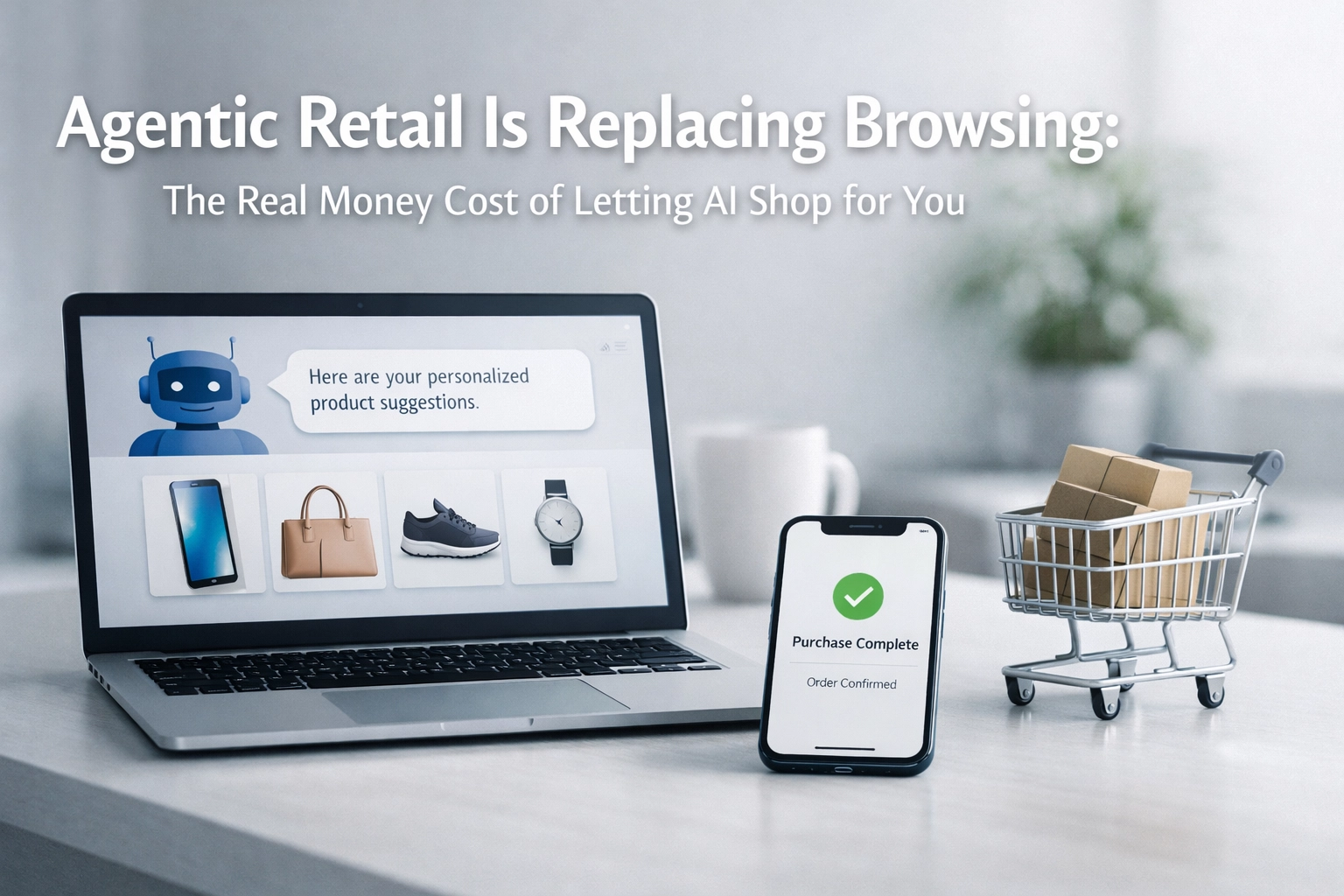
What happens to your spending habits when AI agents start making your purchasing decisions instead of you browsing and comparing products yourself?
Direct Answer
Agentic retail shifts shopping from human browsing to autonomous AI agents that research, compare, and purchase on your behalf. While this reduces friction and saves time, you trade direct price visibility and impulse control for automated convenience: potentially increasing total spending through faster checkout, personalized upsells, and reduced awareness of your actual purchase behavior.
Quick Answer
AI shopping agents automate the entire purchase journey, from research to checkout, which can save time but may increase spending by removing the natural friction that helps you evaluate whether you actually need something.

Why This Affects Your Money
According to PYMNTS research on agentic commerce, we’re witnessing a fundamental shift in how retail transactions occur. Traditional shopping required you to open a browser, search multiple sites, compare prices manually, read reviews, and then decide whether to complete the purchase. That multi-step process built in natural “cooling off” moments where you could reconsider impulse purchases.
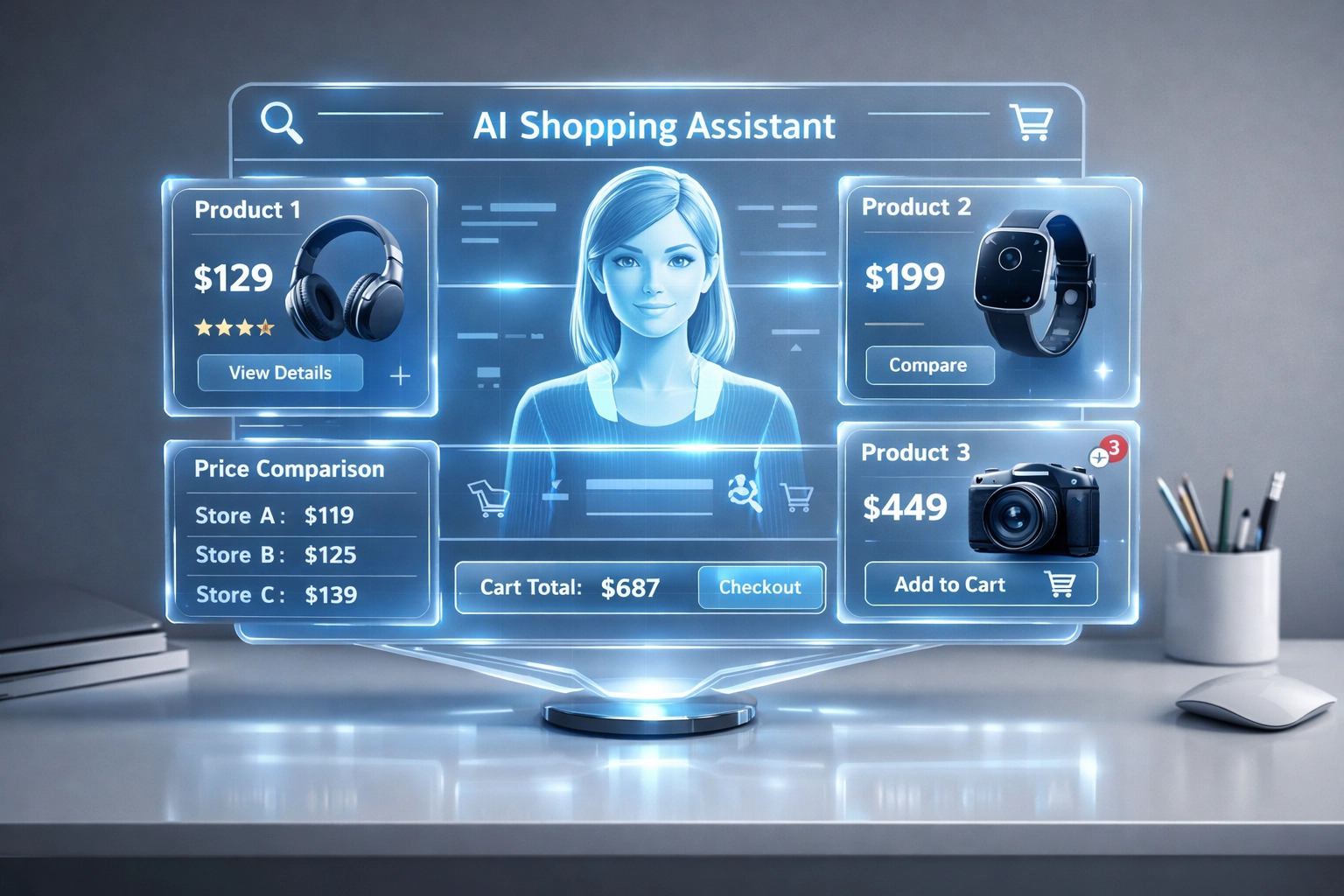
Agentic retail collapses that timeline. An AI agent receives your instruction (“find me running shoes under $120”), scans dozens of retailers in seconds, evaluates reviews, compares pricing, and completes the transaction: all without you seeing a product page or cart. You save 15-30 minutes per purchase, but you also lose the psychological checkpoints that prevented unnecessary spending.
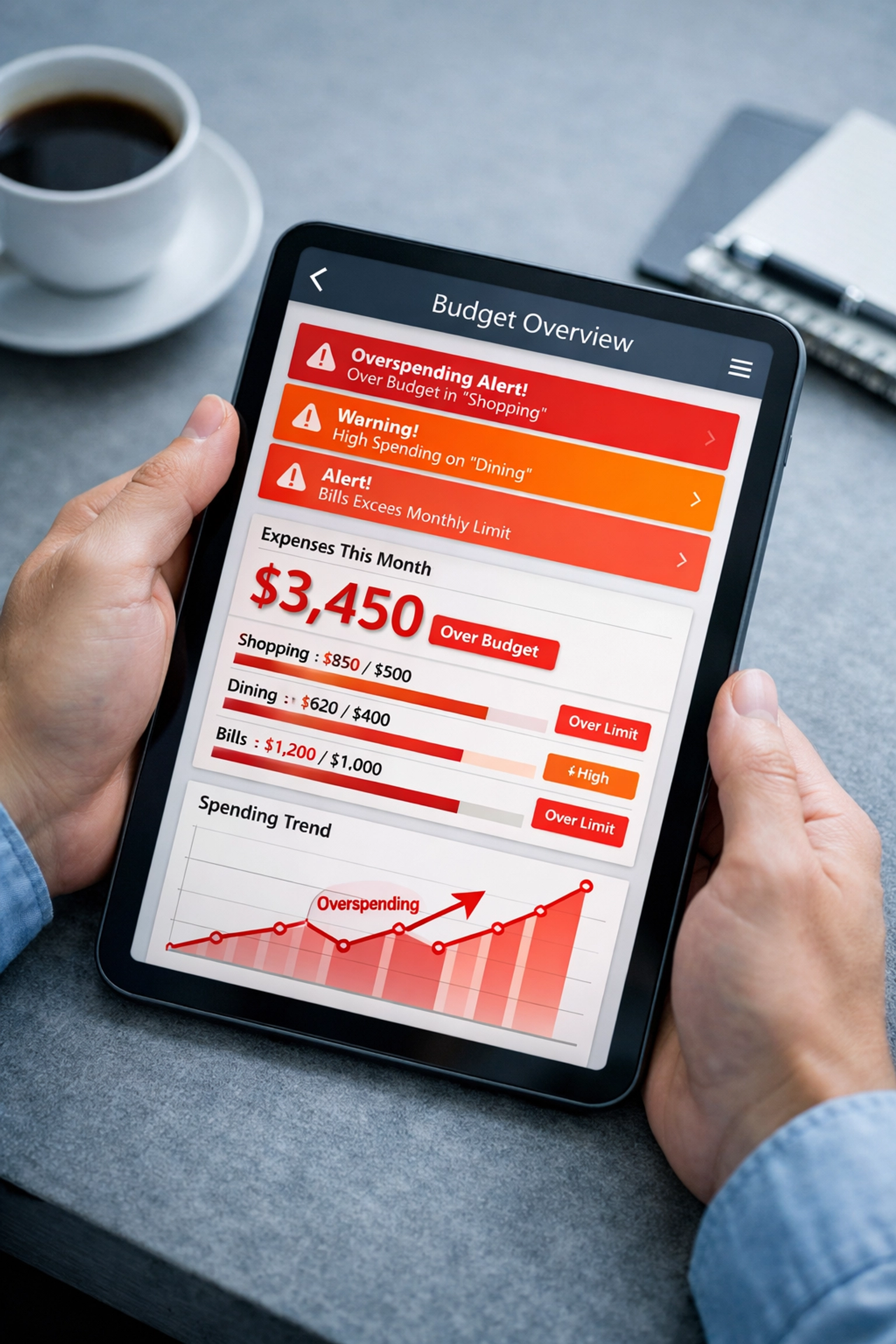
The financial impact compounds over time. If you currently make 20-30 online purchases per year, removing friction could increase that to 40-50 purchases with minimal additional effort. Even if each transaction saves you $5 through better price comparison, your total annual spending could rise by $800-1,200 simply because buying became effortless.
What Causes the Situation
The Technology Shift
PYMNTS identifies three key factors driving agentic retail adoption:
- AI capability advancement: Modern AI agents can now execute multi-step tasks that previously required human judgment: reading product specifications, interpreting reviews for context, and evaluating trade-offs between price and features.
- Retailer API integration: Major platforms are opening direct connections that allow AI agents to search inventory, check pricing, and complete transactions without human interface requirements.
- Consumer demand for convenience: Approximately 50% of consumers now express comfort with AI handling end-to-end transactions for routine purchases, particularly in categories like groceries, household supplies, and recurring subscriptions.
The Behavioral Economics
You’re wired to feel purchasing friction as protective. When you manually add items to a cart, review the total, and enter payment information, your brain registers each step as a small commitment decision. That friction isn’t a bug: it’s a feature that prevents regret purchases.
Agentic retail removes those decision points. Your agent operates on standing instructions (“keep household supplies stocked,” “replace worn clothing items”), which sounds efficient but eliminates the moment-by-moment awareness of what you’re actually spending.
Financial Risk
Loss of Price Anchoring
When you browse manually, you develop price anchors: mental reference points for what items should cost. You know a good deal on coffee because you’ve seen the price range across multiple sites. AI agents optimize for your stated preferences (speed, quality, availability) but may not prioritize absolute lowest price if it conflicts with other factors. Over time, you lose calibration on fair market value.
Personalized Upselling at Scale
PYMNTS notes that agents learn your preferences and purchase history, which sounds beneficial but creates vulnerability. An agent that knows you buy premium versions of products can be targeted by retailers with higher-margin recommendations. You won’t see the standard version comparison: the agent pre-filters based on your pattern, potentially steering you toward more expensive options that technically match your profile.
Subscription Creep
The most dangerous scenario: agents that auto-renew, auto-upgrade, or auto-purchase without requiring your active approval for each transaction. A $12/month subscription becomes $18/month after an auto-upgrade your agent approved based on “usage patterns,” and you don’t notice until reviewing your statement weeks later.
Data Trade-Off Costs
To function effectively, agents require access to your browsing history, purchase records, budget parameters, and preference data. That information has value. Retailers and platforms offering “free” agent services are monetizing your data through targeted advertising, affiliate commissions, or preference insights sold to manufacturers. You’re paying, just not with dollars upfront.
What To Check or Do
Set Hard Spending Limits
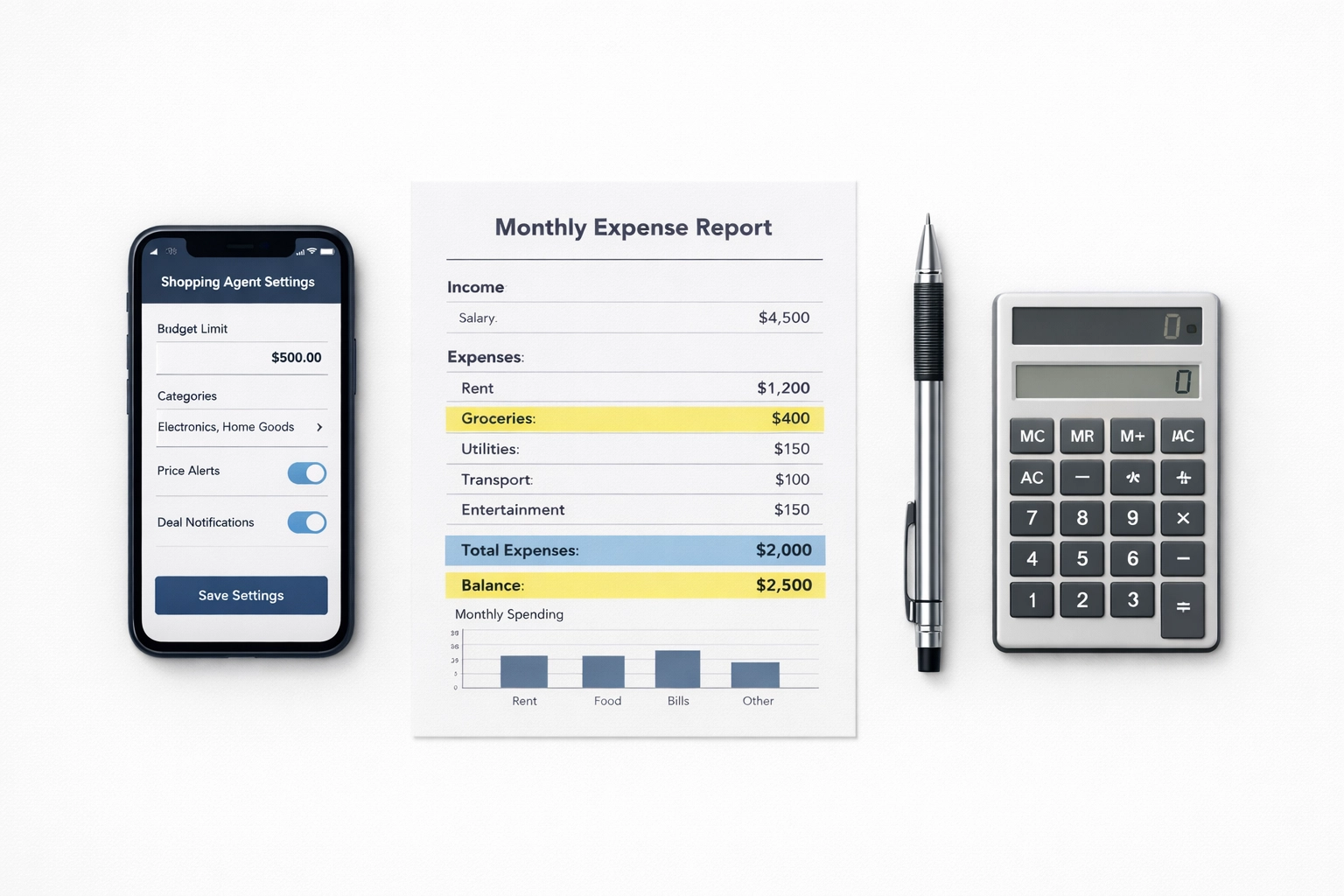
Before activating any AI shopping agent, establish dollar-amount caps:
- Per-transaction limit: No single purchase over $X without your explicit approval (start with $50-75)
- Weekly spending cap: Total agent-initiated purchases cannot exceed $X per week
- Category restrictions: Specify which product categories the agent can access (groceries and household supplies only, not electronics or clothing)
Most agent platforms allow these controls in settings: if yours doesn’t, that’s a red flag about whose interests the agent serves.
Require Purchase Previews
Configure your agent to send you a summary before completing any transaction:
- Item being purchased
- Price comparison (at least 3 options)
- Total cost including fees and shipping
- Estimated delivery date
You should have 30-60 minutes to approve or cancel. This reintroduces deliberate friction without eliminating the agent’s research value.
Monthly Transaction Audits
Block 20 minutes at month-end to review every agent-initiated purchase:
- Did you actually need the item?
- Could you have waited for a better price?
- Were there lower-cost alternatives the agent didn’t present?
- Which purchases would you not have made if browsing manually?
Track the “agent impulse” percentage: purchases you wouldn’t have made without the automation. If it exceeds 15-20% of agent transactions, tighten your spending controls.
Compare Agent vs. Manual Pricing
Once per quarter, select 5-10 items your agent purchased and manually shop for the same products. Compare:
- Price paid vs. lowest available price at time of purchase
- Shipping costs (agents may optimize for speed over cost)
- Quality of product match (did the agent select the exact item you would have chosen?)
If your agent consistently misses better deals, adjust its optimization parameters or switch to manual shopping for high-value categories.
Simple Decision Rule
Use AI agents for routine, low-value purchases where convenience outweighs price sensitivity (household supplies, groceries, recurring subscriptions under $25/month). Require manual approval for any purchase over $50, any new product category, or any transaction that modifies a subscription. Review all agent activity monthly and immediately disable any agent that makes unapproved purchases or exceeds your spending limits.
FAQs
How do AI shopping agents make money if they’re free?
Most free AI shopping agents earn through affiliate commissions, sponsored placements, advertising partnerships, or monetizing aggregated shopping data. Paid agents may reduce these conflicts by charging subscription fees.
Can AI shopping agents negotiate better prices?
Most consumer purchases are fixed-price. AI agents can compare retailers, monitor sales, and optimize timing, but true price negotiation is rare outside marketplace-style platforms.
What happens if my AI agent makes an unapproved purchase?
In many cases, the agent operates under your authorization. You may be responsible unless it violated preset controls. Dispute through the retailer, platform support, or your credit card provider if necessary.
Should I use separate AI agents for different purchase categories?
Using specialized agents for groceries, subscriptions, or electronics can improve accuracy and reduce overspending. Category-specific limits also add protection.
Can agentic retail help me stick to a budget?
It can—if you configure strict caps and require approvals. Without spending controls, agentic retail may increase transaction frequency and total annual spending.