
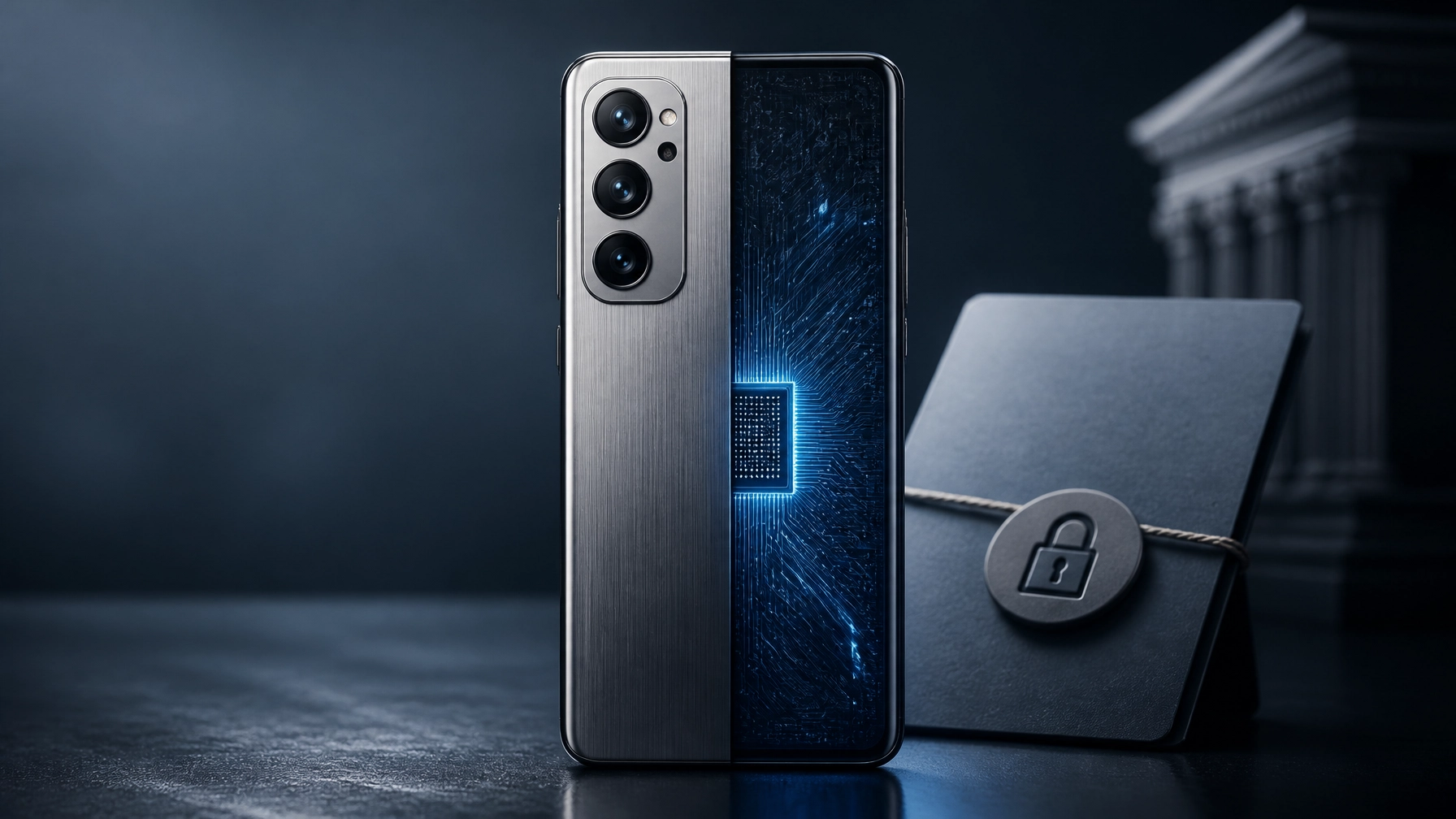
Apple vs. OpenAI are fighting in federal court over allegations that confidential Apple hardware information was taken and used after former Apple employees joined OpenAI.
The dispute is not just about corporate lawyers and engineering files. It could influence who designs the hardware behind future consumer AI products, how quickly new features reach phones, and how companies protect sensitive information when employees move between competitors.
The case remains pending. Apple’s claims are allegations, not proven facts. OpenAI denies wrongdoing and is asking the court to dismiss the lawsuit.
What changed
In an August 31 filing, Apple asked the U.S. District Court for the Northern District of California to allow expedited discovery, which would let Apple investigate evidence earlier than it normally might in a lawsuit.
Apple says forensic analysis of a MacBook used by former engineer Chang Liu revealed that:
- Liu allegedly accessed and downloaded a confidential Apple circuit schematic after joining OpenAI.
- The file allegedly described a power-converter circuit and included simulation data.
- The file was used in LTspice, an electrical engineering tool for modeling circuit performance.
- The resulting simulation files were allegedly created on another computer, a Mac Mini, and later synchronized through iCloud to the MacBook.
- Messages allegedly showed Liu training an AI agent to run LTspice simulations, review results, and adjust technical parameters.
- Apple further alleges that Liu knew his access to Apple’s cloud storage was unauthorized.
- Apple says Liu later discussed restoring Apple-issued devices after learning about an internal investigation, which Apple characterizes as a risk to forensic evidence.
- Apple also alleges that Liu used a tool and related software packages with names matching internal Apple engineering tools.
The filing is part of a larger lawsuit involving OpenAI, Liu, former Apple design executive Tang Yew Tan, and OpenAI’s hardware subsidiary.
Apple is using the newly described evidence to argue that its concerns are specific and urgent, rather than a broad attempt to search through OpenAI’s systems without a clear target.
Why it matters
1. The dispute reaches beyond software
Many people think of AI competition as a contest between chatbots and applications. The next stage is increasingly about devices, chips, sensors, batteries, power management, and industrial design.
A circuit schematic may sound distant from everyday life. In practice, power-conversion technology can affect how efficiently a device uses electricity, how long a battery lasts, how much heat it produces, and how much performance can be delivered in a compact product.
That means a fight over confidential hardware information could eventually affect:
- Battery life
- Device thickness and weight
- Charging performance
- On-device AI capabilities
- Product launch timing
- Manufacturing costs
- The price consumers pay for new hardware
Nothing in the current public filings establishes that Apple information was incorporated into a shipping OpenAI product. That question is one reason Apple wants access to additional devices, accounts, and company records.
2. AI changes the evidence question
Apple’s filing places unusual emphasis on the alleged use of an AI agent.
An AI agent is a system that can carry out a sequence of tasks, such as opening software, running a simulation, reviewing the output, and adjusting settings. In this case, Apple says Liu’s messages described an agent learning to run LTspice and tune circuit parameters.
The important issue is not that AI was involved by itself. LTspice is a conventional circuit simulation program, not an AI model. The concern is whether confidential information was placed into an automated workflow and whether the workflow generated new files or outputs based on that information.
Apple argues that if trade-secret information is used to train or guide an AI system, it may be difficult to identify every copy or derivative output later. That is an allegation about potential harm, not a court finding that this occurred here.
For consumers, the broader lesson is clear: AI systems can make information move faster and become harder to track. Companies will likely respond with tighter controls over what employees can upload to AI tools, which devices may access confidential files, and how departing workers’ accounts are closed.
3. Partnerships may become more complicated
Apple has used outside partners, suppliers, and specialized contractors for years. OpenAI is also building relationships as it moves toward consumer hardware.
If the lawsuit leads to court restrictions, settlement terms, or a breakdown in cooperation between the companies, future partnerships could change. Possible outcomes include:
- More work being kept inside each company
- Additional screening for employees moving between technology firms
- Delays while teams review hardware designs and data histories
- Greater separation between AI software suppliers and device manufacturers
- More restrictive contracts for engineers and executives
These changes may improve security, but they can also raise development costs. Companies generally pass some combination of higher compliance costs, slower development, or duplicated research into their products and budgets.
In real life
Should you delay buying your next iPhone?
Not because of this lawsuit alone.
The case does not currently establish that a specific iPhone model will be delayed, canceled, or redesigned. It also does not establish that a current Apple product contains OpenAI trade secrets.
If you are deciding whether to replace a phone, focus on practical factors:
- Is your current device secure and receiving software updates?
- Is the battery failing or affecting your work?
- Will a new AI feature save you meaningful time?
- Does the purchase fit your budget without increasing credit card debt?
- Would a less expensive model meet your needs?
A useful approach is to separate a technology purchase from the excitement surrounding a legal dispute. If the next device offers features you genuinely need, compare the total cost with alternatives. If your current phone works well, waiting may provide more information about product availability and AI partnerships.
Our guide to values-based spending can help you decide whether an expensive technology upgrade supports your actual priorities.
What about privacy and security?
The lawsuit also highlights the importance of information security in products that combine cloud AI with personal devices.
When AI features depend on outside servers or partners, your information may travel through more systems than it would with a fully on-device feature. That does not automatically make a product unsafe, but it makes the company’s privacy policies, data retention practices, and security controls more important.
Consumers should watch for:
- Whether processing occurs on the device or in the cloud
- What data is stored and for how long
- Whether users can opt out of data sharing
- Which company receives voice, image, location, or message data
- Whether AI features require a paid subscription
These questions matter for both privacy and household cash flow. A phone may appear affordable at checkout but become more expensive if key AI features require a monthly plan.
For related context, see our coverage of AI and credit scores, which examines how artificial intelligence is increasingly entering financial decisions.
Watch
The next major procedural date is October 1, 2026, when Judge Edward J. Davila is scheduled to hear arguments related to the case.
Readers should watch for four developments:
- Whether expedited discovery is granted. This could give Apple earlier access to additional devices, accounts, communications, and technical records.
- Whether OpenAI’s dismissal request succeeds. A dismissal could narrow or end some claims. If the case continues, discovery may reveal more about what information was accessed and how it was used.
- Whether the court orders restrictions on hardware or AI development. Such orders could affect project timelines, though no current filing establishes that a consumer product will be blocked.
- Whether Apple and OpenAI change their partnership strategy. A prolonged dispute could push both companies toward more independent development or more formal safeguards around employee transfers and data access.
The financial impact may be indirect. Product delays can affect upgrade decisions, trade-in values, and the useful life of an existing device. For households planning a large technology purchase, maintaining a cash cushion is more valuable than trying to predict a court outcome. Our financial resilience planning resource offers a framework for handling uncertain expenses.
FAQs: Apple vs. OpenAI
What is Apple accusing OpenAI of doing?
Apple alleges that former employees took confidential Apple hardware and engineering information after joining OpenAI and that some of the information was used in OpenAI-related work. OpenAI denies the allegations.
Has a court found that OpenAI stole Apple trade secrets?
No. The case is pending, and the allegations have not been proven in court.
What is a trade secret?
A trade secret is confidential business information that has economic value because it is not generally known and that a company takes reasonable steps to protect. Examples can include designs, manufacturing methods, supplier information, or technical processes.
What is LTspice?
LTspice is an electrical engineering program used to model and analyze circuit behavior before a physical product is built. It is not itself an AI system.
What is an AI agent?
An AI agent is software designed to complete a sequence of tasks with limited step-by-step direction. In this case, Apple alleges that Liu described an AI agent running simulations, reviewing results, and adjusting parameters.
Could this lawsuit delay a future iPhone?
It is possible that litigation could affect development decisions or partnerships, but there is no current evidence establishing that a particular iPhone will be delayed because of this case.
Should consumers wait before buying an iPhone?
There is no universal answer. Consider your current phone’s security, battery health, performance, and replacement cost. Do not make a major purchase based only on speculation about an unresolved lawsuit.
Could this affect AI features on Apple devices?
Potentially. If Apple changes relationships with AI partners or increases internal development, some features could be redesigned, delayed, or moved on-device. The case does not currently confirm a specific change.
What is expedited discovery?
Expedited discovery is an early information-gathering process that a court may allow before the normal schedule when evidence could be lost or an urgent issue requires investigation.
Why are departing employees’ devices important?
Devices may contain access logs, file histories, messages, metadata, and copies of documents. Those records can help establish what information was accessed, transferred, or used.
What should consumers look for in AI phone features?
Review where data is processed, what is stored, whether users can opt out, which company receives the information, and whether advanced features require a subscription.

AskTheMoneyCoach Staff is the collective byline for our editorial team. Founded by Lynnette Khalfani-Cox, The Money Coach®, and Earl Cox, AskTheMoneyCoach.com publishes practical, research-informed guidance on credit, debt, saving, consumer protection, and everyday money decisions. Our work follows the site’s editorial standards and helps readers understand their options and make informed choices.