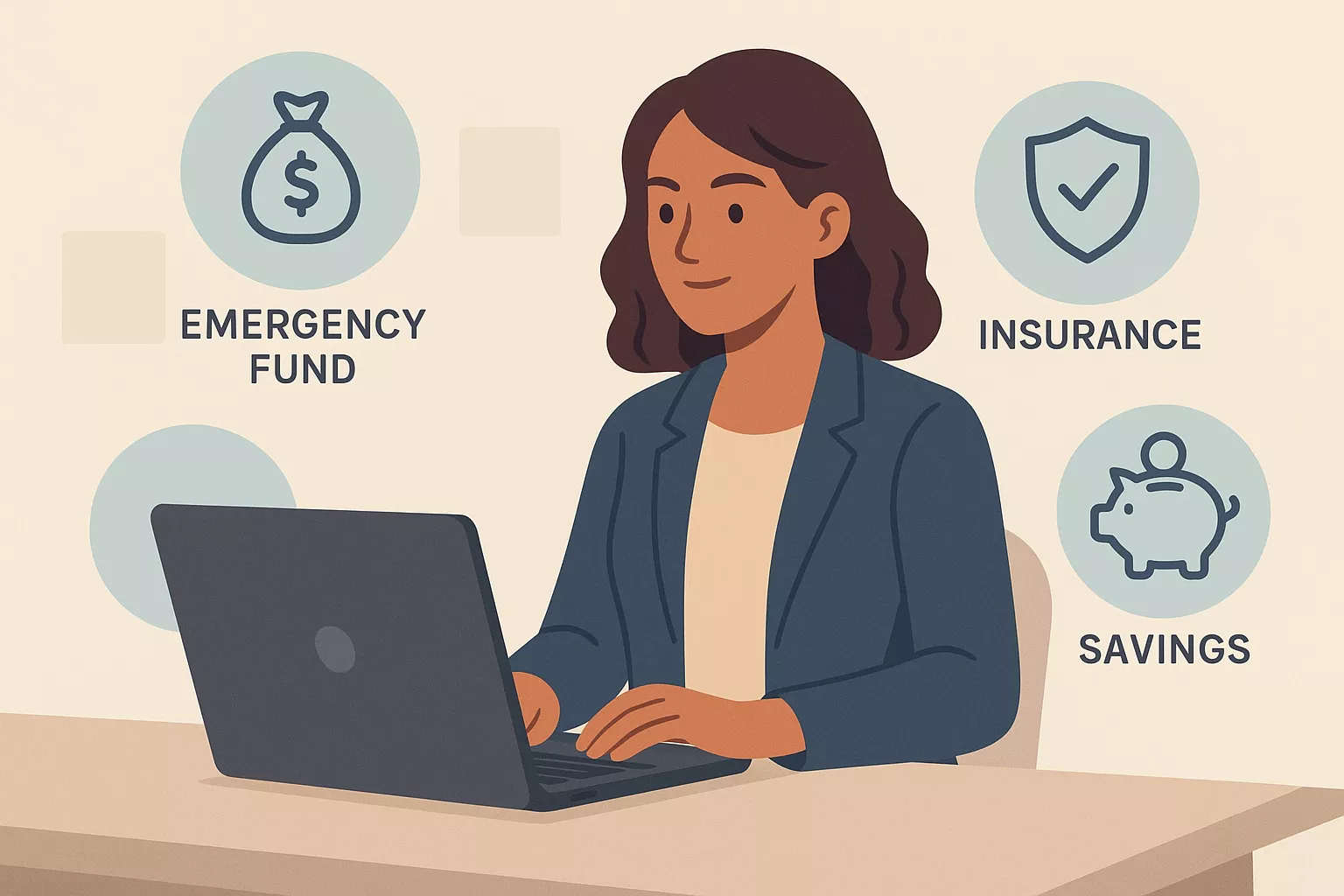
Financial resilience planning is one of the most important skills you can develop in 2025 as economic uncertainty, rising costs, and financial stress continue to impact millions of households. It helps you prepare for unexpected setbacks while still working toward your long‑term goals.
In this guide, you’ll learn what financial resilience means, why it matters, and the exact steps to build a strong, flexible financial safety system.
Key Takeaways
-
Financial resilience planning helps you handle financial shocks without losing long-term progress.
-
Key pillars include savings, budgeting, debt management, insurance, and diverse income sources.
-
Building an emergency fund is central to becoming financially resilient.
-
SMART goals and regular check-ins improve long-term stability.
-
Strong financial habits matter more than high income.
-
Insurance coverage and access to financial services prevent large losses.
-
Resilience is ongoing — not a one-time effort.
What Is Financial Resilience Planning?
Financial resilience planning refers to building the ability to withstand financial setbacks, recover quickly, and continue toward your goals without major disruption. It is not about avoiding challenges — it’s about being prepared for them.
Financial Resilience Definition
According to the Consumer Financial Protection Bureau (CFPB), financial resilience means having the capacity to absorb a financial shock and bounce back. This includes savings, supportive resources, and reliable financial tools.
Core Elements of Resilience
A strong financial resilience plan includes:
-
Accessible savings
-
Stable income sources
-
Low or manageable debt
-
Practical budgeting habits
-
Supportive social and financial networks
-
Adequate insurance protection
Together, these build long-term financial strength.
Why Does Financial Resilience Planning Matter?
Financial resilience planning matters because life is unpredictable. Job loss, medical bills, home repairs, and economic downturns can happen without warning.
Rising Financial Vulnerability
Studies from the Federal Reserve show that 37% of adults cannot cover a $400 emergency without borrowing, highlighting the need for stronger financial safety nets.
Protecting Long-Term Goals
Resilience planning helps you:
-
Avoid going into debt during emergencies
-
Stay on track with retirement goals
-
Reduce stress and make smarter decisions
-
Maintain stability regardless of economic conditions
When unexpected expenses arise, you remain steady instead of scrambling.
How Do You Build a Strong Financial Resilience Plan?
Financial resilience planning requires a clear structure. Here is a proven, step-by-step approach.
Step 1 — Assess Your Current Financial Health
Start by reviewing your:
-
Cash flow
-
Savings balance
-
Debt levels
-
Insurance coverage
-
Spending habits
Use a simple financial snapshot to identify risks.
Step 2 — Set SMART Financial Goals
SMART goals are:
Specific, Measurable, Achievable, Relevant, Time-bound
Examples include:
-
“Save $1,000 for emergencies in 90 days.”
-
“Pay off $2,500 in credit card debt in 6 months.”
-
“Build a 3‑month emergency fund in 18 months.”
Step 3 — Build or Strengthen Your Emergency Fund
Emergency savings protect you from unexpected expenses such as car repairs, job loss, or medical bills.
Recommended amounts:
-
Beginner: $1,000
-
Standard: 1–3 months of expenses
-
Fully Resilient: 6 months+
Keep the money in a high-yield savings account for easy access.
Step 4 — Use a Flexible Budgeting System
A resilient budget adjusts with you. Popular budget types:
-
50/30/20 budget (simple and balanced)
-
Zero-based budget (intentional and detailed)
-
Reverse budgeting (saves first, spends after)
Choose the version that best matches your personality.
Step 5 — Manage Debt Strategically
High-interest debt reduces resilience.
Use:
-
Avalanche method to minimize interest
-
Snowball method to build motivation
Lowering debt increases the money you can save.
Step 6 — Diversify Your Income
Additional income streams improve stability. Examples:
-
Freelancing
-
Consulting
-
Tutoring
-
Selling digital products
-
Gig work
Even an extra $200–$400/month increases resilience significantly.
Step 7 — Strengthen Insurance Protection
Insurance protects your finances from major losses. Review coverage for:
-
Health
-
Auto
-
Home or renters
-
Disability
-
Life
Good insurance reduces the financial impact of unexpected events.
Step 8 — Review Your Plan Regularly
Financial resilience is an ongoing process.
Review your plan:
-
Monthly (basic money overview)
-
Quarterly (progress check)
-
Annually (full financial refresh)
This ensures your plan evolves with your life.
What Are Examples of Financial Resilience Planning?
Below is a simple comparison table showing common approaches:
| Resilience Technique | Difficulty | Impact Level | Description |
|---|---|---|---|
| Emergency fund | Medium | High | Protects from unexpected costs |
| Debt payoff plan | Medium | High | Reduces vulnerability to interest |
| Insurance review | Easy | High | Shields finances from major risks |
| Budget optimization | Medium | Medium | Improves control and reduces stress |
| Income diversification | Hard | High | Expands stability and flexibility |
These tools work best when used together.
What Mistakes Should You Avoid in Financial Resilience Planning?
Mistake 1 — Only Saving Without Managing Debt
Debt can quickly erase your progress if ignored.
Mistake 2 — Not Having Accessible Savings
Investments are not a replacement for an emergency fund.
Mistake 3 — Using an Overly Rigid Budget
Strict budgets break easily. Flexible systems last longer.
Mistake 4 — Forgetting to Review Insurance
Underinsurance can lead to major out-of-pocket costs.
Mistake 5 — Treating Resilience as a One‑Time Task
Your financial life changes — your plan must change with it.
What Are the Long-Term Benefits of Financial Resilience Planning?
Emotional Stability & Confidence
Knowing you can handle setbacks reduces stress and worry.
Stronger Long-Term Progress
Resilience supports:
-
Retirement saving
-
Homeownership goals
-
Career transitions
-
Education plans
Improved Daily Money Decisions
With a solid base, you make decisions from confidence, not fear.
Conclusion + Next Steps
Financial resilience planning gives you the structure and confidence to handle financial challenges without losing momentum. By building emergency savings, staying insured, managing debt, and reviewing your financial health regularly, you create long-term stability that adapts with your life.
Your next step is to assess your current financial risks and start improving one pillar at a time.
FAQs
What does financial resilience mean?
Financial resilience means being able to handle financial shocks without major hardship or long-term setbacks.
What is resilience planning in finance?
Resilience planning is preparing for unexpected expenses or income changes through savings, insurance, budgeting, and strong money habits.
What is a financial resilience plan example?
A simple resilience plan includes an emergency fund, debt payoff strategy, budget, insurance review, and income diversification.
What does it mean to be financially resilient?
Being financially resilient means you can recover quickly from financial setbacks and stay on track with your goals.
What are financial resilience savings plans?
These are structured savings strategies designed to protect you from emergencies, income loss, or major expenses.

Abdul Qadeer is a freelance writer and SEO assistant for AskTheMoneyCoach.com, the award-winning financial education platform founded by Lynnette Khalfani-Cox, also known as The Money Coach.
He collaborates closely with Lynnette and the editorial team to produce accurate, actionable content focused on personal finance, credit, and wealth-building strategies.
Abdul combines his SEO expertise with a passion for financial literacy to help readers make smarter money decisions and discover trusted financial resources.