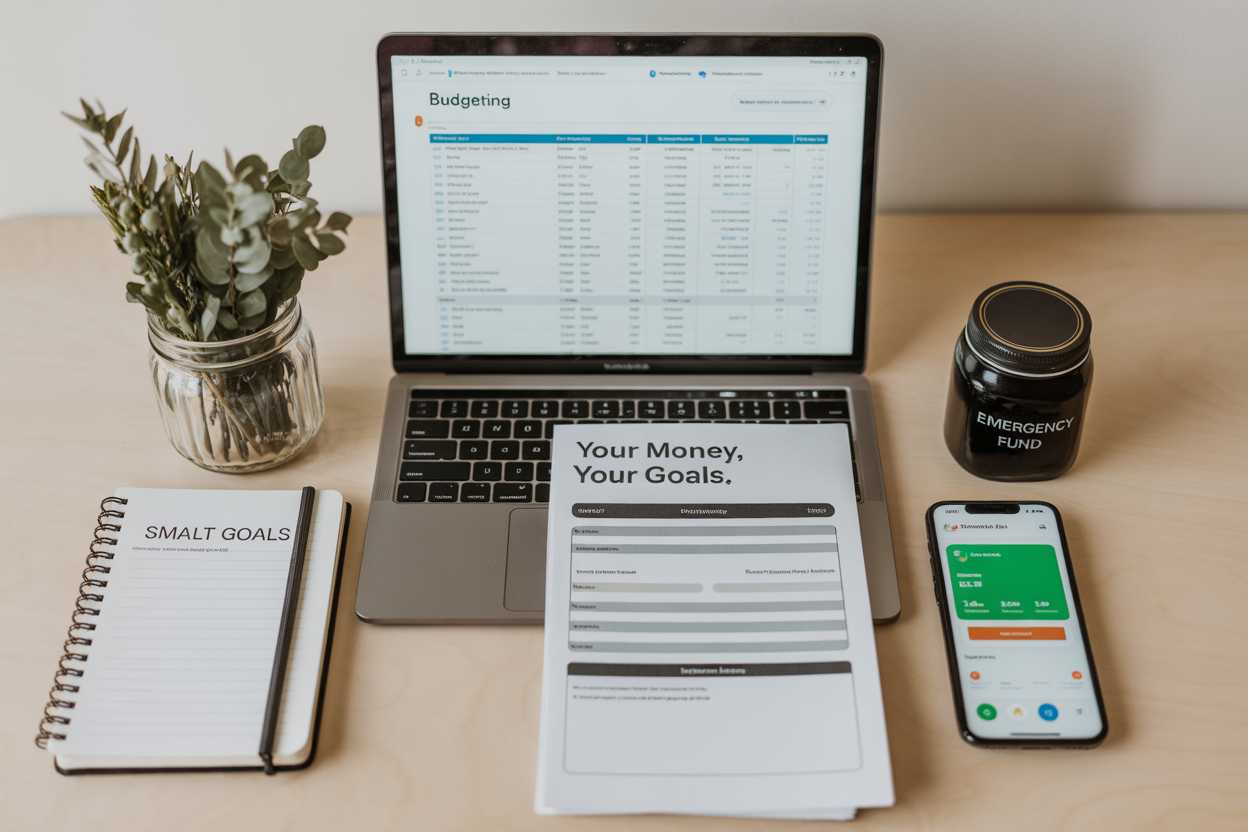
Beginner financial literacy toolkit is the essential starter pack for anyone learning how to budget, save, borrow, and protect money. This guide collects the most reliable free resources, a simple checklist, and clear steps so you can build confident money habits. Read on to learn what to include, where to find government-backed toolkits, and the exact steps to get started.
Key Takeaways
-
A Beginner financial literacy toolkit focuses on five basics: earn, spend, save, borrow, and protect.
-
Use government toolkits like Your Money, Your Goals and Money Smart for trusted, fillable handouts.
-
Start with a simple 50/30/20 or zero-based budget and a $500–$1,000 emergency fund.
-
Regularly use a short financial literacy checklist and an assessment tool to measure progress.
-
Protect your identity, understand credit scores, and avoid high-cost borrowing.
-
Free, authoritative resources live at MyMoney.gov and federal agency toolkits.
-
Most adults still lack multi-month emergency savings — strengthening the need for a toolkit.
What is a Beginner financial literacy toolkit?
A Beginner financial literacy toolkit is a curated set of educational materials, simple worksheets, and actionable checklists that teach core money skills. Typical contents include budgeting templates, goal-setting worksheets, a savings plan, a credit and debt guide, and identity-protection tips. These toolkits are designed to be practical — fillable PDFs, short exercises, and hands-on checklists you can finish in one session.
Many government and nonprofit programs publish ready-to-use kits to make learning fast and trustworthy. For example, the CFPB’s “Your Money, Your Goals” offers 43 fillable handouts designed for frontline educators and learners.
Why does a Beginner financial literacy toolkit matter?
A starter toolkit closes the gap between knowing and doing. It breaks financial topics into bite-size actions (track, plan, act) so beginners build momentum. Data shows a meaningful share of adults remain vulnerable to small emergencies — having a plan and savings improves resilience. According to the Federal Reserve, a majority of adults can cover a $400 emergency now, but multi-month savings are still limited — showing the need for basic financial skill building.
Quick benefits: improved day-to-day money control, faster emergency-prep, lower high-cost borrowing, and a clearer path to goals like education, a car, or a home.
How to build and use your Beginner financial literacy toolkit
Follow this simple, repeatable process to assemble a toolkit you’ll actually use.
Step 1: Gather core templates and PDFs
-
Download a budgeting spreadsheet (or use a 50/30/20 fillable worksheet).
-
Grab the CFPB “Your Money, Your Goals” handouts for goal-setting and savings.
Step 2: Complete a short financial literacy assessment
-
Use a one-page self-check: Can I list monthly income? Do I track spending weekly? Do I know my credit score access method? Repeat quarterly. (See recommended financial literacy assessment tool links below.)
Step 3: Create an emergency plan and savings habit
-
Start with a small emergency fund ($500–$1,000) then aim for 3 months of expenses. Set an automatic transfer to “pay yourself first.”
Step 4: Learn credit basics and avoid traps
-
Read a short guide on interest and minimum payments. Use the toolkit’s credit worksheet to model a repayment plan.
Step 5: Protect and review
-
Add identity safety tips and a fraud checklist. Schedule a 15-minute monthly review of the toolkit.
What resources should be in the toolkit? (Examples & table)
Below is a compact comparison of top free toolkits and what they include.
| Resource | Best for | Format | Quick use |
|---|---|---|---|
| CFPB — Your Money, Your Goals | Practical handouts & caseworker use | 43 fillable PDFs | Use as weekly worksheets. Consumer Financial Protection Bureau |
| FDIC — Money Smart | Classroom modules and self-paced lessons | Curriculum + online modules | Follow 1 short module a week. |
| MyMoney.gov | One-stop federal resources | Links, games, videos | Use for background reading and youth resources. |
| Federal Reserve reports | Data & resilience benchmarks | Reports and tables | Refer for trusted statistics (savings rates). |
What common mistakes should beginners avoid?
-
Skipping assessment: Not measuring progress makes habit-building slow.
-
Overcomplicating budgets: Too many categories kill consistency — start simple.
-
Ignoring emergency funds: Relying solely on credit increases long-term costs.
-
Chasing high-yield without safety: Don’t risk emergency cash for small extra returns.
-
Using unverified sources: Prefer government or nonprofit toolkits over random blogs. (See CFPB, FDIC, MyMoney.gov.)
How does a Beginner financial literacy toolkit help long-term?
Over time, a toolkit converts one-off learning into repeatable systems: monthly budgeting becomes forecasting, small savings builds a safety net, and consistent credit habits improve scores. These outcomes translate to lower borrowing costs, better housing and job prospects, and less lifetime financial stress. National education efforts such as MyMoney.gov exist precisely to scale those long-term benefits.
Conclusion — What to do next
Start today by downloading one fillable worksheet (budget or savings) and completing a short self-assessment. Keep the Beginner financial literacy toolkit in a single folder (digital or printed) and commit to a 10–15 minute monthly review. Use the CFPB and FDIC resources for credible, free materials.
Expert insight or statistic
The Federal Reserve’s annual reports show that while many adults can manage small emergencies, fewer have savings to cover several months — reinforcing that a basic toolkit and emergency plan remain essential.
FAQs:
What is the easiest way to start a Beginner financial literacy toolkit?
Begin with one budget worksheet and one savings goal; complete a 5-question assessment and set one automatic transfer to savings.
Where can I download fillable toolkits for free?
Download the CFPB “Your Money, Your Goals” PDFs and FDIC Money Smart modules — both are free and fillable.
How often should I use the financial literacy assessment tool?
Use a short assessment every 3 months to track improvements and adjust goals.
Can a toolkit help improve my credit score?
Yes — by helping you pay bills on time, reduce credit utilization, and plan repayments, a toolkit can support better credit behavior.
Is the Beginner financial literacy toolkit only for adults?
No — many toolkits offer youth modules and family-friendly activities to start money education early.