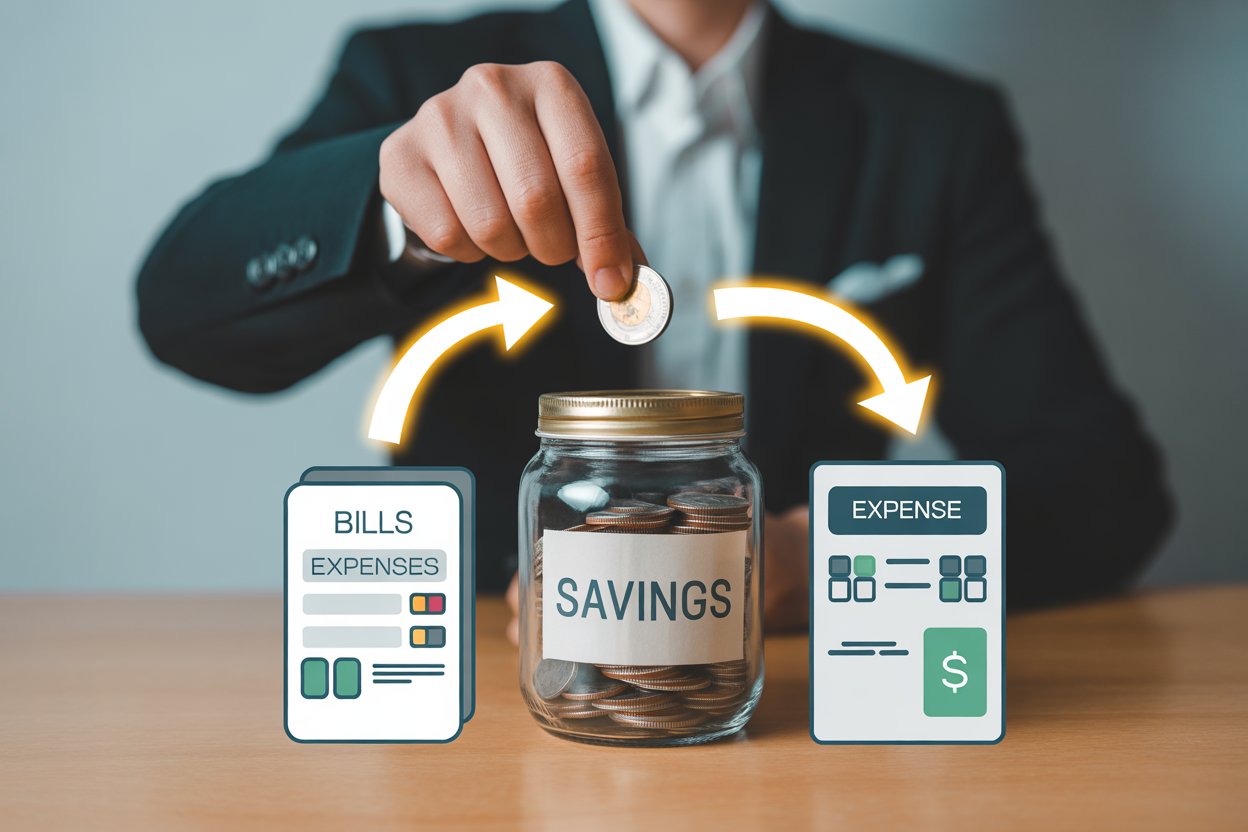
The pay yourself first method is a powerful savings strategy that prioritizes setting aside money for your future before spending on bills or discretionary expenses. By automating savings, this approach ensures you steadily build wealth and achieve financial goals like emergency funds, retirement, or investments. In this article, you will learn how the pay yourself first method works, its benefits, common mistakes, and practical examples to apply immediately.
Key Takeaways
-
The pay yourself first method requires saving a fixed portion of income before other expenses.
-
Automating savings ensures consistency and financial discipline.
-
This method simplifies budgeting and reduces financial stress.
-
Prioritizing savings builds long-term wealth and emergency security.
-
Common mistakes include underestimating expenses or skipping the saving percentage.
-
You can apply this strategy to retirement accounts, emergency funds, or investment accounts.
-
Even a small consistent percentage, like 10%, compounds significantly over time.
What Is the Pay Yourself First Method?
The pay yourself first method definition is simple: treat savings as a non-negotiable expense. Instead of saving what is left after paying bills, you allocate a predetermined percentage of your income—often 10–20%—to a separate savings or investment account immediately when you get paid.
Expert Insight: According to the Consumer Financial Protection Bureau (CFPB), automating savings increases the likelihood of reaching long-term financial goals, as people are less likely to spend money that is moved out of checking immediately.
Pay yourself first in a sentence: “I always use the pay yourself first method to ensure my retirement savings grow consistently each month.”
Why Does the Pay Yourself First Method Matter?
Prioritizing savings changes how you approach money. Instead of reacting to expenses, you proactively plan for the future.
Key reasons it matters:
-
Long-term goal focus: Your savings goals—retirement, emergency fund, or investments—are automatically funded.
-
Financial discipline: You learn to live on what remains after saving.
-
Reduced stress: Knowing you have money reserved for unexpected expenses provides peace of mind.
-
Simplified budgeting: Less time is spent tracking every dollar; the focus is on building wealth first.
How to Implement the Pay Yourself First Method
Here’s a step-by-step guide to explain the pay yourself first method effectively:
Step 1: Set a savings goal
Decide what percentage of your paycheck you want to save. Many experts recommend 10–20% depending on your financial obligations.
Step 2: Automate your savings
Schedule automatic transfers to a separate savings or investment account right after payday. This removes the temptation to spend first.
Step 3: Adjust spending
Use the remaining funds for monthly bills, groceries, and discretionary expenses. Over time, living on the remainder becomes second nature.
Step 4: Monitor and refine
Review your budget every few months. Increase your savings percentage as income grows, or adjust for unavoidable expenses.
Pay Yourself First Method Examples
| Scenario | Income | Savings % | Amount Saved | Remaining for Expenses |
|---|---|---|---|---|
| Monthly Salary | $3,500 | 15% | $525 | $2,975 |
| Side Gig | $600 | 10% | $60 | $540 |
| Freelance | $1,200 | 20% | $240 | $960 |
Example in practice:
If your monthly salary is $4,000 and you commit 15% to savings, $600 goes automatically into a high-yield savings account. The remaining $3,400 covers rent, bills, and other spending. Over time, this approach steadily grows your savings without extra effort.
Common Mistakes to Avoid
-
Skipping automation: Manually transferring money reduces consistency.
-
Underestimating expenses: Save too much without accounting for bills, leading to cash flow problems.
-
Ignoring increases: Raise your savings percentage as income grows.
-
Using savings for non-emergencies: Treat your savings account as off-limits except for financial goals.
Long-Term Benefits of the Pay Yourself First Method
-
Wealth accumulation: Consistent saving results in compounded growth, particularly when invested.
-
Emergency preparedness: You build a financial cushion against unexpected costs.
-
Financial freedom: You create options for life decisions, like buying a home or starting a business.
-
Improved money habits: You cultivate discipline and avoid impulse spending.
Conclusion + Next Steps
The pay yourself first method is more than just a budgeting tool—it’s a mindset that prioritizes your financial security and long-term goals. Start by automating even a small percentage of your income, review your spending habits, and gradually increase your savings rate. By committing to this strategy, you turn saving from a reactive task into an intentional, automatic habit that grows your wealth over time.
FAQs:
What is the pay yourself first method of saving?
It’s a strategy where you save a fixed percentage of income immediately, treating savings as a non-negotiable expense.
How much should I save using the pay yourself first method?
Most experts recommend 10–20% of your income, depending on financial goals and monthly obligations.
Can the pay yourself first method work with irregular income?
Yes, adjust the savings percentage based on each paycheck and prioritize consistent contributions when possible.
What are the advantages to the pay yourself first method?
It builds financial discipline, ensures savings goals are met, simplifies budgeting, and creates long-term financial security.
Can I use this method for investments as well as savings?
Absolutely—automating transfers to investment accounts or retirement funds works perfectly with the pay yourself first approach.