Distinctive Value: The “harvest now, re-attack later” pattern
The first scam may not be the most expensive one. It can be the recruitment step: a fake official-portal site harvests details, then criminals sell them or use them to make later calls, texts, and emails sound more believable. That can mean one operation contacts you again, or your details circulate among multiple criminal operations. Either way, knowing your name, address, or card’s last four digits does not prove an unexpected caller is legitimate.
Quick Answer
If you entered information on a fake official-portal site, assume the exposed details may be used again. Contact your bank using a number you find yourself, secure affected accounts, freeze your credit at all three bureaus, and contact the issuing agency if a passport or driver’s license number was exposed. Treat unexpected calls, texts, and emails as unverified, even when the sender knows something about you.
How one scam can lead to more
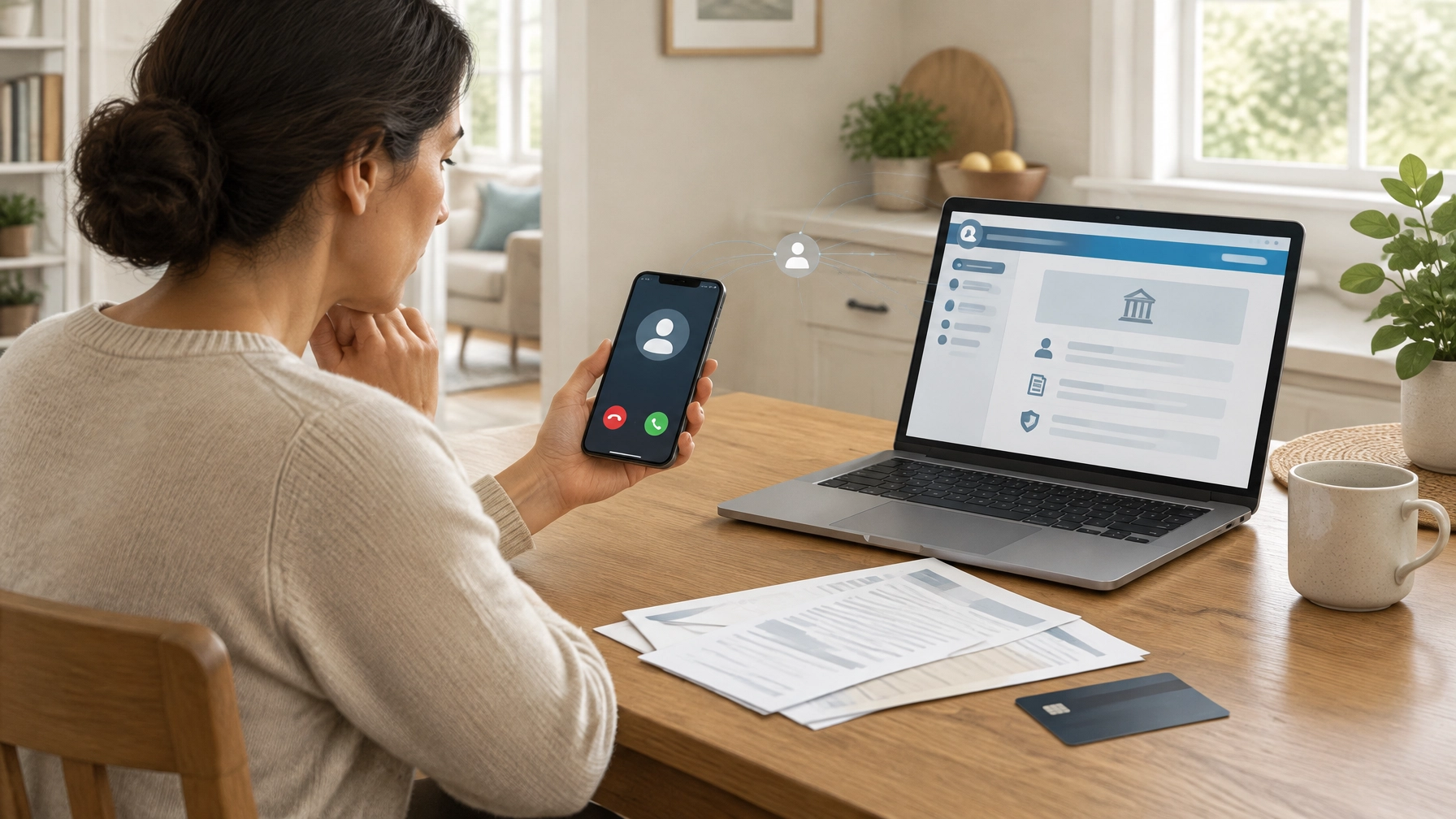
A fake portal can do more than take an application fee or payment. It can collect names, addresses, phone numbers, email addresses, card details, and other identifying information. Criminals may use that information themselves or pass it to others. The next contact may be a caller claiming to be from your bank who refers to a real detail, such as your address or part of a card number.
That familiarity is part of the trap. Many people use the test, “Does this person know something about me?” But after a data-harvesting scam, a criminal may know enough to pass that test. The information is not proof of identity. It may simply be evidence that your details were exposed.
A recent report from The Guardian described this pattern after a fake official-portal site collected personal information and later contacts claimed to be from a bank. For U.S. consumers, the practical lesson is broader than any one application: treat an unexpected approach as unverified and check it through a channel you choose.
Four Synthetic Authority tests
Use these four tests to assess a contact that claims authority. Passing one test is not enough. If you are unsure, end the conversation and verify independently.
IDENTITY test: Who is really contacting you, and can you prove it independently?
A name, caller ID, logo, case number, or accurate personal detail does not establish who is on the other end. Caller ID can be misleading, and exposed information can help a stranger sound familiar. Verify the organization using contact details you find independently, such as the number on your bank card or a statement.
PROOF test: What documentation or evidence would exist if this were real?
Ask yourself what you could check outside the call or message. A real account issue may appear in your bank’s official app, website, or secure message center. Do not treat a screenshot, link, or explanation supplied by the caller as independent proof.
CHANNEL test: Did the contact arrive through a channel you did not initiate, using contact details the sender chose?
An unexpected call, text, or email puts the sender in control of the channel. Do not click its link or call a number it provides. Start a fresh contact using a trusted number or website you locate yourself.
PRESSURE test: Is someone trying to make you act before you can think or check?
Urgent demands to move money, share a one-time code, provide a password, or stay on the phone are reasons to stop. A caller who insists you cannot hang up or speak to your bank independently is trying to control your decision.
Trust Check
Hang up. Find the organization’s contact information yourself. Call or sign in through a trusted channel, then ask whether the issue is real. Do not use a number, link, or QR code supplied in the unexpected contact.
Red Flag
A caller claiming to be from your bank tells you to transfer money to a “safe” account, share a verification code, or keep the conversation secret. Do not comply. End the contact and call your bank using a number you independently locate.
What to do if you already gave your details
Act promptly, but focus on what you actually shared. You do not need to know who collected the information before taking protective steps.
- Call your bank or card issuer using a trusted number. Explain that you entered information on a fake portal. Ask the institution to secure affected accounts, replace exposed cards if needed, review recent activity, and explain how to report unauthorized transactions. Change exposed passwords, and change them anywhere you reused them.
- Freeze your credit at all three bureaus. A credit freeze can make it harder for someone to open new credit in your name. You must place it separately with Equifax, Experian, and TransUnion. USA.gov explains how to place and lift a freeze.
- Contact the issuing agency if an identity document number was exposed. If you shared a passport or driver’s license number, ask the relevant issuing agency what replacement or protective steps are available. Procedures vary, and a new number may not always be available.
- Secure your email and phone accounts. Change your email password, check recovery options, and turn on multifactor authentication where available. Treat your phone number and email address as compromised contact channels: do not trust unexpected messages just because they reach you there. Ask your mobile carrier about setting an account PIN or port-out protection.
- Turn on alerts and keep monitoring. Enable bank and card transaction alerts. Review statements and credit reports for unfamiliar activity, and save relevant messages, URLs, dates, and transaction details. For additional help with bureau disputes, see our article on handling problems with credit bureau reporting agencies.
The exact call-back verification script
If an inbound caller claims to be from your bank, say:
“I don’t verify accounts or move money on an incoming call. I’m hanging up now. I will call the number on the back of my bank card, or a number I find myself, and ask the bank to confirm whether there is an issue.”
Then hang up. Do not let the caller transfer you, stay on the line while you search, or dictate which number to use. When you call back, describe the contact and ask the bank to check your account.
Your 5-step Recovery Roadmap
- Stop the contact. Do not reply, click links, share codes, or send money.
- Secure financial accounts. Contact your bank and card issuer through trusted channels.
- Protect your identity. Freeze credit with all three bureaus and contact the issuing agency about exposed documents.
- Monitor and document. Turn on alerts, review statements and reports, and keep evidence.
- Report the incident. Use the appropriate consumer and law enforcement reporting channels below.
How to Report
- Report scams and suspicious business practices to the Federal Trade Commission at ReportFraud.ftc.gov.
- Report cyber-enabled crime to the FBI’s Internet Crime Complaint Center at ic3.gov.
- If someone used your personal information for identity theft, start a recovery plan at IdentityTheft.gov.
- You can also contact your state attorney general to ask about consumer protection reporting options in your state.
Reporting does not guarantee that money will be recovered or that an agency will contact you. It can help document what happened and inform efforts to address fraud.
FAQs: Stop Repeat Scam Calls
Why do scam calls continue after I entered information on a fake website?
The site may have collected contact and identity details that criminals can reuse or pass to others. That can make later bank-impersonation calls sound more convincing, even when the caller is not connected to your bank.
Does a caller knowing my name or address prove they are legitimate?
No. Personal details can be exposed, sold, or shared, so familiarity is not verification. Hang up and contact the organization using a number you find yourself.
Should I change my phone number after a scam?
Not automatically. First secure your carrier account with a PIN or port-out protection, and treat unexpected calls and texts as unverified. If harassment continues, ask your carrier about available options.
Do I need to freeze my credit with all three bureaus?
Yes, if you want a credit freeze at all three major bureaus. A freeze placed with one bureau does not automatically freeze your reports at the other two.
What if I only gave the fake site my email address and phone number?
Be alert for more convincing messages and calls, but do not assume that financial accounts were accessed. Secure your email account, protect your carrier account, and avoid links or callback numbers in unexpected contacts.
What if I gave the site my bank password or card number?
Contact your bank or card issuer promptly using a trusted number. Change the exposed password and any reused passwords, and ask the institution whether it should replace the card or take other protective steps.
Can scammers use the last four digits of my card to prove they are my bank?
No. Those digits are not proof of identity. Do not share additional information or verification codes to “confirm” the caller.
Should I answer calls from my bank after a scam?
You may choose to answer, but do not treat an incoming call as verified. If the caller discusses account security, hang up and call the bank using a number you locate independently.
What should I save before reporting a scam?
Keep messages, email addresses, phone numbers, website addresses, screenshots, dates, and records of payments or account changes. Do not revisit a suspicious site just to collect evidence.
Will reporting the scam stop future calls or get my money back?
Reporting can help document the incident and share information with authorities, but it does not guarantee that calls will stop or funds will be recovered. Continue securing accounts and verifying unexpected contacts independently.

Avoid This Scam™ is the consumer protection and scam awareness desk of AskTheMoneyCoach.com. We help readers recognize, avoid, and respond to financial scams, fraud, identity theft, deceptive business practices, and online threats.
Our coverage includes scam alerts, fraud prevention strategies, consumer advocacy, practical safety guides, and expert analysis designed to help individuals and families protect their money, personal information, and financial well-being. We also explain what to do if you’ve already been targeted, because knowing how to respond can be just as important as avoiding a scam in the first place.