When we talk about business growth or home renovations, we usually focus on the big-ticket items. We look at the quarterly spreadsheets, the marketing budget, or the aesthetic of the front lobby. But the hidden costs of small spaces reveal a quieter side of financial health—one tied directly to the physical environment we inhabit and manage. It’s about the ergonomics of our spaces and how even the most mundane details can influence long-term costs and the comfort of the people who use them.
Think about the last time you walked into a commercial space or a small business and felt cramped. It’s a subtle psychological shift. When a space feels poorly planned, it sends a message that corners were cut. From a financial perspective, fixing a layout that was done wrong the first time is significantly more expensive than getting it right from the start. This is especially true when it comes to the most-used yet least-discussed areas of any building: the restrooms.
And that is where most people stop thinking.
Planning for the Long Haul
Investing in infrastructure is a game of patience. If you’re a business owner or a property manager, you know that every square foot carries a price tag. There’s a constant temptation to pack as much as possible into a floor plan to maximize utility. But have you ever considered the cost of being too efficient? Maybe we forget that people actually need to breathe. However, there’s a diminishing return on that strategy. When we squeeze utility areas too tightly, we invite wear and tear that accelerates depreciation.
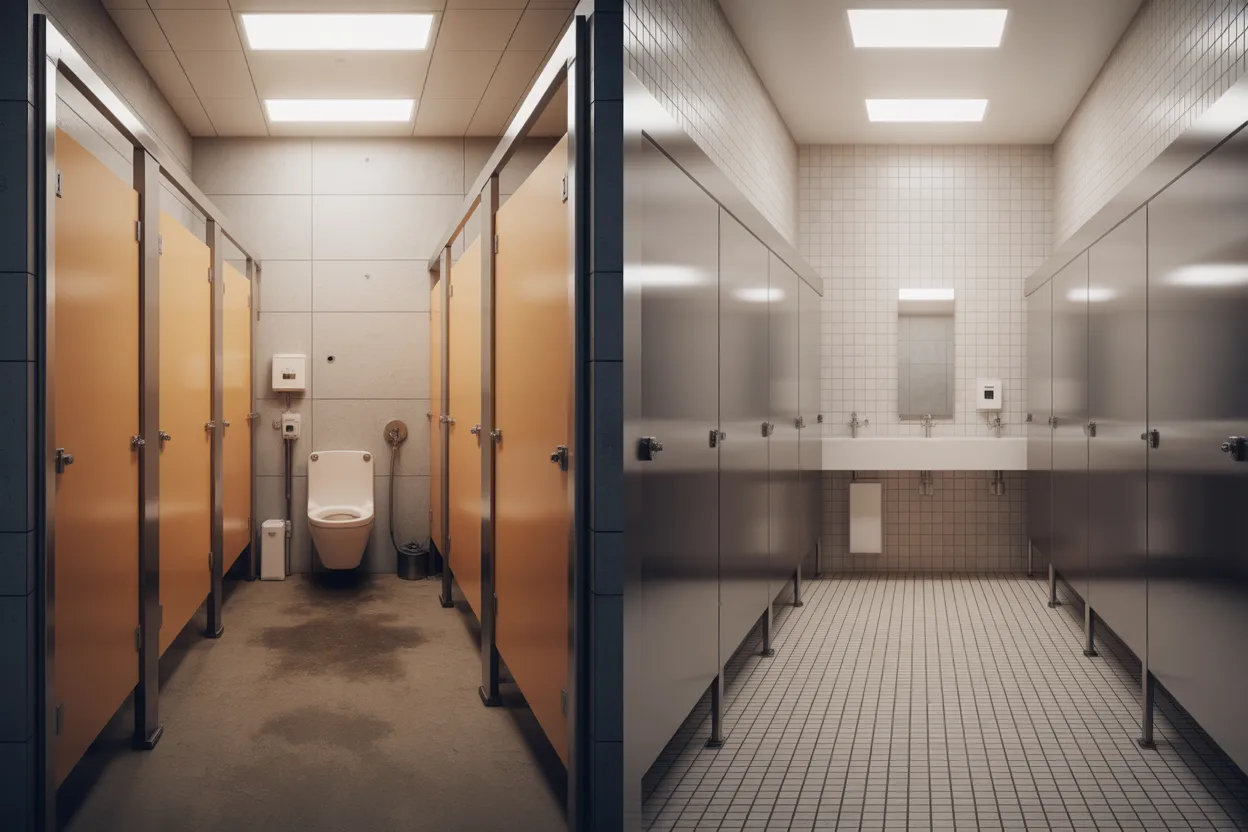
Take, for instance, the standard requirements for facilities. If you’re designing a public or employee restroom, you can’t just guess the layout. You have to consider accessibility and ease of maintenance. Understanding the standard bathroom stall size isn’t just about compliance with local codes, although that’s vital for avoiding hefty fines. It’s about flow. It’s about ensuring the materials don’t take a beating from people constantly bumping into doors or walls in a space that’s too small for natural movement.
You know, it’s those small collisions that add up over time.
So, do we build for the minimum requirement, or do we build for how people actually move?
The True Price of Cheap Materials
In the world of personal finance and business management, we often talk about the “buy it once” philosophy. It’s almost always better to pay more upfront for quality than to pay three times for a budget version that breaks. This applies to your physical surroundings just as much as it applies to a good pair of shoes or a reliable laptop. I’ve seen too many people try to save a few dollars only to regret it six months later.
When you look at the renovation budget, the line items for partitions and hardware seem like places to save a few pennies. But consider the cost of labor. If you install low-quality materials in a high-traffic area, you’re going to be paying a contractor to come back in two years to fix a sagging door or a rusted hinge. By choosing durable materials and ensuring the layout meets users’ physical needs, you’re actually protecting your capital. You’re ensuring that your investment stands the test of time without constant draining of your maintenance fund.
It is a long game. And that’s the point.
Efficiency and Human Psychology
There’s a financial value to how people feel in a space. If you’re running a restaurant or a retail shop, the “vibe” of your facility influences customer retention. A cramped, poorly lit, or difficult-to-navigate restroom can actually drive customers away. It sounds like a small detail, but in a competitive market, those small details are what separate successful ventures from those that struggle to stay afloat.
We often underestimate the “friction” caused by bad design. Friction is anything that makes a task harder than it needs to be. In an office environment, poorly planned facilities add a layer of frustration to the workday. We don’t always realize how much the little things matter. Happy employees are more productive employees, and productivity is a direct driver of profit. When you invest in a space that feels open and well considered, you’re removing friction. You’re creating an environment where people can focus on their work or their shopping experience rather than being annoyed by their surroundings.
But what happens when the environment itself becomes a distraction?
Budgeting for the Unseen
How do you approach this from a money management perspective? First, you need to conduct a thorough needs assessment. Don’t just look at what’s required today; look at what will be required in five or ten years. Is the building likely to see more foot traffic? Will you need to accommodate a more diverse range of physical needs?
Second, always include a contingency fund for quality. When the quotes come in, don’t automatically go for the lowest bidder. Ask questions about the materials’ longevity and the logic behind the layout. If a designer suggests a layout that feels tight, challenge them on it.
Remember that the cost of an extra few inches of space is negligible compared to the cost of a complete remodel later on because the initial design was unusable. I’ve sat through those meetings where the hum of the laptop at midnight was the only sound while we crunched these numbers.
Finally, remember that your physical assets reflect your brand. Whether you’re a solo entrepreneur working from a home office or a manager of a large commercial complex, the way you maintain and plan your space tells a story about your financial discipline. A well-maintained, thoughtfully laid-out space says you value quality and have a long-term vision. It shows that you’re not just reacting to problems as they arise, but that you’re proactively managing your environment to ensure success.
And that really matters. Honestly, it’s everything.
Finding the Balance
Money is a tool, and like any tool, it works best when it’s applied with intention. Planning your physical space with the same rigor you apply to your investment portfolio will pay dividends in the long run. It’s about finding the balance between efficiency and comfort, between cost and value.
When we stop viewing facilities as just cost centers and start seeing them as assets that support our goals, our perspective shifts. We start to see the wisdom in proper dimensions, the value in stainless steel over plastic, and the importance of a layout that respects the human form. In the end, the money you save through smart planning and quality investments is money you can put back into growing your dreams.
FAQs:
What are the hidden costs of small spaces in business?
The hidden costs of small spaces include increased maintenance, faster material wear, inefficient layouts, and reduced productivity, all of which can impact long-term profitability.
How can small space design affect business revenue?
Poor design can create discomfort for customers and employees, leading to lower retention, reduced productivity, and ultimately decreased revenue.
Why is investing in quality materials important in small spaces?
High-quality materials last longer and require fewer repairs, reducing long-term costs and preventing operational disruptions.
How do you reduce the hidden costs of small spaces?
You can reduce costs by planning efficient layouts, investing in durable materials, and considering long-term needs rather than short-term savings.
What should businesses consider when planning small spaces?
Businesses should consider traffic flow, accessibility, durability of materials, future scalability, and overall user experience when designing small spaces.