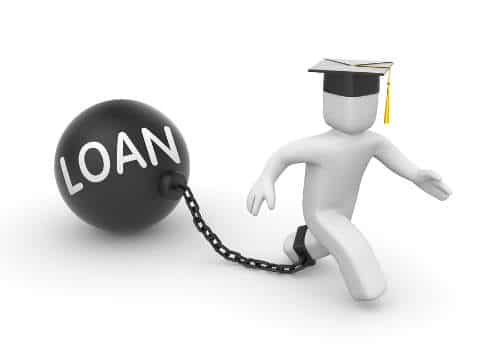
Posts Tagged ‘defaulted student loans’

My Husband Defaulted on a Student Loan. What Should We Do?

A reader of AskTheMoneyCoach.com wanted to know how to deal with a defaulted student loan. Her question and an answer are provided below. Many thanks to Marlene Ware, of the National Foundation for Debt Management  for her expertise and providing the answer that follows.

Question: My husband’s Sallie Mae loan went into default and was just turned over to a collection agency. If he wants to do the rehabilitation program, is that through Sallie Mae or the collection agency? Also, who does he work with now: the collection agency or go back to Sallie Mae? If he makes payments each and every month to the collection agency will he be fine, no matter the amount of the payments? As long as he makes payments to the collection agency can they still do him harm, ie garnishment, etc?

Answer:

This is a pretty complex area with a lot a variables.  Without knowing what preceded the default I will try to give you an answer that will hopefully clarify your situation.

If the Sallie Mae loan was in default for 270 days and any attempts by the loan holder have been unsuccessful the loan will be turned over to the ‘guaranty agency’ in your state.  Go to :  http://wdcrobcolp01.ed.gov/Programs/EROD/org_list.cfm?category_ID=SGA  for the contact information concerning the guaranty agency in your state.  After he jumps through the hoops required to bring the loan out of default, the collection company will search for a financial institution to buy the loan.   Your husband will begin a relationship with this new loan holder and continue to make the payments as requested.

While in rehabilitation, he must make 9 voluntary consecutive on-time payments to the collection agency holding the loan.  If he is able to do that, he will see the following benefits of his hard work:

  • His loan(s) will no longer be considered to be in a default status.
  • The default status reported by his loan holder to the national credit bureaus will be deleted.
  • He will be eligible for the same benefits that were available on the loans before the loans defaulted. This may include deferment, forbearance, and Title IV eligibility.
  • Wage garnishment ends and the Internal Revenue Service no longer withholds his income tax refund.

I hope this gives you some useful information.  There is a great deal of information concerning defaulted loans on the Department of Education website.  Good luck!

Related Questions:

Federal Student Loan Defaults Surge; Here’s How to Fix Your Defaulted Student Loans

Federal student loan defaults are way up – rising to 8.8% in fiscal year 2009, compared to 7.0% in 2008, according to new data released in September 2011 from the Department of Education.

The numbers represent the most recent figures available about federal student loans, and they show that scores of borrowers continue to struggle with college debt.

And unfortunately, the data don’t tell the full story. The government’s numbers only track student loan defaults over a given two-year period. Starting next year, the feds will track defaults in three-year periods. By that measure, the Department of Education expects the default rate to top 12%.

Four Options to Fix a Defaulted Student Loan

I’ve written in the past about how to get an overdue student loan back on track.

It essentially boils down to one of four options:

•           Consolidate the loan(s)
•           Enter a loan rehabilitation program
•           Pay the loan(s) off completely
•           Get the loan(s) totally discharged or canceled

The last two are probably not realistic options. I know you don’t have the money to pay off the loan(s). That’s why you’re in this predicament; and loan cancellations are rare (though they can be obtained).

You’ll likely have to “rehabilitate” your loan(s) or consolidate.

Should You “Rehabilitate” Your Loans or Consolidate?

Before you can consolidate, you have to bring your loan(s) out of default status.

You do this by making just three monthly payments — on time, and in any amount that you and your lender agree upon.

To find out if you qualify for loan consolidation, contact the Federal Direct Consolidation Loan Info Center at 800-557-7392 or go online to http://loanconsolidation.ed.gov.

If you call, the staff there should be able to tell you what your monthly payment will need to be for those three months while your loan is in repayment.

The one drawback to consolidation is that your credit remains tarnished. Even though your loan will be paid off and listed as “paid in full” on your credit report, you’ll get a new loan through consolidation and that previous default still shows on your credit report for seven years.

The Benefits of Student Loan Rehabilitation

An alternative, to fix your credit, and have all past negative information about your student loans completely deleted from your credit file is to go through loan rehabilitation:

In a nutshell, with rehabilitation you make 9 or 12 on-time payments on your student loans in an amount you can afford. You make nine monthly payments on Direct Loans and Federal Family Education Loans, or 12 monthly payments on Perkins Loans.

This, in my opinion, is the preferred route as it will help you restore your credit in a big way, so your past default won’t haunt you for years to come.

A Guidebook for Cash-Strapped Borrowers from the Department of Education

For more details about various alternatives to cure your student loan delinquency, check out the Department of Education’s guidebook called “Options for Financially-Challenged Borrowers in Default.”

Here is a link to the guide online: http://www.ed.gov/offices/OSFAP/DCS/forms/2004.Borrower.Options.pdf


Related Questions:

How to Get Your Student Loans Out of Default

Q: I Have Student Loans of $66,000, Including $20 in Penalties, Fees and Interest. My Salary is $1,500 a Month. My Required Student Loan Payments are is $415 a Month. I Want to Get Them out of Default. Any Advice?

A: I know those student loans seem overwhelming right now, especially given your modest salary. But there are some steps you can take to improve your situation.

Start by going through the process of rehabilitating your student loans to clear up your student loan default. Read this article which explains everything you need to know about fixing defaulted student loans.

Also read this post about smart ways to pay off student loans.

Both of these items will give you great ideas about how to best tackle that student loan debt.


Related Questions:

I Have Student Loans That I Can Not Repay. Will They Garnish My Tax Refund?

Question: I have student loans that I can not repay.  When I  file my taxes, will they garnish my refund check?

Answer: If you have seriously delinquent student loans, your income tax refund check could be subjected to garnishment when you file your income taxes. This usually happens when someone has defaulted on student loans. If you can’t pay due to lack of income, you can seek out a loan forbearance or deferment, which would put off your payments, but would increase the amount of interest that gets added to your loans. Alternatively, you can tweak your budget and try to cut back on other areas of spending, and use the savings to pay toward your student loans. You can also investigate loan consolidation or extending your student loans repayments, if you haven’t already done so.

Read this article about dealing with garnishments and paying off student loans once they’ve gone into default for more tips.

 Triple Advantage - Free Credit Score

Related Questions:

Get Free Financial Advice

Enter your email address:

Delivered by FeedBurner

Follow The Money Coach
Disclaimer

All information on this blog is for educational purposes only.  

Lynnette Khalfani-Cox, The Money Coach, is not a certified financial planner, registered investment adviser, or attorney.

If you need specialty financial, investment or legal advice, please consult the appropriate professional.

Per FTC guidelines, this site may accept advertising, affiliate payments or other forms of compensation from companies mentioned.

Details of any products, services, prices or offers highlighted on this site may change, so check with the company or provider for up-to-date terms.