Posts Tagged ‘Small Business’

Managing Positive Cash Flow in Your Small Business

The two most important jobs you have as a business owner is getting business and getting paid. Being a bill collector is one the toughest jobs you’ll have as an entrepreneur.  But if you take control of the situation up front, you can minimize any delays with payments.  The key thing to do is make sure you are not hit with any surprises. Does your customer pay vendors net 45?  You need to know. Here are some tips that I have used to in my business to manage cash flow:

1) Make sure you understand at the signing of a contract the procedure for getting paid. Ask about their accounts payable policy. Ask about whether you can be paid via electronic funds transfer, you get your money much faster this way.  Then make sure you understand what you need to do to facilitate getting you payment.

  • How does your invoice need to be formatted?
  • Does your EIN number need to appear on the invoice?
  • Do you need to file a W-9 IRS form to become a new vendor?
  • Do you need to have an EDI system in place to get paid?

Note: An EDI system is Electronic Data Interchange (EDI), which is a way to submit invoices and receive payments electronically. If you are doing business with a major corporation or manufacturer, they may require this type of system for doing business with them. The great thing about EDI systems is that all of your transactions are web-based and available anytime and anywhere via the Internet.

2) Develop a contact in the Accounts Payable department. You never want to annoy your actual customer with a payment issue until you have no other alternative.  If you start out knowing a name in accounts payable its makes things so much easier if there is an issue. Call this person at start of the contact to ask them what the procedure is for becoming a new vendor in the system and getting that first invoice paid.

3) Develop a discount incentive program for paying early. Please not do not discount for paying Net 30! That is what your customers are supposed to do.  Offer a 2% – 5% discount for Net 10 or Net 15 payment for your customers depending on the amount of the contract.

4) Make sure you get a deposit up front and create an incremental payment schedule. You should offer your clients a payment schedule such as 50% at the start / 25% mid way / 25% on delivery or 25% / 25% / 25% / 25%. Do not even start work without a signed contract, purchase order and a deposit.

5) Start making collection calls at 30 days to inquire about the status of your invoice. In this economy, people will easily ignore an email, letter or fax.  Do not ever be afraid to pick up the phone to ask about your money. Do not wait 45-60 days to initiate collection procedures. The polite, but squeaky vendor always gets the check.

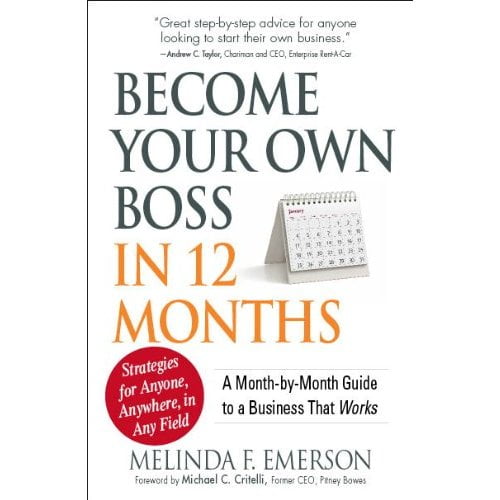
Melinda F. Emerson, SmallBizLady, is one of America’s leading small business experts, whose mission is to end small business failure.  Forbes Magazine recently named her one of the Top 20 women for entrepreneurs to follow on Twitter where she hosts #SmallBizChat, Wednesdays 8-9pm ET for emerging entrepreneurs. She publishes a resource blog www.succeedasyourownboss.com and is also the author of the national bestseller Become Your Own Boss in 12 months; A Month-by-Month Guide to a Business That Works. (Adams Media)

Related Questions:

Small Business Advice: How To Make Business Decisions

It’s great to have a nice website, a regular sales process and glossy business cards for your small business. All of these things steer sales, and sales is the engine that drives business. You must look credible in order for a corporation to do business with you, and you must have relationships to make a sale, and people must know where to reach you so business cards are important–but before you make any decisions in your business—you need up-to-date financial information about how your business is doing under the hood.

By the 15th of every month, you should have three financial statements which should include a balance sheet, income statement, and a statement of cash flow. These statements will outline the previous month activity including what sales were made, who has paid you and who you owe, and how much cash you have on hand to make it through the next month.

Once you put a process in place to generate monthly financial statements (such as hiring a bookkeeper to reconcile your accounts monthly and generate the statements), get into the habit of referring back to your financial statements and annual budget for information. Do not make business decisions based on what the account balance is online. Also, do not make decisions based on what you want or think you need for your business. Ask yourself or your staff WHY three times before making any purchases.

Always refer back to your budget and see what it says you have planned to spend, before committing to purchasing equipment, hire consultants or plan on attending any conferences.  Also never purchase a booth at a trade show the first year you plan to attend—walk the show the first year. Talk to the other vendors about whether they got their money’s worth.  It costs a lot of money to attend conferences—be sure it’s the right place to engage your niche target customer.  Here are four financial tips to keep in mind in your small business.

Use a budget—Manage your business with an annual budget. In October, start working on the budget for the following year.

Monitoring profit margins—It’s fine to know your gross revenues, but in the end, it’s really all about the profits you keep.  In every sale, know how much money is for you.

Understanding the cash position daily—Cash is king. A business with contracts and no cash will soon be out of business.

Know your numbers by the 15th of every month—Do not wait until tax time to deal with your financial statements.  Have them complied monthly, so that you can know where you stand as a business.

Melinda F. Emerson, SmallBizLady, is one of America’s leading small business experts, whose mission is to end small business failure.  Forbes Magazine recently named her one of the Top 20 women for entrepreneurs to follow on Twitter where she hosts #SmallBizChat, Wednesdays 8-9pm ET for emerging entrepreneurs. She publishes a resource blog www.succeedasyourownboss.com and is also the author of the national bestseller Become Your Own Boss in 12 months; A Month-by-Month Guide to a Business That Works. (Adams Media)

Related Questions:

Finding The Money To Start Your Small Business

If you are ready to take the leap into entrepreneurship, you must get really focused on your finances. It will be a real test to get back to only the bare necessities. Are you willing to reduce your lifestyle down to just basic living expenses? Most of the time, the initial capital to start your small business will come from you. Here are 8 tips you may not have considered to find money to start your small business.

Pay your mortgage twice a month to reduce payments. It is the accelerated payment program. Your mortgage company or a third party vendor offers this service for a low or no fee. The money will be automatically debited from your bank account. An extra mortgage payment is made each year; you can reduce a 30 year mortgage to a 22 year mortgage.

Go cash only. If you don’t have the cash, you don’t buy it. If you stop using your check card or credit cards to pay for everything, it’s much easier to stick to a weekly budget for yourself.

Avoid 90 days, 6 months or 1 year – same as cash deals. If you do not have the money the day you are making the purchase, chances are you will not have it in 90-days, six-months or a year from when it’s due. Keep in mind if you can’t pay, the interest rate is hefty and is compounded back to your original purchase date.

Cook at home and bring your leftovers to work for lunch. You’ll save money, get a healthier meal, and spend more quality time with your family. Look for free recipes online and start cooking!

Keep driving your car. Drive your car until it stops running. As a new business owner, you can no longer afford to upgrade your vehicle every two to three years. Buy a reliable car and take care of it, so you can ride without a car payment as long as you can. (I still do this! My car is five years old.) Try to plan your days so that you can do lots of major errands on the same day to minimize gas and parking expenses.

Grab a sweater. Turning down your thermostat five degrees and keeping a throw blanket nearby to save money on heating costs. The American Council for an Energy-Efficient Economy (ACEEE) says that for every degree you lower your thermostat, you’ll save about 3% of your heating bill. Putting your thermostat on a timer during the workday or while you are asleep will have an even greater effect on your heating bills.

Turn down the hot water heater. Heating water is the third-largest portion of the typical family’s energy bill. Heat water to 115-120 degrees to reduce power consumption.

Cut back on trips to Starbucks, Dunkin’ Donuts, Dairy Queen and Blockbuster. The money you spend each week on unnecessary extras can really add up. Treat yourself only once in a while. You’ll be shocked how the money you save will add up.

Read: Do’s and Don’ts for Starting a New Business in 2011

When you get started in business, you need three pools of money – an emergency savings account for your household, 12 months of budget to run your household, and 12 months of operating expenses to start your business. If you employ these simple money management tools, you will have the money you need in no time.

Melinda F. Emerson, SmallBizLady, is one of America’s leading small business experts, whose mission is to end small business failure.  Forbes Magazine recently named her one of the Top 20 women for entrepreneurs to follow on Twitter where she hosts #SmallBizChat, Wednesdays 8-9pm ET for emerging entrepreneurs. She publishes a resource blog www.succeedasyourownboss.com and is also the author of the national bestseller Become Your Own Boss in 12 months; A Month-by-Month Guide to a Business That Works. (Adams Media)

Related Questions:

Can You Afford to Become An Entrepreneur?

Everyone has good ideas.  Some of them may even be million dollar ideas, but if you live from paycheck to paycheck or way beyond your means, you may never be able to quit your job and start a business.

As the Smallbizlady, often I get emails, facebook messages and DM’s on Twitter from people asking me to help them start a business.  My first three questions are usually something like this.

  • What is your business idea?
  • How much money do you have saved?
  • How much money do you think it will take to launch this business?

If question two brings on a case of stuttering, I start shaking my head.

You should have three pools of money before your start a business.

  • An emergency fund for the household
  • 12-24 months of budget to run your household
  • 12-18 months of money to launch and operate the business

Now hear this, “Your ability to save has everything to do with your ability to start a business!

Money is not everything.  It’s just a tool, but it is certainly the beginning of a business plan.  Banks rarely, if ever, loan money to start-up businesses.  Banks will typically not deal with you for a loan or line of credit until you’re been in business 2-3 years and can show growth in the business with your financial statements and business tax returns.

There are some franchising opportunities that will provide some working capital, but 30-50% of the money will still come from you. And by the way, you will need to have significant net worth and assets to collateralize the loan.  Think of it this way, no credit = no business.  When you are first starting out in business, you are your business’s credit.

So what do you do if you have a great idea and no money? There are other sources of funds to start your business. There’s the 3 F’s Family, Friends, Fools.  Your family loves you and hopefully believes in you enough to invest in your business.  If you are fortunate enough to have a family that can afford to invest in you– you are fortunate, but beware.  Your rich Aunt Sally may think she’s your boss and might call you up every 30 days to check on how her $50K is doing.  You may not want that kind of pressure in your new business.

Then there are your friends. Nothing can kill a friendship faster than borrowing money that you can’t pay back.  I have a rule.  I do not loan money to friends, I give it to them.  I make sure that I do not give away any money that I cannot afford to lose.  Would your friends do that for you?  If so, they could be an option.

Every once in awhile, a hungry entrepreneur will come across a rich guy who’s an idealist about business, who falls in love your idea but doesn’t wish to run the business.  That is an angel investor— who will invest money in the company for an equity stake and lend his or her network to help you.  Do not get your hopes up about finding an angel investor in this economy.  It can happen, but let’s just say you are better off using your own funds that you save to start your business.  Family, friends or an angel investor can be fools for investing in a half-baked business idea.  Invest your time, to make sure you have a sound business plan before you take anyone’s money.  And do have a plan to show them—for when and how you think you’ll pay it back.

If you do have assets, you are in a different situation.  You can borrow against your 401K, you can take out a home equity loan, you can sell your home or rental property, you can cash in a Roth IRA.  The money must come from somewhere—its best when it comes from your own coffers.

It’s essential that you start your business from a position of financial security. Otherwise, you’re finished before you get started.

Melinda F. Emerson, SmallBizLady, is one of America’s leading small business experts, whose mission is to end small business failure.  Forbes Magazine recently named her one of the Top 20 women for entrepreneurs to follow on Twitter where she hosts #SmallBizChat, Wednesdays 8-9pm ET for emerging entrepreneurs. She publishes a resource blog www.succeedasyourownboss.com and is also the author of the national bestseller Become Your Own Boss in 12 months; A Month-by-Month Guide to a Business That Works. (Adams Media)

Related Questions:

Get Free Financial Advice

Enter your email address:

Delivered by FeedBurner

Follow The Money Coach
Disclaimer

All information on this blog is for educational purposes only.  

Lynnette Khalfani-Cox, The Money Coach, is not a certified financial planner, registered investment adviser, or attorney.

If you need specialty financial, investment or legal advice, please consult the appropriate professional.

Per FTC guidelines, this site may accept advertising, affiliate payments or other forms of compensation from companies mentioned.

Details of any products, services, prices or offers highlighted on this site may change, so check with the company or provider for up-to-date terms.