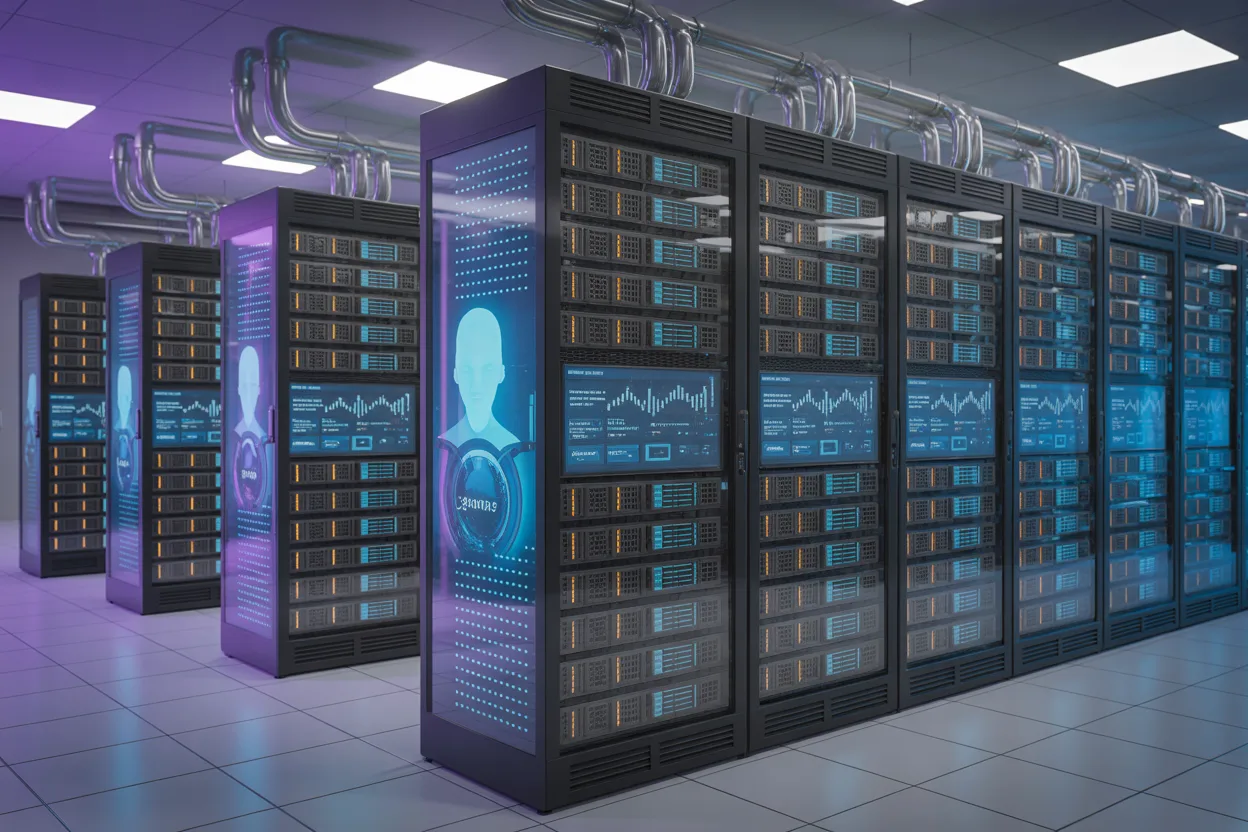
Direct Answer Running AI agents 24/7 requires a specialized infrastructure stack consisting of high-performance GPUs or TPUs for continuous reasoning, large-scale memory for long-term “context,” and robust serverless environments to maintain persistent states. Unlike standard web applications, 24/7 agents need “always-on” compute cycles that allow them to monitor data, make decisions, and interact with the web without waiting for a user to trigger a session.
How It Works The hardware foundation for persistent AI agents is built on specialized chips, typically Nvidia’s Blackwell or Rubin architectures or Google’s TPUs. These chips are designed to handle the massive parallel processing required for deep learning. Because agents often need to “think” through complex problems over long periods, they require high-bandwidth memory (HBM) to store the vast amounts of information they are currently processing without slowing down.
On the software and cloud level, 24/7 agents require a shift from session-based computing to persistent environments. Standard AI models are often “stateless,” meaning they forget everything once a chat ends. 24/7 agents utilize “vector databases” and “long-term memory” modules that allow them to save their progress, remember past interactions, and maintain a consistent personality or set of goals over weeks or months.
Furthermore, agents need “headless” browser environments and API connectors that run on virtual private servers (VPS). This allows the agent to exist in a cloud environment rather than on a user’s personal laptop. These servers provide the necessary uptime and power to ensure the agent doesn’t stop working when a user closes their browser or turns off their computer.
Real-World Implications
- Data Center Demand: The rise of autonomous agents is driving a massive increase in the construction of specialized data centers capable of supporting high-density AI hardware.
- Subscription Models: Cloud providers are moving toward “agent-hosting” models where users pay for a persistent digital worker rather than just API credits.
- Energy Consumption: Always-on AI reasoning loops consume significantly more power than traditional passive software, impacting corporate sustainability goals.
Signals to Monitor
- Hardware Availability: The lead times and pricing for next-generation AI chips in the enterprise market.
- Persistence Breakthroughs: New methods for reducing the memory and compute cost of keeping an AI agent “awake” for long periods.
- Edge Computing: Efforts to move some agentic reasoning to local devices to reduce reliance on massive, centralized data centers.
Infrastructure Stack for24/7 AI Agents
| Layer | Technology Required | Why It’s Needed |
|---|---|---|
| Compute Layer | High-performance GPUs (e.g., Nvidia Blackwell/Rubin architectures) or Google TPUs | Continuous parallel processing for reasoning loops |
| Memory Layer | High-Bandwidth Memory (HBM) | Maintains large working context without latency |
| Storage Layer | Vector databases + long-term memory modules | Persistent state tracking and contextual recall |
| Cloud Infrastructure | VPS, Kubernetes clusters, serverless containers | Ensures 24/7 uptime and scalability |
| Execution Layer | Headless browsers + API connectors | Enables web interaction and tool usage |
| Networking | High-speed fiber + low-latency data center networking | Real-time monitoring and decision-making |
| Energy & Cooling | Liquid cooling + optimized power distribution | Supports always-on AI workloads efficiently |
Running AI agents 24/7 requires more than powerful models—it demands an always-on infrastructure stack. From high-performance chips and high-bandwidth memory to vector databases and persistent cloud environments, autonomous agents depend on specialized hardware and software integration. As adoption grows, data center expansion, energy efficiency, and memory optimization will become central challenges for organizations deploying persistent AI systems.
FAQs: AI Agents 24/7
1. What type of hardware is required to run AI agents continuously?
AI agents running 24/7 require high-performance GPUs or TPUs designed for deep learning and massive parallel processing.
2. Why is high-bandwidth memory (HBM) important for AI agents?
HBM allows agents to store and process large volumes of active data without slowing down during long reasoning cycles.
3. How do 24/7 AI agents maintain long-term memory?
They use vector databases and long-term memory modules to persist context, past interactions, and goals beyond a single session.
4. Where do persistent AI agents operate?
They run in cloud environments such as virtual private servers (VPS), rather than on a user’s personal device.
5. What impact do always-on AI agents have on energy consumption?
Continuous reasoning loops consume significantly more power than traditional software, increasing energy demands.