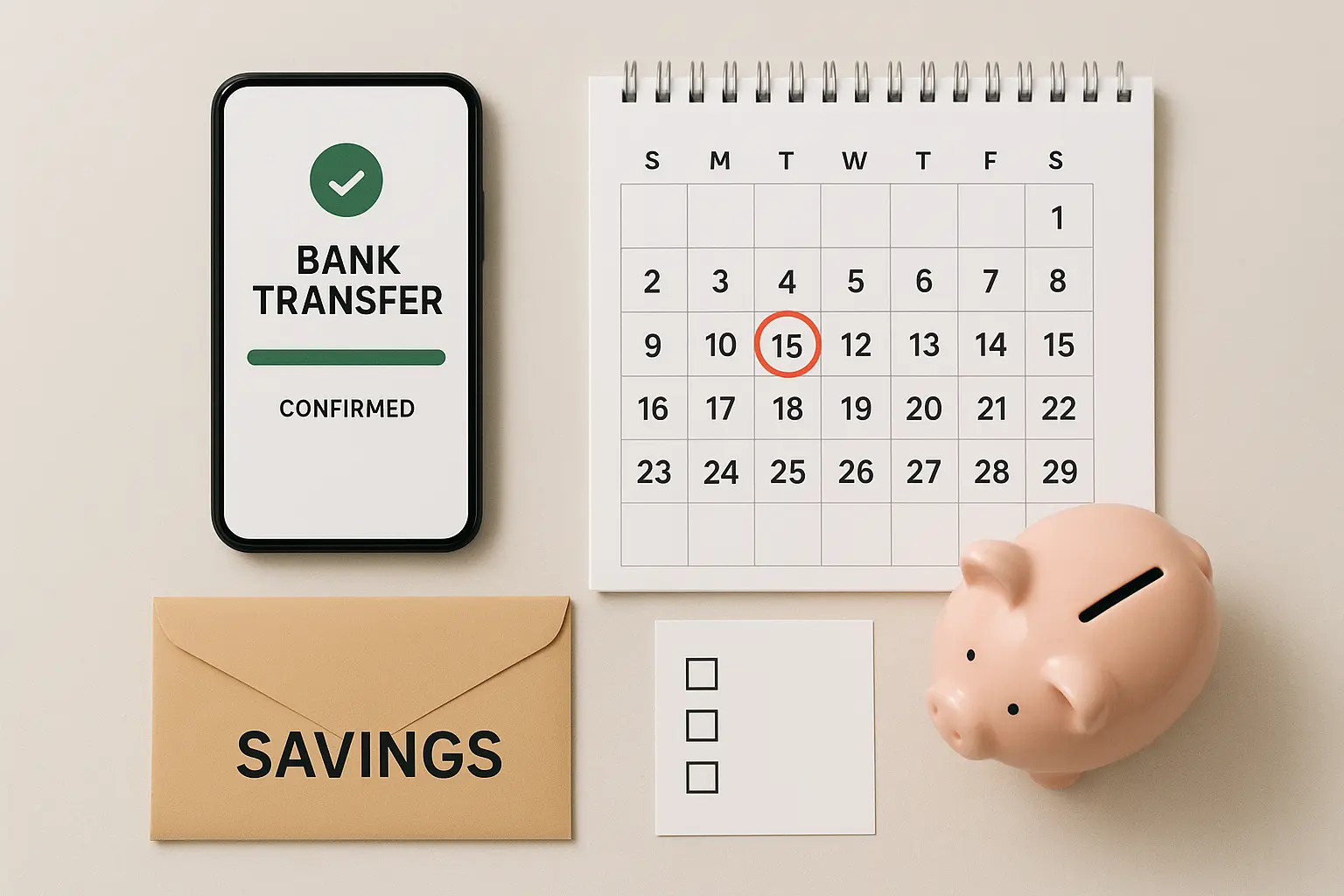
Reverse budgeting method puts savings first by automatically moving a set amount of income into savings or investments before you pay bills or spend. This “pay yourself first” approach makes saving non-negotiable and leaves you to cover essentials and discretionary spending with what remains. Read on to learn how it works, real examples, the biggest mistakes to avoid, and how it can become a simple wealth building system.
Key Takeaways
-
Save first: automate a fixed percent or amount from each paycheck to ensure consistent savings.
-
Simple setup: use bank auto-transfers, employer split deposits, or automatic investment plans.
-
Flexibility: treat savings like a bill, then live on the remainder without constant tracking.
-
Best fit: works well for steady incomes and people who struggle to save after spending.
-
Watchouts: can be tough for tight budgets or high-interest debt — prioritize immediate needs and essential bills.
-
Long-term payoff: consistent automated savings compounds into emergency funds and retirement assets.
-
Evidence: U.S. personal saving rates and auto-enrollment in retirement plans show automation increases saving behavior.
What is the Reverse budgeting method?
Reverse budgeting method — often called “pay yourself first” — flips the usual budgeting order. Instead of tracking every expense and saving what’s left, you decide a savings target (a dollar amount or percent), automate that transfer at payday, then allocate the rest to bills and everyday spending. This method treats savings as a fixed, non-negotiable “expense” and simplifies decisions for the rest of the month. Authoritative personal finance guides describe it as a low-maintenance way to build savings without micromanaging daily spending.
How the idea started
Behavioral economics supports defaults: when saving is automatic, more people stick with it. Employer auto-enrollment in retirement plans is a real-world example — plans that default employees into contributions dramatically raise participation rates.
Why does the Reverse budgeting method matter?
Reverse budgeting method matters because it helps solve a common problem: people intend to save but spend first and forget to save. By automating the habit, you remove willpower from the equation. The U.S. personal saving rate has fluctuated but remains relatively low by historical standards, underscoring the need for practical saving tools. Setting savings to occur automatically increases the odds you’ll build emergency cash and retirement funds over time.
Quick comparison: Traditional vs. Reverse budgeting
-
Traditional: Track every cost; save leftovers. High tracking burden.
-
Reverse budgeting: Save first; spend the rest. Low tracking, higher guaranteed savings.
How to implement the Reverse budgeting method step-by-step
Follow these practical steps to set up the reverse budgeting system.
1) Define clear goals and an initial savings rate
Decide what you’re saving for (emergency fund, down payment, retirement) and pick a target percent — common starting points are 5–20% of net income. If that’s too high, start lower and increase gradually.
2) Automate the transfers on payday
Set up an automatic transfer from checking to a savings account, high-yield savings, or brokerage every payday. Use employer split direct deposit if available — it can send part of your paycheck directly to savings or retirement accounts.
3) List and cover essentials with what’s left
With savings already set aside, pay your fixed bills (rent, utilities, insurance) next. Whatever remains becomes your flexible spending pool.
4) Review and adjust quarterly
Check progress each quarter and adjust the saved percentage when your income changes or after meeting a goal.
Examples and scenarios (with a simple table)
Here are three short examples showing how the reverse budgeting method works for different incomes.
| Monthly income (net) | Savings % | Saved/month | Bills | Flexible spending |
|---|---|---|---|---|
| $3,000 | 20% | $600 | $1,200 | $1,200 |
| $5,000 | 15% | $750 | $2,200 | $2,050 |
| $1,800 | 10% | $180 | $1,000 | $620 |
Example explanation: With $3,000 net monthly pay and the reverse budgeting method set at 20%, you automatically save $600. Then you pay essentials and spend freely with the remaining $1,200.
What are the reverse budgeting pros and cons?
Pros (why people like it)
-
Guaranteed savings: You hit goals faster because money is withheld automatically.
-
Simplicity: Less time tracking day-to-day expenses.
-
Psychological freedom: When savings are secured, spending feels less stressful.
Cons (when it can be hard)
-
Cashflow strain: If your income barely covers essentials, automatic savings can cause shortfalls.
-
Not ideal for variable-income workers without an emergency buffer.
-
May conflict with debt-paydown priorities — high-interest debt sometimes deserves immediate attention before aggressive saving.
What mistakes should you avoid when using this method?
-
Over-automating: Don’t set a savings percent so high that you miss bill payments.
-
Ignoring high-interest debt: For many, paying down credit card interest yields a better return than saving.
-
Not having an emergency cushion: Variable incomes need a starter emergency fund before fixed automation begins.
How does the Reverse budgeting method help long-term wealth building?
Treating savings as automatic creates consistent contributions to emergency funds, investment accounts, and retirement plans. Regular, automated contributions capture the power of compound interest and dollar-cost averaging in investments, turning small monthly habits into substantial long-term wealth. Research on automatic enrollment and defaults shows that behavioral nudges make long-term saving more likely — a direct institutional analogue to the reverse budgeting method for personal finance.
Conclusion + Next steps
Reverse budgeting method is a low-friction, high-impact way to secure regular savings. Start by choosing a modest percent, automate transfers, ensure bills are covered, then increase savings as your buffer grows. If you’re managing high-interest debt or irregular income, adjust the approach: build a small emergency fund first, prioritize urgent debt, and then automate. Small, consistent automated steps become a system for wealth building over time.
Expert insight: The U.S. personal saving rate and studies of automatic enrollment both support automation as an effective tool for increasing saving behavior. If you struggle to save, the reverse budgeting method removes decision fatigue and makes your future self the priority.
FAQs:
How does the reverse budgeting method differ from other budgeting systems?
Reverse budgeting focuses on saving first and spending the remainder, whereas other systems (like zero-based budgeting) allocate every dollar to categories before saving.
Can reverse budgeting work if I have unstable income?
Yes — but first build a small emergency buffer, then set variable transfers (fixed dollar amounts may be safer) so automation doesn’t cause overdrafts.
What percentage should I save using reverse budgeting method?
Common starting points are 5–20% of net income; aim for at least 10% if possible and increase gradually toward 15–20% for long-term goals.
Does reverse budgeting mean I never track spending?
No — it reduces daily tracking, but you should still monitor bills, essential categories, and progress toward savings goals periodically.
Is automated savings safe and effective?
Yes — automation reduces human error and boosts consistency; research on defaults and auto-enrollment shows automation reliably increases saving behavior.