
Last week, my neighbor Sarah got a call from “her bank.” The voice sounded professional, the caller ID looked legitimate, and they knew her account balance down to the penny. It turned out to be one of the increasingly sophisticated AI scams targeting consumers nationwide. She almost transferred $3,000 to “secure her account” before something made her hang up and drive to her actual bank branch.
It was a scam. An AI-powered one.
She’s not alone, and she’s definitely not uninformed. According to a recent U.S. News & World Report survey, 79% of Americans now admit that AI is making scams significantly harder to identify. That’s not just tech-challenged folks or seniors, that’s nearly everyone.
Here’s what should really get your attention: two-thirds of Americans believe AI now puts their financial health at risk. And they’re right to be worried.
The New Normal: Why You Can’t Trust Your Eyes (or Ears) Anymore
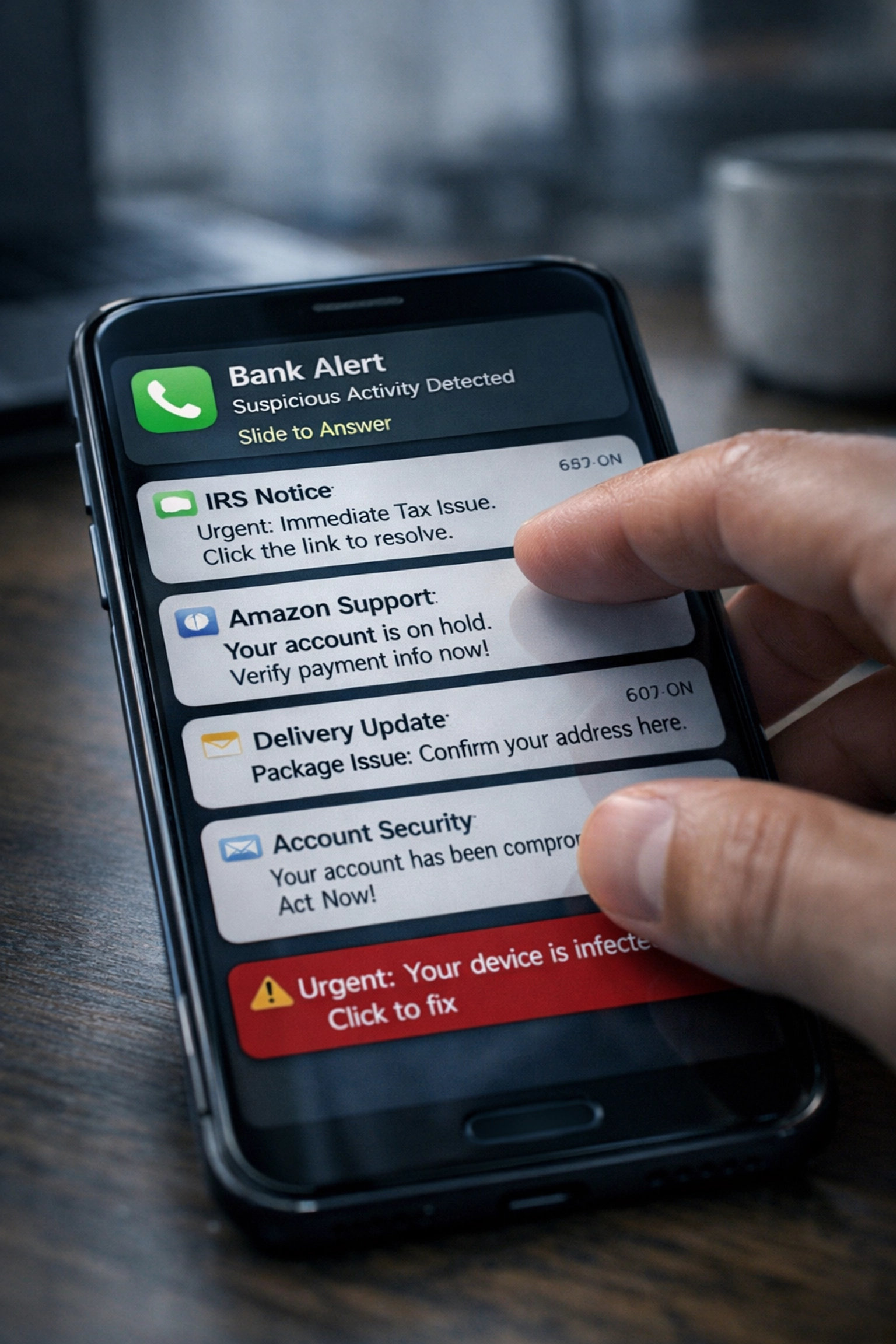
Remember when you could spot a scam email by the broken English and weird formatting? Those days are over.
AI has fundamentally changed the game. Criminals with zero technical expertise can now create phishing sites that look pixel-perfect, write emails that sound naturally conversational, and even clone voices that fool family members. The research shows Americans now see an average of 3 deepfakes per day, so many that AI-generated content feels normal.
Think about that for a second. You’re being conditioned to accept fake content as routine, which makes it exponentially harder to recognize when that same technology is weaponized against your bank account.
The volume alone is exhausting. Americans receive an average of 14 scam messages daily across text, email, and social media. That’s not just annoying, it’s a cognitive burden that researchers estimate costs us 114 hours per year just figuring out what’s real and what’s not. That’s nearly three full workweeks spent playing detective with your inbox.
More than one in three Americans lack confidence identifying deepfake scams. And here’s the kicker: one in ten report they’ve already experienced voice-clone scams. These aren’t theoretical threats anymore.
The Real Cost: It’s Not Just About the $250
The U.S. News survey found that 23% of Americans have lost money to fraud in the last three years. Nearly one in four people. Let that sink in.
When people do get scammed, the median loss is $250. Now, I know some folks might think, “Well, that’s not that bad.” But here’s what the averages hide: high-value fraud cases drive the average loss up to $1,917. That’s rent. That’s a car payment. That’s a serious chunk of an emergency fund.
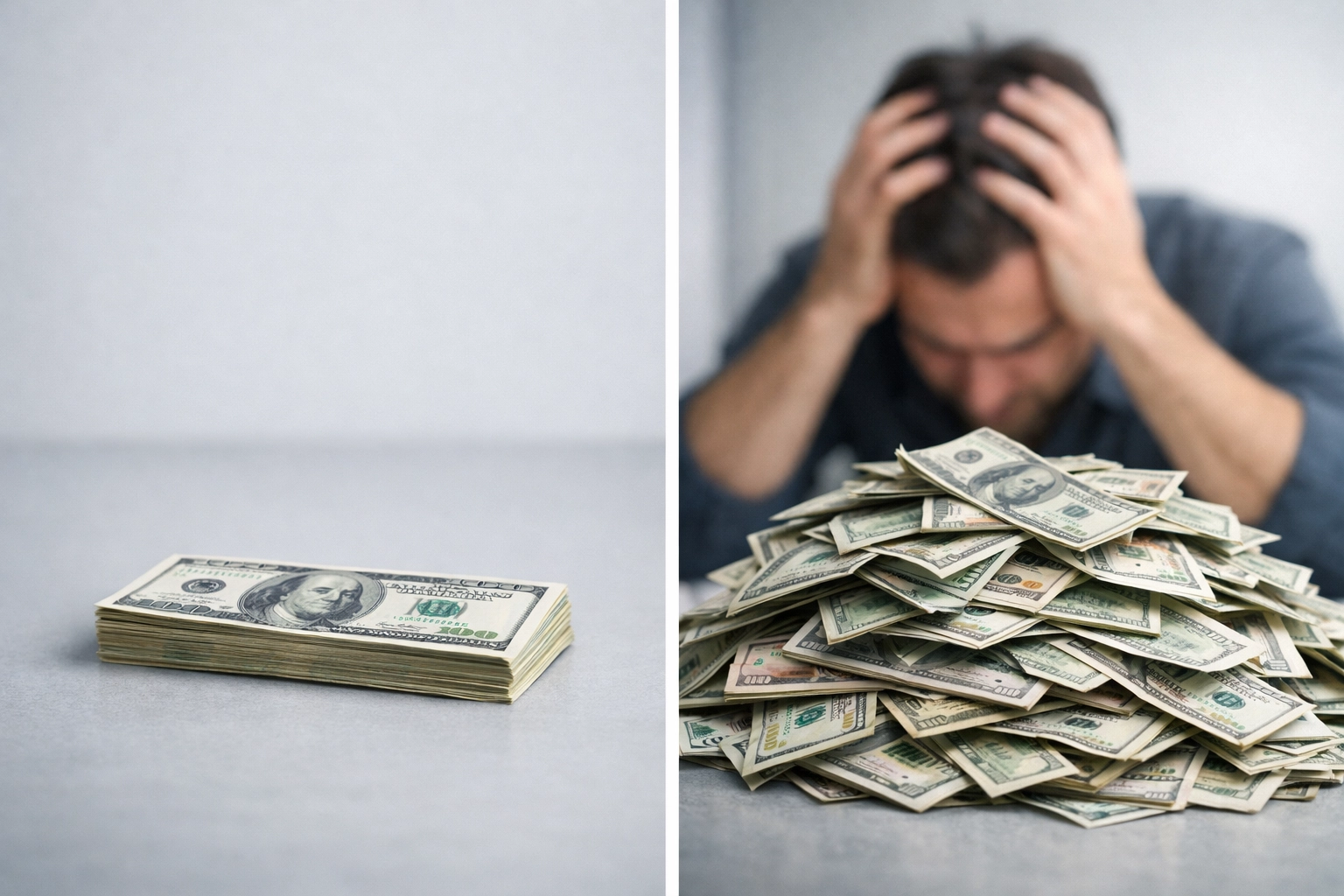
Consumers reported $12.5 billion in fraud losses in 2024, a 25% increase over the previous year. And Deloitte is predicting that generative AI could enable fraud losses to reach $40 billion in the United States by 2027.
But the money is only part of the story. One in three Americans report losing money to scams, and the typical attack unfolds in approximately 38 minutes from first interaction to harm. Think about that timing. That’s less than an hour from “Hello, this is your bank” to “Your savings account is empty.”
Beyond the direct financial hit, 55% of Americans report having a social media account compromised in the past year. That’s not just inconvenient, it’s a gateway for scammers to impersonate you and target your friends and family.
Who’s Actually Responsible When AI Scammers Strike?
This is where things get messy, and honestly, a bit frustrating.
The U.S. News survey revealed what researchers are calling the “Responsibility Gap.” When asked who should be the first line of defense against scam calls:
- 32% said banks should be responsible
- 39% said the burden is on the individual
I’ve seen this debate play out in real life. A client of mine got hit with a wire transfer scam last year. The bank said, “You authorized the transfer.” She said, “But you should have flagged this as suspicious.” Nobody wanted to take responsibility, and she was out $4,200.
Here’s my take: it’s both. Banks absolutely need better AI detection systems and fraud prevention protocols. But waiting for institutions to save you is not a financial strategy. You need to protect yourself today, not after Congress passes some future legislation or banks upgrade their systems.
The reality check? You’re your own first line of defense, whether you signed up for that job or not.
The Red Flags That Still Work in 2026
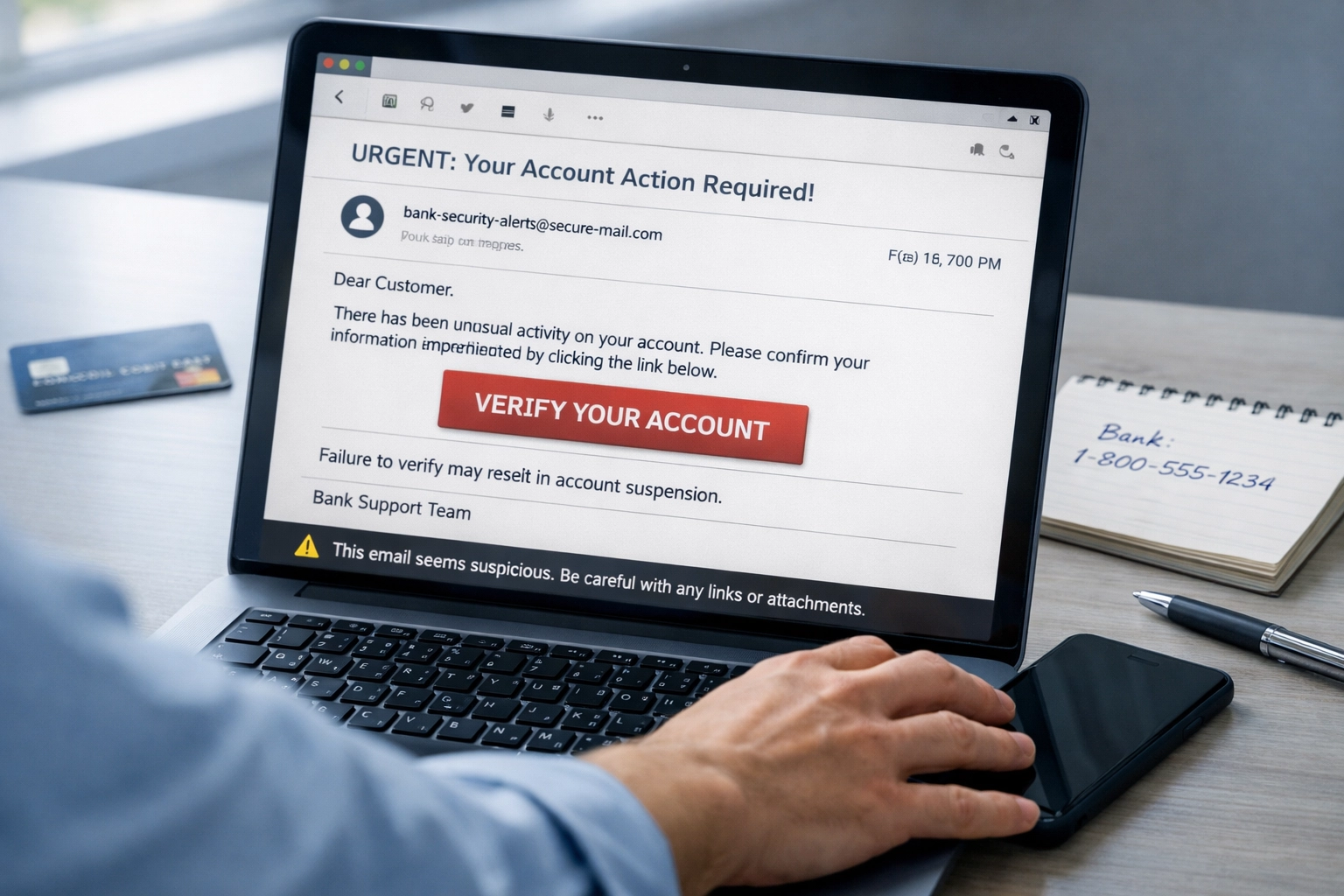
Even with AI making scams more sophisticated, some warning signs still hold up. Greg Garrison, Consumer Banking Analyst at U.S. News, points to several red flags that should make you immediately suspicious:
Urgency tactics. Real banks don’t demand you act in the next 10 minutes or your account will be closed. Scammers rely on panic to override your common sense.
Requests to move money “for security.” Your bank will never ask you to transfer funds to a “safe account” or withdraw cash to hand to a courier. Ever.
Contact initiated by them, not you. If “your bank” calls you out of the blue, hang up and call them back using the number on your card or statement. Don’t use the number they provide.
Payment requests via gift cards, cryptocurrency, or wire transfer. Legitimate businesses and government agencies don’t ask for payment this way. Full stop.
Too-good-to-be-true offers. If someone promises to eliminate your debt for pennies on the dollar or guarantee investment returns, you’re looking at a scam.
The AI twist? Scammers now use machine learning to analyze your social media and create personalized romance scams or fake job opportunities. They know what you care about, what you’re struggling with, and exactly what buttons to push.
Your Daily Defense: What Changed Habits Actually Look Like
Here’s a stat that should tell you everything: 77% of Americans have been forced to change their daily habits just to protect their data.
What does that actually mean in practice?
I’ve started treating every unexpected message like it’s suspicious until proven otherwise. That sounds paranoid, but it’s just the new baseline. I verify through separate channels, if my “bank” texts me, I call them directly. If a friend messages me asking for money, I call them on the phone.
I’ve also gotten ruthless about what information I share online. Those fun Facebook quizzes? Data mining operations. That work anniversary post with your job title and company? Ammunition for scammers to impersonate you or your employer.
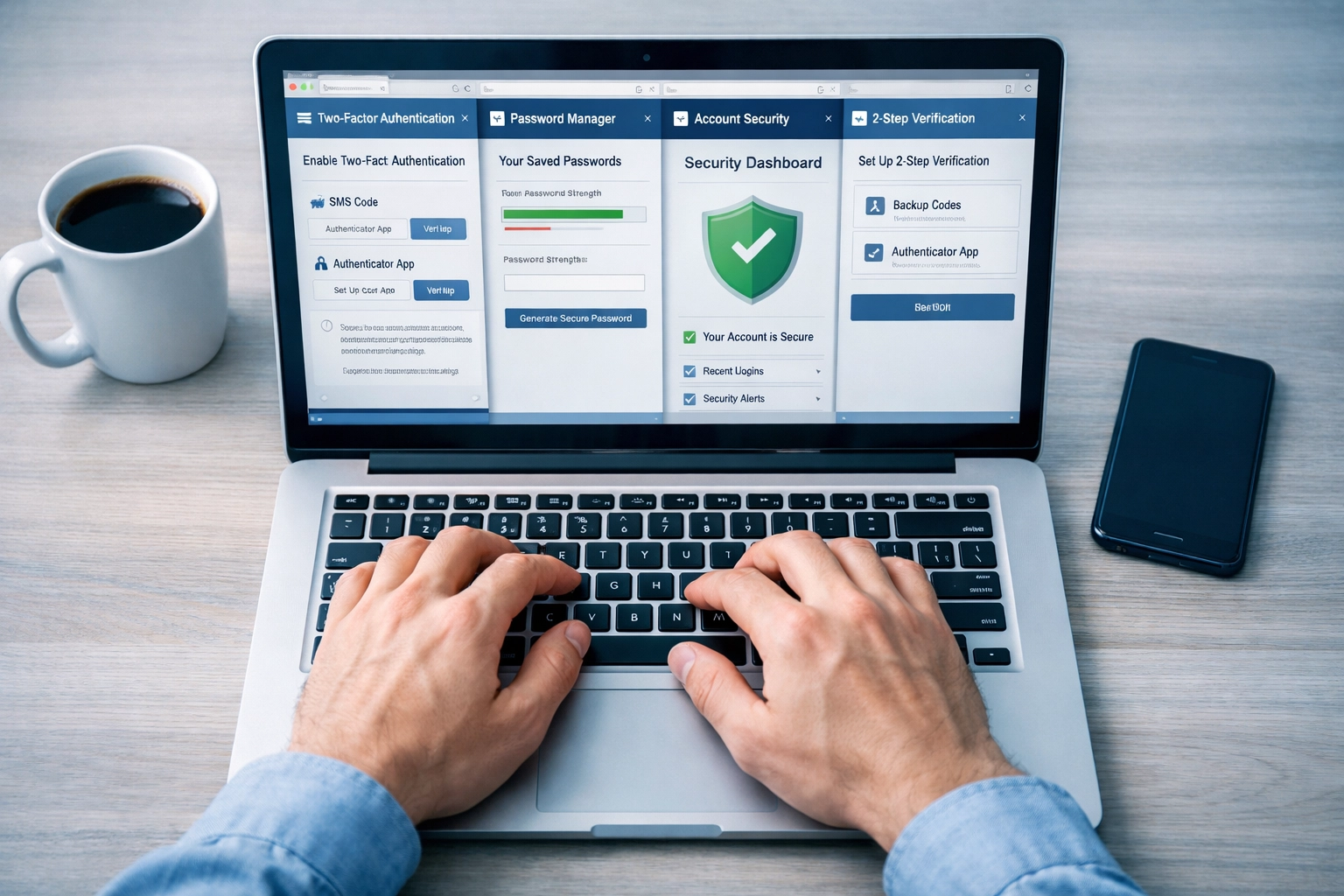
Two-factor authentication on everything. Unique passwords for every account (yes, use a password manager, it’s worth it). Regular credit monitoring. These aren’t optional extras anymore; they’re basic hygiene.
And honestly? I’ve accepted that protecting myself takes time. Those 114 hours a year of message verification? That’s the new cost of having a digital financial life.
If You’re Trying to Pay Off Debt, You’re a Bigger Target
Let me be clear about something that doesn’t get talked about enough: if you’re struggling financially or actively working to pay off debt, scammers see you as premium bait.
They know you’re stressed. They know you’re looking for solutions. And they know you might be desperate enough to take a risk on something that sounds too good to be true.
I’ve seen the ads: “Eliminate your debt in 90 days!” “The government doesn’t want you to know about this debt forgiveness program!” “Pay pennies on the dollar!”
AI has made these scams more targeted and more convincing. Criminals can scrape your social media, see that you posted about financial stress, and craft a message that speaks directly to your situation. They might reference the specific type of debt you have or the creditors you mentioned online.
The legitimate path to pay off debt is slower and less sexy: budget analysis, debt snowball or avalanche method, possible balance transfers, maybe credit counseling from a nonprofit agency. But it works, and it doesn’t put you at risk of losing even more money to fraud.
If someone contacts you promising magical debt relief, it’s a scam. The real solution to debt is discipline, time, and sometimes professional help from legitimate sources, not miracle cures from strangers.
FAQ
How can I tell if a call from my bank is real?
Hang up and call your bank using the number printed on your debit or credit card. Never trust caller ID alone.
What should I do if I’ve been scammed?
Contact your bank immediately to freeze or reverse transactions. File a complaint with the Federal Trade Commission at ReportFraud.ftc.gov. Change passwords and enable two-factor authentication. Monitor your credit reports.
Are banks liable if I authorized a scam transfer?
If you authorized the transaction—even under deception—banks often deny liability. If access was unauthorized, federal protections may apply. Reporting quickly improves your odds of recovery.
How much are Americans losing to AI scams?
Median loss: $250. Average loss: $1,917. Total fraud losses in 2024 reached $12.5 billion, with projections rising sharply.
Can I trust caller ID?
No. Caller ID spoofing is easy and widespread. Always verify independently.
What’s the best way to protect against AI scams?
Strong passwords, two-factor authentication, independent verification of unsolicited requests, account monitoring, and healthy skepticism toward urgency.