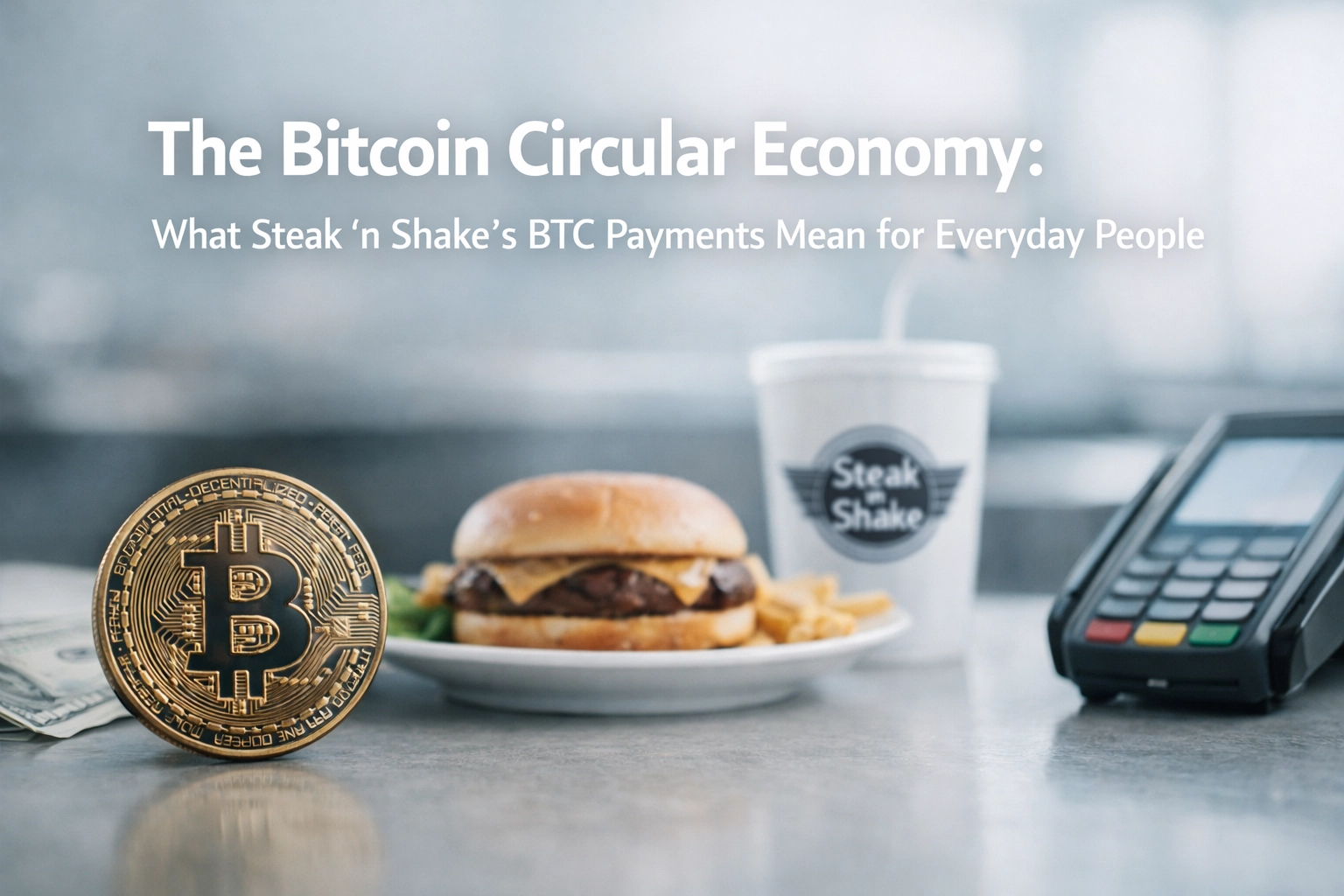
Can you really buy a burger with Bitcoin, and should you?
Yes, you can now pay for a Steakburger with Bitcoin at participating Steak ‘n Shake locations, and the company is turning those payments into employee bonuses and corporate Bitcoin reserves. But before you rush to spend your crypto on fries, you need to understand what this means for your taxes, budget, and whether it actually makes financial sense for everyday purchases.
Quick Answer
Steak ‘n Shake accepts Bitcoin payments through the Lightning Network and pays employees hourly Bitcoin bonuses, creating what economists call a “circular economy” where cryptocurrency flows between customers, workers, and the company. For you as a consumer, this means you can earn and spend Bitcoin in the real world, but you’re triggering capital gains taxes every time you buy a shake, and the practical savings are minimal unless you’re already holding BTC you bought below current prices.
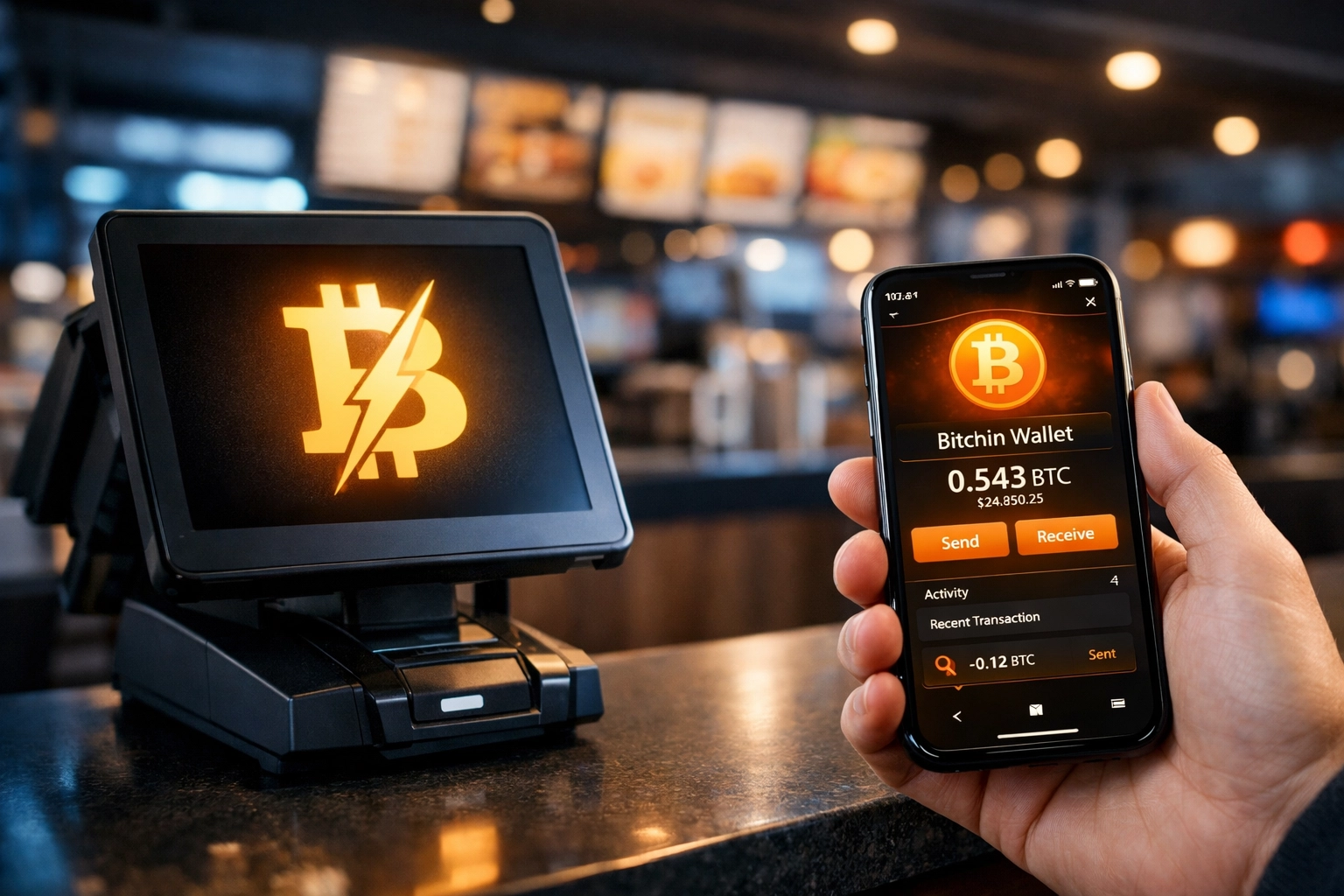
Why This Affects Your Money
Here’s what caught my attention: this isn’t just another company accepting Bitcoin as a publicity stunt. Steak ‘n Shake is building a self-sustaining loop. When you pay with Bitcoin, that payment goes into their Strategic Bitcoin Reserve (SBR). The company then takes their sales growth, which jumped 11% in Q2 2025 and 15% in Q3 2025, and buys more Bitcoin. Meanwhile, employees earn $0.21 per hour in Bitcoin bonuses that vest over two years.
That circular flow matters because it changes the math for three groups: customers who want to spend crypto without converting to dollars first, employees who can accumulate Bitcoin without buying it themselves, and anyone watching to see if cryptocurrency can actually function as money instead of just an investment.
Let me be clear: if you’re wondering whether this saves you money on lunch, the answer is probably no. But if you’re asking whether Bitcoin is moving from “speculative asset” to “thing you can use at a drive-thru,” the answer is yes, and that shift has implications for how you think about budgeting, spending, and earning in a world where digital currencies are becoming normal.
What Causes the Situation
Bitcoin has faced a chicken-and-egg problem since day one: merchants won’t accept it if customers don’t spend it, and customers won’t spend it if merchants don’t accept it. Steak ‘n Shake’s model solves this by creating financial incentives for all three parties.
For the company: They save approximately 50% on payment processing fees compared to traditional card networks. When you swipe a Visa, the restaurant pays 2-3% to the credit card company. Bitcoin transactions through the Lightning Network cost a fraction of that. Over thousands of transactions, those savings add up, and Steak ‘n Shake reinvests them into more Bitcoin, which has appreciated significantly since they started accumulating.
For employees: Hourly workers who might never have opened a crypto exchange account are now earning Bitcoin automatically. A full-time employee working 40 hours per week accumulates roughly $436 in Bitcoin annually at current rates. That’s not life-changing money, but it’s a tangible bridge between traditional paychecks and cryptocurrency ownership, without the worker needing to figure out wallets, exchanges, or seed phrases on their own.
For customers: You get access to Bitcoin-denominated rewards tied to menu items, and you can spend BTC you already own without converting it to dollars first. If you bought Bitcoin at $30,000 and it’s now worth $95,000, you can use it to pay for lunch without triggering a taxable sale event through a crypto exchange (though you’re still triggering taxes, more on that in a second).
The company’s Strategic Bitcoin Reserve reached approximately $10.96 million as of January 2026, showing this isn’t a marketing gimmick. They’re accumulating a real asset using business revenue, which is a fundamentally different approach than just accepting crypto and immediately converting it to cash like most retailers did during the last Bitcoin hype cycle.

Financial Risk: The Tax Trap You Need to Know About
Here’s where most people get burned, and I’ve seen this mistake cost clients thousands: every time you spend Bitcoin, you’re triggering a capital gains tax event.
Let’s say you bought $100 worth of Bitcoin three years ago, and that Bitcoin is now worth $300. If you use that Bitcoin to buy a $15 meal at Steak ‘n Shake, the IRS considers that a sale of Bitcoin. You owe capital gains tax on the $200 gain, even though you just bought a burger.
The math works like this:
- Original cost basis: $100
- Current value: $300
- Amount spent on meal: $15
- Taxable gain on the Bitcoin you spent: $10 (because you spent 5% of your holdings, and 5% of your $200 gain is $10)
- Tax owed (assuming 15% long-term capital gains rate): $1.50
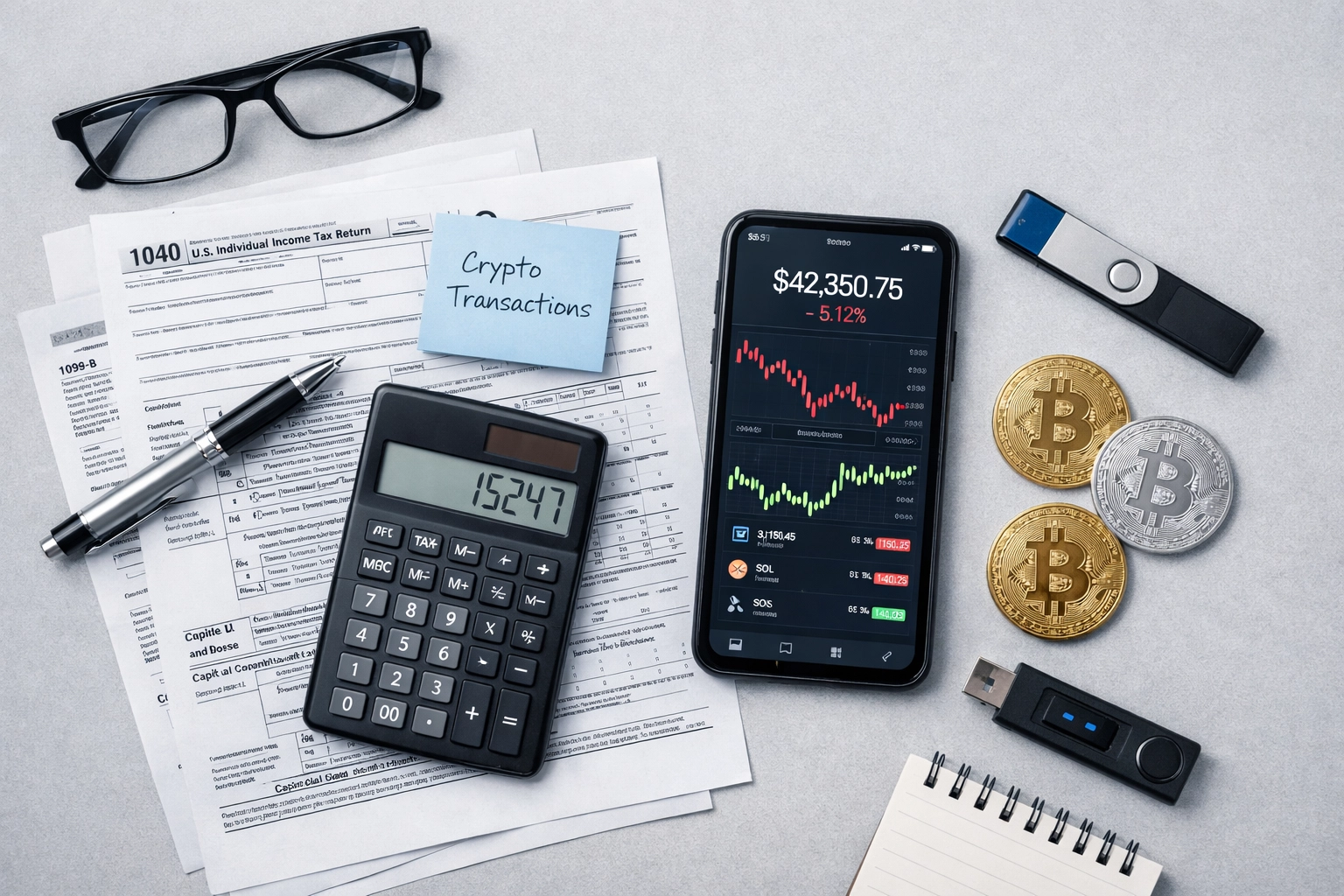
That $15 burger just cost you $16.50 when you factor in taxes. And here’s the kicker: you need to track every single transaction throughout the year and report it on your tax return using Form 8949. Miss a few burgers, and you’re underreporting income.
If you’re spending Bitcoin you bought above current prices, you’re actually locking in a capital loss, which can offset other gains, but most people aren’t tracking this properly. The record-keeping burden alone makes casual Bitcoin spending impractical for most consumers.
What To Check or Do
If you’re considering paying with Bitcoin, or earning it through work, here’s what you need to verify:
Before spending Bitcoin:
- Check your cost basis. If you bought BTC below current prices, calculate the tax hit before you pay.
- Use crypto tax software like CoinTracker or Koinly to automatically track transactions. Manual tracking is a nightmare.
- Ask yourself: would you rather spend this Bitcoin or hold it? If you believe BTC will appreciate, spending it now means giving up future gains.
If you’re earning Bitcoin bonuses at work:
- Understand the vesting schedule. Steak ‘n Shake’s $0.21/hour bonuses vest over two years, so you don’t own them immediately.
- Set up a secure wallet. Your employer might hold the Bitcoin for you initially, but you’ll eventually need your own storage solution.
- Budget using the dollar value, not the Bitcoin amount. If you’re counting on $436 in annual BTC bonuses but Bitcoin drops 50%, that’s now $218 in real purchasing power.
Tax compliance:
- Keep records of every Bitcoin transaction, including the date, amount in BTC, dollar value at the time, and what you purchased.
- Report Bitcoin income (like work bonuses) as ordinary income at the fair market value when you receive it.
- Report Bitcoin spending as a capital gain or loss based on your cost basis when you acquired it.
Simple Decision Rule
Spend Bitcoin for everyday purchases if:
- You bought it at or above current prices (so you’re locking in a small loss or breaking even)
- You’re already using crypto tax software that auto-tracks transactions
- You philosophically want to support Bitcoin adoption and don’t mind the administrative hassle
Don’t spend Bitcoin if:
- You bought it significantly below current prices and believe it will keep appreciating
- You’re not prepared to track every transaction for tax purposes
- You’re just doing it because it feels cool, novelty isn’t worth a tax headache
Accept Bitcoin bonuses at work if:
- You’re comfortable with price volatility (that $436 could become $200 or $800)
- Your employer handles the initial custody and makes it easy to transfer later
- You view it as a bonus on top of your regular pay, not essential income you’re budgeting against
FAQs: The Bitcoin Circular Economy
Do I pay taxes if I spend Bitcoin I received as a bonus?
Yes. You pay income tax when you receive it and capital gains tax when you later spend or sell it.
Can I avoid taxes by spending Bitcoin instead of selling it?
No. The IRS treats spending cryptocurrency as a taxable disposition.
What if Bitcoin crashes after I receive it?
You may claim a capital loss when you sell or spend it. However, you cannot recover income tax already paid when you received it.
What is the Lightning Network?
The Lightning Network is a second-layer protocol built on Bitcoin that allows faster, cheaper transactions than the main blockchain.
Does Steak ’n Shake convert Bitcoin to dollars immediately?
No. The company holds BTC in its Strategic Bitcoin Reserve rather than instantly converting it to cash.
Should I adjust my budget for Bitcoin volatility?
Yes. If any portion of your income is paid in Bitcoin, assume potential 30–50% price swings and budget conservatively.