
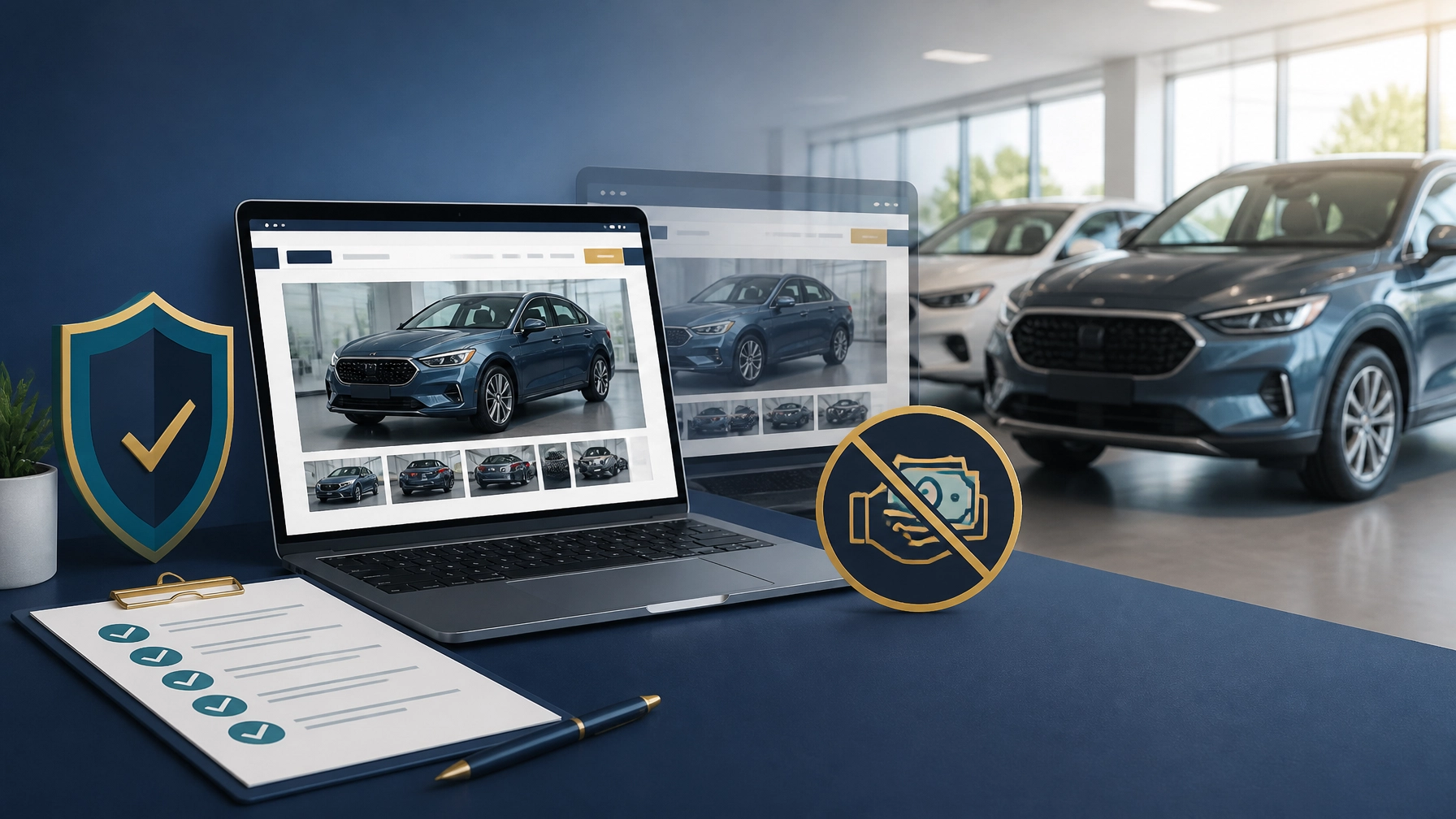
Buying a car online can save time, widen your search, and help you compare prices. It can also expose you to a convincing impersonation scam.
The Federal Trade Commission warned in a September 1, 2026, Consumer Alert that scammers are cloning legitimate car dealership websites. These fake sites may copy logos, vehicle listings, photographs, and customer testimonials. Some use artificial intelligence to make the imitation look polished and authentic.
The goal is straightforward: persuade you to send a deposit or full payment for a vehicle that does not exist.
A low price is not the only warning sign. The more important question is whether you can independently verify the dealership, the vehicle, and the payment instructions before money changes hands.
Bottom line: Never send a deposit to an online car seller until you verify the dealership through an independent channel, confirm that the vehicle exists, and understand how the payment can be disputed or recovered.
How fake car dealership website scams work
A typical scam begins with an attractive listing for a rare, classic, or hard-to-find vehicle. The price may be noticeably below what comparable vehicles cost. The website may appear professional, include detailed purchasing instructions, and promise flexible returns or shipping.
The site may even be a near-perfect copy of a real dealership’s website. That creates a serious problem: searching the dealership name may produce legitimate reviews because the scammers copied the identity of an actual business.
The fake seller then asks for an upfront deposit to reserve the vehicle. The payment request may come with a deadline, a claim that other buyers are interested, or an instruction to use a wire transfer only.
Once the money is sent, the supposed dealer may demand additional shipping, insurance, documentation, or customs payments. In other cases, the website and contact information simply disappear.
Who is most at risk?
This scam can target anyone shopping for a vehicle, but certain buyers may face greater pressure:
- People searching for rare or classic vehicles
- Buyers looking outside their local area
- First-time buyers unfamiliar with dealership procedures
- Busy households relying on online research
- Buyers who believe a deposit is necessary to secure a bargain
- People with limited transportation who feel pressure to act quickly
The financial damage may include the lost deposit, additional fraudulent payments, bank fees, and the cost of replacing a vehicle purchase that never existed. If you submit personal information through a fake financing form, you may also need to monitor your credit reports and accounts for signs of identity misuse.
Use the Synthetic Authority test before paying
A professional website is not proof that a seller is legitimate. Use four tests to evaluate the seller’s identity, evidence, communication channel, and pressure tactics.
1. Identity test
Ask: Who exactly is selling this vehicle, and can I verify that business independently?
Do not rely only on the phone number, email address, or physical address shown on the suspicious website. Search for the dealership through independent sources and call a number that you found separately.
Check whether:
- The business name matches across independent listings
- The physical address appears to be a real dealership
- The phone number connects to the business you intended to contact
- The website domain matches the dealership’s independently verified information
- The dealership confirms that the vehicle listing is genuine
Search the dealership’s name with words such as “scam,” “complaint,” or “review,” as the FTC recommends. Treat the results as a starting point, not as the only verification step.
2. Proof test
Ask: What evidence shows that the car exists and is available for sale?
A copied photograph, vehicle identification number, or detailed description can still be part of a fraudulent listing. Request a live video walk-around that shows the vehicle from multiple angles. Ask the seller to display a current date or a unique item during the video so you are not simply being shown an old promotional clip.
Whenever possible:
- See the car in person
- Visit the dealership’s physical location
- Compare the vehicle details with independent records
- Request a written purchase agreement before sending money
- Confirm the deposit terms, refund conditions, and delivery obligations
If you cannot travel to the dealership, hire an independent mobile inspection service. The inspector should be selected by you, not by the seller. A refusal to allow an independent inspection is a serious reason to stop.
3. Channel test
Ask: Am I communicating through a channel I verified myself?
Scammers often control every channel connected to the fake website. That means an email reply, phone call, or text message may only confirm the scammer’s story.
Verify the dealership through:
- An independently located phone number
- A physical address confirmed through separate sources
- A direct conversation with the dealership’s general office
- An in-person visit or an inspection arranged without seller interference
Be careful with search advertisements, social media messages, and links sent by email. A polished search result or professional-looking message does not establish who is behind it.
If someone calls repeatedly and insists that you pay immediately, review the warning signs in our guide to scam calls and phone impersonation.
4. Pressure test
Ask: What happens if I take time to verify everything?
A legitimate seller may have other interested buyers, but you should still be allowed reasonable time to confirm the dealership and vehicle. Pressure is a tactic when it prevents verification.
Warning signs include:
- “Send the deposit today or lose the car”
- A price that is dramatically below comparable listings
- A demand for wire transfer only
- Refusal to permit an in-person visit
- Refusal to permit an independent inspection
- New payment instructions appearing after you have already agreed to terms
- Threats that the vehicle will be sold if you ask basic questions
Red Flag: A low price combined with urgency, remote-only communication, and a wire-transfer demand should be treated as a stop signal, not a special opportunity.
How to keep your car deposit safer
Before paying, create a short verification file. Save the listing, the seller’s contact information, the purchase agreement, and the payment instructions.
Then complete this checklist:
- Search the dealership independently
- Call a verified phone number
- Confirm that the vehicle is physically available
- Inspect the vehicle in person or arrange an independent mobile inspection
- Review the written deposit and refund terms
- Confirm the exact legal name receiving payment
- Ask your bank or card issuer about available dispute protections
- Avoid wire-transfer-only demands
- Do not send additional money because of a sudden shipping or insurance request
- Pause if the seller resists any reasonable verification step
A payment method can affect your recovery options, but it cannot make an unverified seller safe. The best protection is preventing the payment from being sent before you establish that the dealership and vehicle are real.
What to do if you already sent a deposit
Act quickly and preserve evidence. Do not wait for the seller to respond or send another payment.
The five-step Recovery Roadmap
- Stop communication and stop paying. Do not send extra money to unlock a refund, release a shipment, or correct a supposed paperwork problem.
- Contact the payment provider immediately. Call your bank, credit union, card issuer, or payment service using contact information you locate independently. Explain that you may have been deceived and ask what cancellation, recall, or dispute options are available. Recovery is not guaranteed, but speed matters.
- Secure your accounts. If you shared bank details, identification, account credentials, or a Social Security number, change exposed passwords and monitor your financial accounts and credit reports. Ask the affected institution what additional safeguards it recommends.
- Preserve the evidence. Save screenshots of the website, vehicle listing, emails, texts, phone numbers, payment confirmations, contracts, and bank details. Do not edit the original files.
- Report the scam. File a report with the FTC at ReportFraud.ftc.gov. You may also contact your state attorney general or consumer protection office and your local law enforcement agency.
How to report and protect others
When reporting, provide the website address, the claimed dealership identity, payment instructions, dates, phone numbers, email addresses, and copies of supporting records.
You can also notify the legitimate dealership if its identity appears to have been copied. Use a verified contact method, not the information on the suspicious site. The dealership may need to warn customers that its name, photographs, or inventory have been impersonated.
For additional car-buying guidance, review the FTC’s resources on buying and owning a car and buying a used car from a dealer.
Final takeaway
A fake car dealership website succeeds by making a risky payment feel routine. The website looks real, the vehicle appears desirable, and the seller creates a reason to act immediately.
Your strongest defense is a deliberate verification process:
- Test the seller’s identity
- Demand independent proof that the vehicle exists
- Communicate through channels you verify yourself
- Reject pressure that prevents careful review
- Avoid wire-transfer-only payment demands
A missed bargain is frustrating. A lost deposit can disrupt your budget, transportation plans, and emergency savings. Take the time to verify the deal before you pay.
You can find more consumer-protection guidance in the Ask The Money Coach Avoid This Scam™ library.
FAQs: Fake Car Dealership Websites: Avoid This Scam
1. How can I tell if a car dealership website is fake?
Look for inconsistencies in the business name, address, phone number, domain, vehicle details, and payment instructions. Independently contact the dealership and ask whether the website and listing belong to it. Do not rely solely on the site’s appearance or testimonials.
2. Is a car priced below market value always a scam?
No. A low price can have legitimate explanations, such as condition, mileage, title history, or a motivated seller. However, a significantly low price deserves extra verification, especially when combined with urgency or remote-only communication.
3. Should I send a deposit before seeing the car?
Avoid sending money before confirming the dealership and vehicle. If you cannot visit, arrange an independent mobile inspection. Do not allow the seller to choose an inspector who may not be independent.
4. Why is a wire-transfer-only request dangerous?
Wire transfers can be difficult to reverse after the funds are delivered. A demand for wire transfer only is not proof of fraud, but it is a significant warning sign when the seller is not independently verified.
5. Can a vehicle identification number prove the listing is legitimate?
No. A real vehicle identification number can be copied from another listing or vehicle. Verify the VIN through multiple sources and confirm that the physical vehicle matches the listing.
6. What if the website has positive reviews?
Reviews may belong to the legitimate dealership whose website or identity was copied. Check whether the reviews refer to the same physical address, phone number, and website you are using.
7. What should I do if the seller refuses an inspection?
Stop the transaction. The FTC recommends using an independent mobile inspection service when an in-person visit is not practical. Refusal removes an important safeguard.
8. Can my bank get back a fraudulent car deposit?
Possibly, depending on the payment method, timing, and circumstances. Contact the financial institution immediately and ask about a cancellation, recall, or dispute. Do not assume recovery is automatic.
9. What information should I save after a suspected scam?
Keep the website URL, screenshots, listing details, emails, texts, phone numbers, contracts, payment confirmations, recipient account information, and any identity documents you submitted.
10. Where should I report a fake car dealership website?
Report it to the FTC at ReportFraud.ftc.gov. You can also notify your state attorney general, consumer protection office, local law enforcement agency, and the legitimate dealership if its identity was copied.
AskTheMoneyCoach Staff is the collective byline for our editorial team. Founded by Lynnette Khalfani-Cox, The Money Coach®, and Earl Cox, AskTheMoneyCoach.com publishes practical, research-informed guidance on credit, debt, saving, consumer protection, and everyday money decisions. Our work follows the site’s editorial standards and helps readers understand their options and make informed choices.