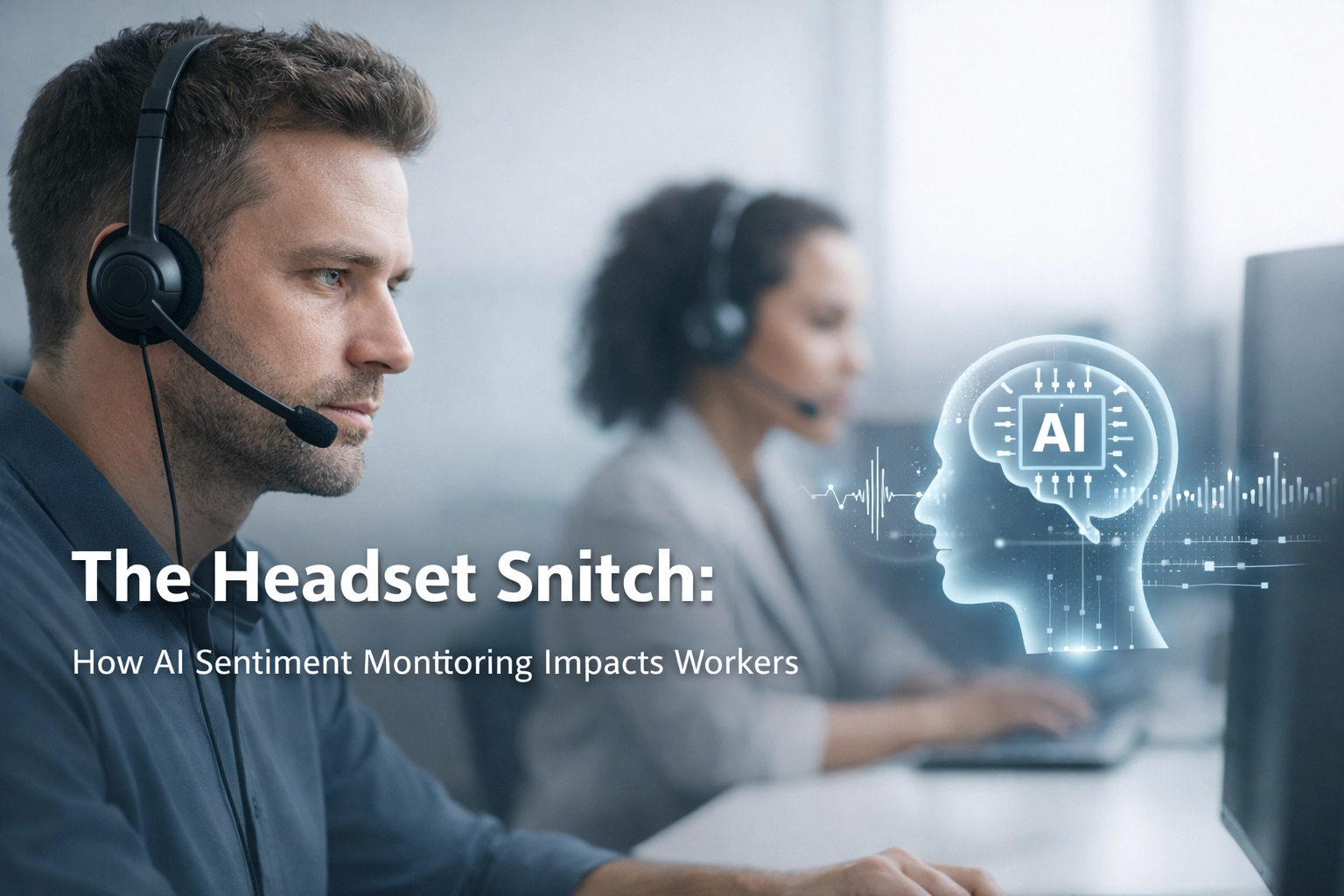
Imagine you’re halfway through an eight-hour shift at a busy call center or a fast-food drive-thru. Your feet ache, you’ve dealt with three angry customers in a row, and your energy is understandably flagging. Suddenly, a notification pops up on your screen or a soft chime sounds in your headset. It’s not a message from your manager; it’s an AI “coach” telling you that your tone of voice has become “unsympathetic” and that you need to increase your “energy levels” to maintain your performance rating.
AI sentiment monitoring is the use of machine learning and natural language processing to analyze employee communications and vocal tones in real-time. This technology impacts workers by creating a “digital credit score” based on their emotional output, which directly influences job stability, shift scheduling, and the ability to earn performance bonuses.
While companies frame these tools as a way to support employees and improve the customer experience, the reality is far more nuanced. We are entering an era where your “vibes” at work are no longer just a matter of office culture, they are a financial metric. If an algorithm decides you sound frustrated, it doesn’t just mean you’re having a bad day; it could mean a smaller paycheck or a faster track to termination.
From “Service with a Smile” to “Service by Algorithm”
For decades, the concept of “emotional labor” has been a staple of the service industry. You were expected to leave your personal problems at the door and put on a happy face for the customer. However, that expectation was historically enforced by human managers who, presumably, had a degree of empathy and understood that humans aren’t robots.
Enter Real-Time Sentiment Monitoring. Tools like the “Patty” AI, which gained notoriety in the fast-food industry (notably linked to Burger King franchises), represent a shift from human oversight to algorithmic policing. These systems don’t just record what you say; they analyze the pitch, speed, and cadence of your voice. They look for keywords that signal “engagement” and flags that suggest “disengagement.”
This constant surveillance creates a high-pressure environment where every word is scrutinized. Let me be clear: this isn’t just about making sure you don’t swear at a customer. It’s about enforcing a specific, narrow range of “acceptable” human emotion. When a machine is the one judging your humanity, the margin for error disappears.

The Birth of the Digital Credit Score for Employees
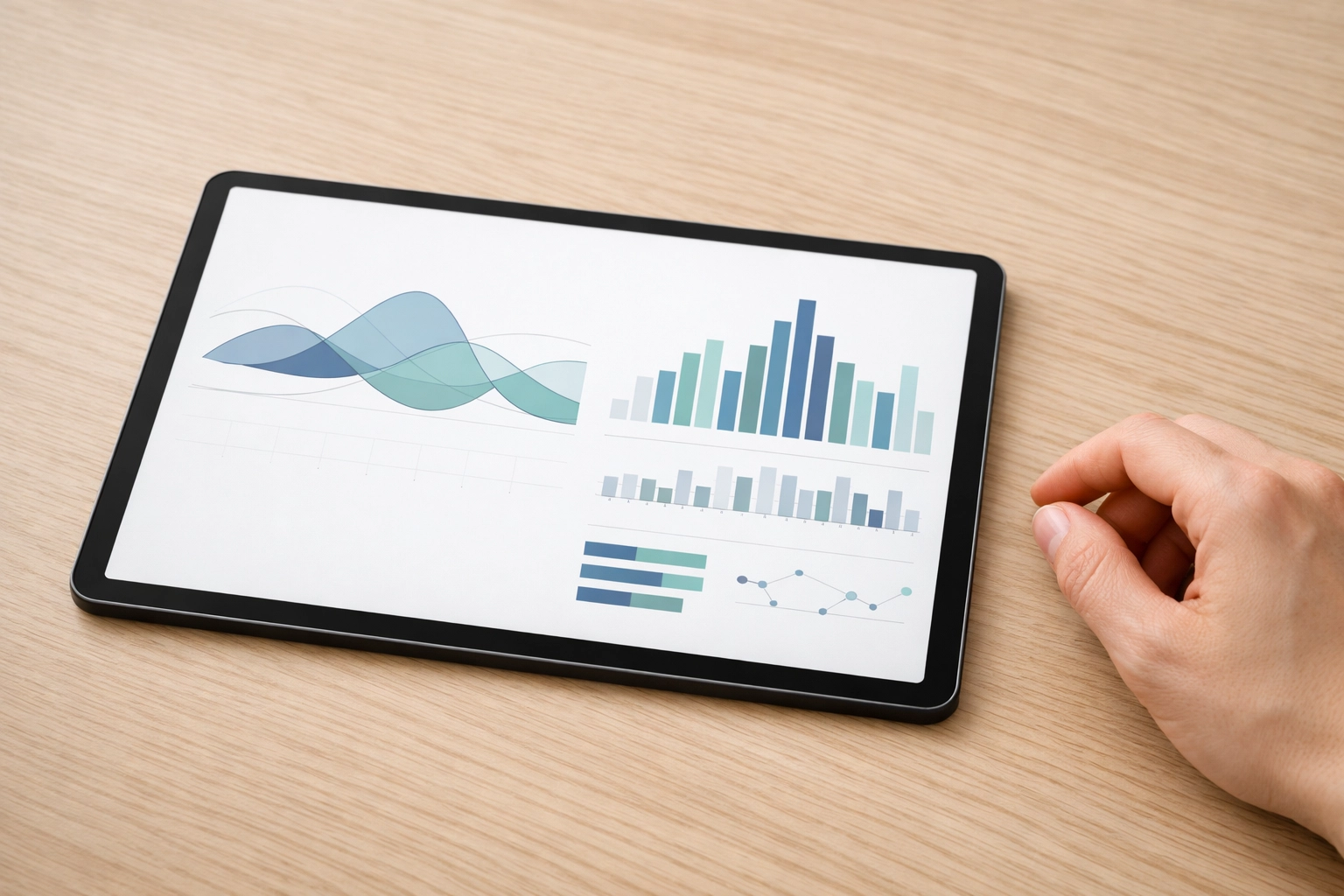
The most concerning development in workplace surveillance is the rise of what experts are calling a Digital Credit Score for workers. Just as your financial credit score determines your ability to buy a house or get a loan, this internal score determines your value within a company.
In many modern workplaces, your sentiment data isn’t just stored in a vacuum. It is aggregated into a profile that ranks your “sentiment health.” This score can have immediate financial consequences:
- Performance Bonus Suppression: Many companies have moved toward “dynamic” bonus structures. If your AI-generated sentiment score stays above a certain threshold for the month, you get the full bonus. If it dips, even if your actual sales or resolution numbers are high, your bonus is docked.
- Shift Priority: Algorithms often handle scheduling. A worker with a high “positivity” score might be prioritized for high-traffic, high-tip shifts, while those flagged as “burned out” by the AI are relegated to fewer hours or less desirable slots.
- The “Flight Risk” Label: Sentiment monitoring is often used to predict when an employee is likely to quit. While this might sound like a way for a company to offer support, it often results in the employee being “quietly sidelined” from promotions or training opportunities because the AI has labeled them a poor long-term investment.
If your income is becoming increasingly tied to these scores, it is essential to have a solid financial foundation. Managing a variable income budget system becomes even more critical when an algorithm can shave 10% off your earnings based on a “bad mood” flag.
The Hidden Cost: The Psychological Toll of Emotional Surveillance
Research from the University of Michigan in 2024 highlighted a disturbing paradox: the very technology designed to “improve” the workplace often makes it significantly worse for the people doing the work. The study found that being subjected to emotional surveillance causes significant anxiety and distraction.
Workers report that they spend a massive amount of mental energy trying to “game” the system. Instead of focusing on solving a customer’s problem, they are focusing on modulating their voice to sound cheerful enough for the AI to register a “pass.” This is a hidden tax on the worker’s cognitive load.
When you have to perform “happiness” for an algorithm, the emotional labor becomes exhausting. This leads to faster burnout, which irony of ironies, the AI then detects and flags, further lowering the worker’s score. It’s a feedback loop that treats human emotion as a resource to be extracted rather than a natural part of the human experience.
Legal Rights and the Surveillance Gap
You might be wondering: Is this even legal? In the United States, the answer is currently a “mostly, yes.” While privacy laws are slowly catching up to technology, workplace surveillance laws remain heavily tilted in favor of the employer.
Most employment contracts include broad language about “monitoring for quality assurance purposes.” This phrase has become a catch-all that allows companies to implement sentiment analysis without specific, additional consent from the worker. While some states like California and Illinois have stricter biometric and privacy laws, “tone of voice” is often a legal grey area.
However, there are a few things you should know:
- Disclosure: In many jurisdictions, employers must at least disclose that monitoring is taking place.
- Discrimination: If an AI sentiment tool consistently flags workers with certain accents or those who speak English as a second language as having “poor tone,” this could potentially be grounds for a discrimination claim under the EEOC.
- Union Protections: Workers in unions often have more leverage to negotiate how: or if: this data can be used in disciplinary actions.
If you feel your job security is being unfairly impacted by these tools, it may be worth seeking affordable financial planning services to build an emergency fund that can cushion the blow of a sudden termination or a docked bonus.
Protecting Your Financial Future in the Age of AI
As AI becomes more integrated into the workplace, the burden of protection often falls on the individual. If you are working in an environment where your “Digital Credit Score” is being tracked, you need to treat it with the same seriousness you treat your FICO score.
First, understand the metrics. Ask your manager directly: “What data points go into my performance review? Is my tone of voice being tracked, and how does that impact my bonus?” Knowledge is your first line of defense.
Second, document everything. If you receive a high customer satisfaction rating but the AI flags you for “low energy,” keep a record of that discrepancy. Human managers still have the power to override algorithms, but they usually won’t do it unless you provide the evidence.
Third, prioritize your mental health. The stress of being “always on” is a recipe for long-term health issues, which are far more expensive than any lost bonus. Recognizing that the AI’s “opinion” of your mood is a business metric, not a reflection of your worth as a person, is vital for maintaining your sanity.

A Grounded Perspective on the Future of Work
The “Headset Snitch” is likely here to stay in some form. As companies look for more ways to squeeze efficiency out of every minute of the workday, sentiment monitoring will become more sophisticated. We are moving toward a world where “soft skills” are no longer subjective: they are quantified, tracked, and sold as data points.
While this technology presents a significant challenge to worker autonomy and financial stability, being aware of how it works is the first step toward navigating it. Don’t let an algorithm dictate your value. By understanding the rise of real-time monitoring and the creation of your digital credit score, you can take proactive steps to protect your career and your wallet.
Practical Next Step: Review your current employment handbook or contract for any mentions of “real-time monitoring,” “emotional analytics,” or “quality assurance AI.” If you see these terms, start keeping a daily log of your performance vs. the AI’s feedback to ensure you have a paper trail if your income is ever unfairly targeted.
Frequently Asked Questions About AI Sentiment Monitoring
1. What is AI Sentiment Monitoring in the workplace?
AI Sentiment Monitoring is the use of artificial intelligence to analyze employee tone, speech patterns, word choice, and emotional cues during work interactions. These systems often operate in real time and generate performance data that may influence evaluations, scheduling, bonuses, or disciplinary action.
2. Can AI sentiment scores affect my paycheck?
Yes. In some workplaces, sentiment data feeds into performance dashboards that impact:
-
Monthly or quarterly bonuses
-
Shift assignments
-
Promotion eligibility
-
Retention decisions
If compensation structures include “engagement” or “customer experience” metrics, AI-generated emotional scores may influence earnings.
3. Is AI emotion tracking legal in the United States?
In most cases, yes. U.S. workplace surveillance laws generally allow employers to monitor communications for “quality assurance” purposes. However:
-
Employers may be required to disclose monitoring.
-
Biometric or privacy laws vary by state.
-
Discriminatory outcomes could violate rules enforced by the Equal Employment Opportunity Commission (EEOC).
Legal standards are evolving, especially around biometric and AI governance issues.
4. Can AI sentiment tools be biased?
Yes. AI systems can misinterpret:
-
Accents
-
Speech impairments
-
Cultural communication styles
-
English as a Second Language (ESL) patterns
If certain groups are disproportionately flagged for “negative tone,” this may raise discrimination concerns.
5. Do employees have to consent to AI monitoring?
Consent requirements depend on state law and employment agreements. Many companies include broad monitoring clauses in employment contracts. In unionized workplaces, monitoring policies may be subject to collective bargaining agreements.
6. How can I protect myself if my workplace uses AI sentiment monitoring?
You can:
-
Ask management how sentiment scores affect compensation.
-
Keep personal documentation of customer outcomes.
-
Review your employment handbook.
-
Build an emergency savings buffer in case of income fluctuations.
-
Monitor discrepancies between human feedback and AI scoring.