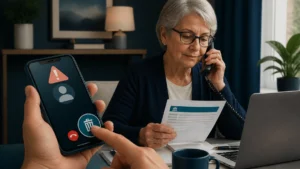
Imposter Scams are one of the most common forms of fraud today, costing victims billions each year. These scams happen when criminals pretend to be trusted people or organizations to steal money or personal information. In this guide, you’ll learn how imposter scams work, common warning signs, real-world examples, and practical steps to protect yourself and your family.
Key Takeaways
- Imposter scams involve criminals pretending to be trusted individuals or organizations
- Government agencies, banks, tech companies, and family members are common impersonation targets
- Urgent threats and unusual payment requests are major warning signs
- Older adults are frequently targeted in imposter scams
- Payment apps and cryptocurrency are often used because transactions are hard to reverse
- Verifying calls, emails, and texts directly with the organization can prevent fraud
- Reporting scams quickly helps reduce further financial damage
What Are Imposter Scams?
Imposter scams happen when someone pretends to be a trusted source to trick victims into sending money or sharing sensitive information.
The imposter scams meaning is simple: fraud through impersonation. Scammers may claim to represent:
- Government agencies
- Banks or credit card companies
- Tech support teams
- Delivery services
- Family members in emergencies
Their goal is usually financial theft or identity fraud.
Why Do These Scams Work So Well?
Scammers rely on fear, urgency, and confusion. They pressure victims to act quickly before they have time to think.
For example, a scammer may claim:
- Your Social Security number has been suspended
- You owe taxes immediately
- Your bank account was hacked
- A family member is in danger
These emotional tactics make people react without verifying the story.
Why Do Imposter Scams Matter So Much Today?
Digital communication has made scams easier to spread. Texts, emails, phone calls, and social media allow criminals to reach thousands of people quickly.
According to the Federal Trade Commission (FTC), consumers reported losing billions of dollars to fraud in recent years, with imposter scams ranking among the top categories. The FTC also notes that payment apps and cryptocurrency losses continue to rise.
The Rise of Government Imposter Scams
Government imposter scams are especially dangerous because scammers use fear of legal trouble.
They often pretend to be from:
- The IRS
- The FBI
- Medicare
- The Social Security Administration
The FTC has repeatedly warned consumers that government agencies do not demand immediate payment through gift cards, wire transfers, or cryptocurrency.
SSA Imposter Scams Increase Each Year
Reports show that SSA imposter scams increase during tax seasons and economic uncertainty. Scammers claim there is a problem with your Social Security number or benefits to create panic.
How Can You Spot Imposter Scams?
Common Imposter Scams Warning Signs
Recognizing the red flags can help you avoid becoming a victim.
Warning Signs Include:
- Pressure to act immediately
- Threats of arrest or account suspension
- Requests for secrecy
- Demands for payment through gift cards or crypto
- Suspicious links or attachments
- Caller ID spoofing that looks official
Legitimate organizations rarely demand urgent payments over the phone or by text.
How to Verify Suspicious Messages
If you receive a suspicious message:
- Stop and avoid responding immediately
- Contact the organization directly using its official website or phone number
- Never click links from unexpected emails or texts
- Review your accounts through official apps or websites
Slowing down is one of the best defenses against Imposter Scams.
What Are Common Imposter Scams Examples?
Government Agency Scams
A caller claims to be from the IRS and says you owe unpaid taxes. They threaten arrest unless you pay immediately using gift cards.
This is one of the most common imposter scams examples reported to the FTC.
Tech Support Scams
Scammers pretend to be from Microsoft or another tech company. They claim your computer has a virus and request remote access or payment.
Family Emergency Scams
Criminals may pretend to be a grandchild or relative needing emergency money for bail, medical bills, or travel.
These scams often target emotional reactions.
Business and Subscription Scams
Victims receive fake emails claiming there’s a problem with an Amazon order or antivirus subscription renewal.
The message usually includes a phone number or payment link.
Imposter Scams Zelle Fraud
Imposter scams zelle schemes are increasing because instant payment apps are difficult to reverse.
A scammer may pretend to be your bank and instruct you to transfer money to a “safe account.” In reality, the money goes directly to the scammer.
Banks generally do not ask customers to move money to protect accounts.
Who Is Most Vulnerable to Imposter Scams?
Anyone can become a victim, but scammers often target people under stress or unfamiliar with digital fraud tactics.
Imposter Scams Targeting Seniors
Imposter scams targeting seniors are especially common because older adults are more likely to answer unknown calls and may trust authority figures more readily.
Scammers often target seniors with:
- Medicare scams
- Social Security scams
- Grandparent scams
- Sweepstakes fraud
Family members should discuss scam awareness regularly with older relatives.
How Can You Protect Yourself From Imposter Scams?
Build Safe Communication Habits
The best protection is caution and verification.
Smart Safety Practices
- Ignore unexpected payment demands
- Never share passwords or verification codes
- Use two-factor authentication
- Keep devices updated
- Monitor bank and credit card statements regularly
These habits reduce your risk significantly.
Be Careful With Payment Methods
Scammers prefer payment methods that are hard to trace.
High-Risk Payment Requests
| Payment Method | Risk Level | Why Scammers Prefer It |
|---|---|---|
| Gift Cards | High | Difficult to recover |
| Cryptocurrency | High | Anonymous transfers |
| Wire Transfers | High | Fast and irreversible |
| Payment Apps | Medium-High | Instant transfers |
| Credit Cards | Lower | Fraud protections available |
If someone insists on unusual payment methods, treat it as a major warning sign.
What Mistakes Should You Avoid?
Common Errors That Lead to Fraud
Many victims make understandable mistakes during stressful situations.
Avoid These Actions
- Trusting caller ID alone
- Clicking unknown links
- Sending money quickly without verification
- Sharing personal information over the phone
- Ignoring account security alerts
Scammers are skilled at creating panic and confusion.
What Are the Long-Term Effects of Imposter Scams?
The impact often goes beyond financial loss.
Financial and Emotional Consequences
Victims may experience:
- Identity theft
- Damaged credit
- Lost savings
- Anxiety and stress
- Reduced trust in online services
Some people spend months recovering stolen funds or repairing compromised accounts.
Why Reporting Matters
Reporting scams helps law enforcement track patterns and warn others.
You can report fraud to:
- The FTC
- The FBI Internet Crime Complaint Center (IC3)
- Your bank or payment provider
Quick reporting may also improve your chances of recovering money.
Conclusion + Next Steps
Imposter Scams continue to evolve, but awareness remains one of the strongest defenses. Scammers rely on urgency, fear, and confusion to pressure victims into making fast decisions.
Take time to verify suspicious messages, avoid unusual payment requests, and educate family members about common fraud tactics. Staying cautious online and over the phone can protect your money, identity, and peace of mind.
FAQs
How do imposter scams usually begin?
Most imposter scams start through phone calls, emails, text messages, or social media messages pretending to come from trusted organizations.
What should I do if I paid an imposter scammer?
Contact your bank or payment provider immediately, report the fraud to the FTC, and secure your accounts as quickly as possible.
Are government agencies allowed to demand payment by gift card?
No. Legitimate government agencies do not request payment through gift cards, cryptocurrency, or wire transfers.
Why are seniors often targeted in imposter scams?
Scammers believe seniors may be more trusting of authority figures and more likely to answer phone calls from unknown numbers.
Can Zelle payments be reversed after a scam?
In many cases, Zelle payments are difficult to reverse because transfers happen quickly, which is why scammers frequently use payment apps.
This article is part of our Avoid This Scam series, published by AskTheMoneyCoach.com to help you spot and avoid financial fraud.
Avoid This Scam™ is the consumer protection and scam awareness desk of AskTheMoneyCoach.com. We help readers recognize, avoid, and respond to financial scams, fraud, identity theft, deceptive business practices, and online threats.
Our coverage includes scam alerts, fraud prevention strategies, consumer advocacy, practical safety guides, and expert analysis designed to help individuals and families protect their money, personal information, and financial well-being. We also explain what to do if you’ve already been targeted, because knowing how to respond can be just as important as avoiding a scam in the first place.