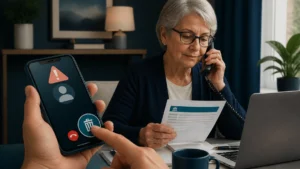
What Is an Imposter Scam? It is a type of fraud where criminals pretend to be someone you trust to steal money, personal information, or account access. These scams often involve fake government agents, banks, businesses, or even family members. In this guide, you’ll learn how imposter scams work, the warning signs to watch for, and the best ways to protect yourself.
Key Takeaways
- An imposter scam happens when a scammer pretends to be a trusted person or organization
- Common scams involve government agencies, banks, tech support, or family emergencies
- Scammers use fear, urgency, and fake caller IDs to pressure victims
- Legitimate agencies never demand payment through gift cards or cryptocurrency
- Always verify suspicious calls, texts, or emails using official contact information
- Business imposter scams and fake websites are becoming more common
- Reporting scams quickly can reduce financial damage and identity theft risks
What Is an Imposter Scam?
An imposter scam is a fraudulent scheme where someone pretends to be a trusted person, business, or government agency to trick victims into sending money or sharing sensitive information.
The scammer may contact you by:
- Phone calls
- Text messages
- Emails
- Social media
- Fake websites
The goal is usually financial theft or identity fraud.
According to the Federal Trade Commission (FTC), imposter scams are one of the most commonly reported forms of fraud in the United States. Scammers rely on panic, urgency, and trust to manipulate victims.
What Does Imposter Mean?
The word “imposter” refers to someone who pretends to be another person for dishonest reasons. An imposter scammer meaning typically involves deception for financial gain.
You may also see the spelling “impostor.” If you’re wondering what is the difference between impostor and imposter, both words mean the same thing. “Impostor” is the original spelling, while “imposter” is more common in modern American English.
What Is an Imposter Person?
An imposter person is someone pretending to have an identity, role, or authority they do not actually possess. In scams, this could include fake police officers, IRS agents, bank employees, or tech support workers.
Why Do Imposter Scams Matter?
Imposter scams can lead to major financial and emotional harm. Victims may lose savings, have their identities stolen, or experience long-term credit issues.
Financial and Emotional Damage
Scammers often target vulnerable people, including older adults and those under stress. Victims may feel embarrassed after realizing they were deceived, which sometimes delays reporting the fraud.
The FBI Internet Crime Complaint Center reports billions of dollars in annual fraud losses tied to impersonation and online scams.
Why These Scams Are Increasing
Technology makes it easier for scammers to fake phone numbers, emails, and websites. Criminals can now use:
- Caller ID spoofing
- AI-generated voices
- Fake company websites
- Phishing emails
This makes modern imposter scams harder to recognize.
How Do Imposter Scams Work?
Common Tactics Used by Scammers
Most imposter scams follow the same pattern:
- The scammer contacts the victim
- They pretend to be a trusted source
- They create fear or urgency
- They demand money or information
Scammers may claim:
- Your bank account is compromised
- You owe taxes immediately
- A family member is in danger
- Your computer has a virus
What Is Impersonation Imposter Scams?
What is impersonation imposter scams refers to scams involving fake identities or organizations. The scammer impersonates a trusted figure to gain credibility quickly.
These scams are effective because victims often react emotionally before verifying the situation.
What Is a Business Imposter Scam?
A what is a business imposter scam question usually refers to fraud involving fake companies or employees. Examples include:
- Fake customer support calls
- Fraudulent delivery notifications
- Fake invoices from suppliers
- Scammers posing as banks or retailers
Business imposter scams often target both consumers and employees.
What Are the Most Common Types of Imposter Scams?
Government Impersonation Scams
Scammers pretend to be from agencies like:
- IRS
- Social Security Administration
- Medicare
They threaten arrest, fines, or account suspension unless immediate payment is made.
Bank and Tech Support Scams
The scammer claims suspicious activity exists on your account or device. They may ask for passwords, verification codes, or remote access to your computer.
Legitimate banks and tech companies do not request sensitive information this way.
Family Emergency Scams
A scammer pretends to be a relative needing urgent financial help. They often request money transfers, cryptocurrency, or gift cards.
These scams commonly target grandparents and older adults.
Lottery or Prize Scams
Victims are told they won money or prizes but must pay taxes or fees first. Legitimate sweepstakes do not require upfront payment.
What Is an Imposter Website?
An imposter website is a fake website designed to look like a legitimate business, government agency, or service provider.
Warning Signs of Fake Websites
- Misspelled domain names
- Poor grammar or design
- Requests for payment or passwords
- Missing contact information
- Unsecured URLs without “https”
Always verify the official website before entering personal information.
How Can You Protect Yourself From Imposter Scams?
Verify Before Responding
Never trust caller ID, email addresses, or text messages automatically.
Instead:
- Look up official contact information yourself
- Contact the company directly
- Avoid clicking suspicious links
Never Pay Using Gift Cards or Crypto
Government agencies and legitimate businesses rarely request payment through:
- Gift cards
- Cryptocurrency
- Wire transfers
These payment methods are difficult to trace or recover.
Slow Down and Think
Scammers rely on panic and urgency. If someone pressures you to act immediately, pause and verify the claim first.
Comparison Table: Legitimate Contact vs. Imposter Scam
| Situation | Legitimate Organization | Imposter Scam |
|---|---|---|
| Payment Requests | Standard billing methods | Gift cards or crypto |
| Urgency | Reasonable deadlines | Threats and panic |
| Verification | Encourages direct contact | Discourages verification |
| Personal Data | Secure processes | Requests passwords or codes |
| Communication | Professional and consistent | Aggressive or suspicious |
What Mistakes Should You Avoid?
Common Errors That Increase Risk
- Answering unknown calls without caution
- Clicking links in unexpected texts or emails
- Sharing passwords or verification codes
- Trusting caller ID alone
- Sending money before verifying identity
Avoiding these mistakes can significantly reduce your risk.
What Are the Long-Term Effects of Imposter Scams?
Victims of imposter scams may face:
- Identity theft
- Financial loss
- Credit damage
- Emotional stress
Some victims spend months repairing compromised accounts and restoring their credit.
Why Awareness Matters
Understanding What Is an Imposter Scam helps you recognize threats early and respond safely. Education is one of the strongest defenses against fraud.
Conclusion + Next Steps
Learning What Is an Imposter Scam is essential in today’s digital world. Scammers continue to use fake identities, pressure tactics, and convincing technology to target consumers and businesses.
Stay cautious, verify suspicious messages, and never rush financial decisions. If you suspect fraud, contact the organization directly using official information and report the incident to the FTC or FBI Internet Crime Complaint Center.
FAQs
How do imposter scams usually start?
Most imposter scams begin with a phone call, text, email, or social media message pretending to be from a trusted source.
What should I do if I think I was targeted by an imposter scam?
Stop communication immediately, contact your bank or affected accounts, and report the scam to the FTC or local authorities.
Can scammers fake official phone numbers?
Yes. Scammers often use caller ID spoofing to make calls appear legitimate.
What is a qualifying imposter scam?
A qualifying imposter scam generally refers to a scam that meets legal or reporting definitions for impersonation fraud or consumer fraud investigations.
Are imposter websites dangerous?
Yes. Fake websites can steal passwords, payment details, and personal information through phishing or malware.
This article is part of our Avoid This Scam series, published by AskTheMoneyCoach.com to help you spot and avoid financial fraud.
Avoid This Scam™ is the consumer protection and scam awareness desk of AskTheMoneyCoach.com. We help readers recognize, avoid, and respond to financial scams, fraud, identity theft, deceptive business practices, and online threats.
Our coverage includes scam alerts, fraud prevention strategies, consumer advocacy, practical safety guides, and expert analysis designed to help individuals and families protect their money, personal information, and financial well-being. We also explain what to do if you’ve already been targeted, because knowing how to respond can be just as important as avoiding a scam in the first place.