Knowledge Snapshot
- The Core Issue: Back-to-school shopping frequently leads to severe household debt as parents struggle to cover supplies, clothing, and technology.
- Key Survey Data: According to the Beyond Finance 2026 Back-to-School Survey, 70 percent of parents consider back-to-school shopping the most financially stressful time of the year, even surpassing the winter holidays.
- The Social Pressure Factor: Over 60 percent of parents admit buying items solely so their children would not feel left out among peers.
- Actionable Takeaway: Implementing a dedicated school fund, utilizing community resources, and separating peer expectations from practical needs can protect household cash flow.
Quick Answer
Why do nearly half of parents go into debt for school supplies? Driven by soaring retail costs, peer pressure, and the fear of social exclusion, many families turn to credit cards, personal loans, or even high-risk financing to afford backpacks, laptops, and wardrobes. Recognizing these psychological triggers helps parents regain control of their household budgets without compromising their children’s educational success.
Introduction
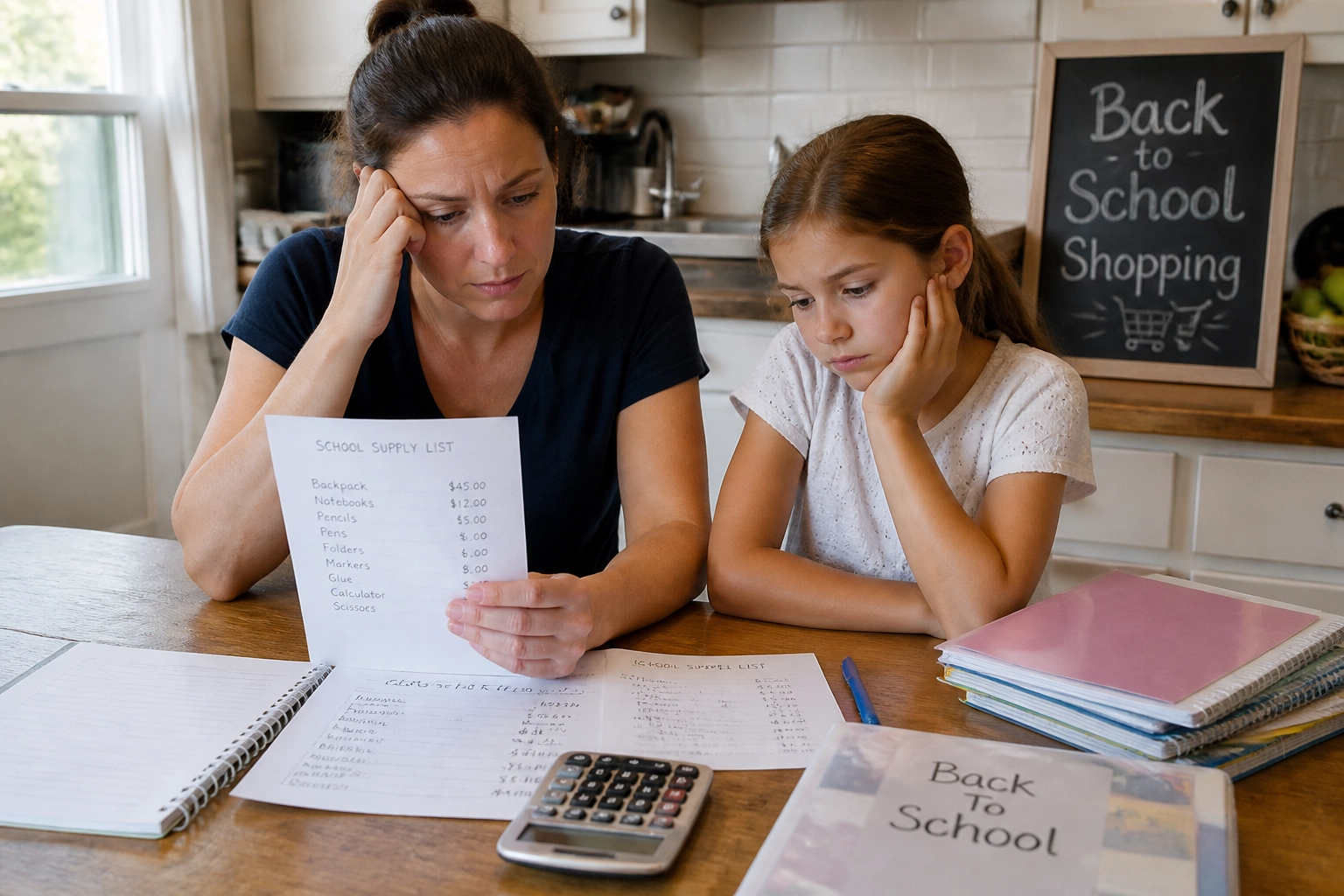
Every summer, the retail landscape transforms. Store aisles overflow with colorful binders, high-end electronics, and designer backpacks, signaling the approaching academic year. For millions of households, however, this seasonal transition brings profound anxiety rather than excitement.
Recent data from the Beyond Finance 2026 Back-to-School Survey reveals a startling reality: a massive 46 percent of parents take on debt to purchase school supplies and related essentials. Far from being a minor household expense, outfitting children for the classroom has evolved into a major financial hurdle that competes directly with retirement savings, emergency funds, and even basic monthly bills like rent or mortgage payments.
Understanding the mechanics of this financial trap requires examining more than just price tags. We must look at the intersection of consumer psychology, social pressure, and modern household economics.
Unpacking the Beyond Finance Survey Data
To grasp the magnitude of the back-to-school financial squeeze, we must examine the numbers. The Beyond Finance survey, which polled 2,000 U.S. parents of school-aged children between ages 5 and 17, uncovers deep systemic stress across households.
The Peak of Seasonal Stress
According to the survey, 70 percent of parents report that back-to-school shopping is the most financially stressful time of the year. Remarkably, 58 percent state that it causes more anxiety than the winter holiday season. While holidays often allow for scaled-back gift-giving or homemade presents, school supply lists are mandatory, leaving parents with little room to negotiate with educational requirements.
The Cost of Keeping Up
Inflation and shifting expectations have dramatically raised the baseline cost of education. Today’s supply lists extend far beyond basic pencils and spiral notebooks to include specialized calculators, mandatory digital licenses, classroom contribution fees, and brand-name tech gear.
When families face these cumulative costs, cash reserves deplete rapidly. Consequently, 39 percent of parents actively expect to take on debt each year, while 38 percent report carrying residual debt from previous school shopping seasons.
The Psychology of Peer Pressure and Social Exclusion
Financial pressure rarely stems from physical goods alone. Emotional triggers play a dominant role in parental spending decisions.
Buying to Belong
The survey highlights that 70 percent of parents feel intense pressure to buy the exact same clothing, technology, and supplies that other families purchase. More tellingly, 61 percent admit they have purchased specific items solely so their child would not feel left out among classmates. Furthermore, 54 percent worry openly that their children will face social judgment or bullying for reusing clothing or older school supplies.
This dynamic creates a dangerous trap. Parents want to protect their children’s emotional well-being and self-esteem. When marketing messages equate brand-name backpacks or the latest tablets with social acceptance, loving parents often stretch their credit cards past safe limits. Interestingly, the survey notes that 42 percent of parents who succumbed to this social pressure later experienced deep buyer’s remorse.
The Ripple Effect on Household Cash Flow
Taking on debt for school supplies does not happen in a vacuum. It forces families to make painful trade-offs that destabilize their broader financial health.
When credit card balances swell or personal loans are secured to pay for notebooks and sneakers, other vital financial priorities get pushed to the side:
- Delayed Savings: 23 percent of parents report delaying long-term savings goals, including college funds and emergency reserves.
- Stalled Debt Paydown: 20 percent put their existing debt reduction plans on hold, extending the life of high-interest balances.
- Housing Risks: Most alarmingly, 15 percent of parents admit to delaying rent or mortgage payments to free up cash for back-to-school expenses.
In extreme cases, the pressure pushes individuals toward high-risk solutions. The survey reveals that 15 percent of parents rely on personal or payday loans, while 8 percent have even turned to gambling in an attempt to fund school shopping needs. These desperate measures turn a seasonal expense into a long-term financial crisis.
How to Break the Back-to-School Debt Cycle
Breaking free from the back-to-school trap requires proactive planning, clear communication, and a willingness to separate emotional spending from educational essentials. Here is a practical framework to protect your finances before the bell rings:
1. Build a Dedicated Back-to-School Fund Year-Round
Waiting until July or August to fund school shopping guarantees financial strain. Instead, calculate your average annual spending on supplies, clothes, and fees, and divide that total by 12. Set aside that monthly amount in a dedicated savings account. By treating school expenses like a recurring utility bill, you eliminate the need for credit cards entirely.
2. Separate Needs from Wants on School Lists
Review school supply lists carefully alongside your children. Distinguish between strict classroom requirements and optional upgrades requested by peers or marketing trends. Many basic supplies can be reused from previous years, including backpacks, binders, and calculators.
3. Leverage Community Swaps and Bulk Purchasing
Before heading to major retailers, explore local community groups, parent-teacher association swap meets, and neighborhood exchanges. Many families have gently used uniforms, calculators, and books that they are eager to pass on. For brand-new items, consider bulk purchasing with other families to secure wholesale discounts.
4. Explore Broader Financial Tools and Alternatives
If your household faces severe cash flow crunches, explore responsible tools rather than high-cost payday lenders or predatory loans. For managing existing credit card balances or structuring payments safely, consider consulting reputable debt management resources or using structured balance transfer offers learn more about balance transfer strategies. To streamline your monthly obligations and avoid missed bills during high-stress seasons, automated budgeting apps and bill reminder tools explore automatic savings options can keep your finances organized.
Conclusion
Back-to-school shopping should be an exciting milestone that celebrates learning and growth, not a source of lingering financial trauma. The Beyond Finance survey makes it clear that while peer pressure and inflation are powerful forces, families do not have to fall victim to the trap.
By shifting the conversation at home toward values rather than brand names, planning ahead with year-round savings, and refusing to sacrifice essential household bills for seasonal supplies, you can protect your financial future. True parental support is built on long-term stability and security, providing children with a strong foundation that extends far beyond the classroom door.
Frequently Asked Questions
1. What percentage of parents go into debt for school supplies?
According to surveys such as the Beyond Finance report, roughly 39 to 46 percent of parents take on debt or expect to borrow funds to cover back-to-school expenses, driven by high retail costs and social pressures.
2. Why is back-to-school shopping more stressful than the holidays for many parents?
Unlike holiday gift-giving, which can be scaled back or skipped without academic consequence, school supply lists are mandatory requirements set by schools. Parents feel compelled to fulfill these lists immediately, regardless of their current cash flow.
3. How can I talk to my child about budget limits without making them feel left out?
Focus the conversation on family values and resource management rather than limitations. Involve your child in comparison shopping and explain that financial health allows the family to achieve long-term goals together while still getting what they truly need.
4. Are school supply costs tax-deductible?
In certain states, tax-free weekends allow parents to purchase clothing and school supplies without state sales tax. Additionally, some educators can claim deductions for classroom supplies they purchase out-of-pocket, though parents generally cannot deduct personal school supply purchases on federal tax returns unless specific business or education credit criteria apply.
5. What are the dangers of using payday loans for school shopping?
Payday loans carry astronomical interest rates and short repayment terms. Using them for seasonal shopping often traps families in a revolving cycle of debt, making it much harder to cover basic living expenses in subsequent months.
6. Where can I find free or low-cost school supplies in my community?
Many local non-profits, religious organizations, community centers, and libraries host annual back-to-school supply drives. Additionally, school district family resource centers often distribute backpacks and essential supplies to families in need.
7. How much do families typically spend on back-to-school shopping?
Spending varies widely depending on the age and grade level of the child, but average spending per child often ranges from several hundred dollars to over a thousand dollars when factoring in technology, clothing, and extracurricular fees.
8. How can I start preparing for next year’s school expenses today?
Calculate your total spending from this year, divide that number by 12, and set up an automatic monthly transfer into a dedicated savings sub-account. This simple habit eliminates last-minute borrowing and financial anxiety.
Sources & Methodology
- Beyond Finance 2026 Back-to-School Survey: Conducted by Talker Research from July 20 to 27, 2026, surveying 2,000 U.S. parents of school-aged children (ages 5 to 17).
- Ask The Money Coach Editorial Research: Consumer finance data analysis on household cash flow, seasonal budgeting, and debt prevention strategies.
AskTheMoneyCoach Staff is the collective byline for our editorial team. Founded by Lynnette Khalfani-Cox, The Money Coach®, and Earl Cox, AskTheMoneyCoach.com publishes practical, research-informed guidance on credit, debt, saving, consumer protection, and everyday money decisions. Our work follows the site’s editorial standards and helps readers understand their options and make informed choices.