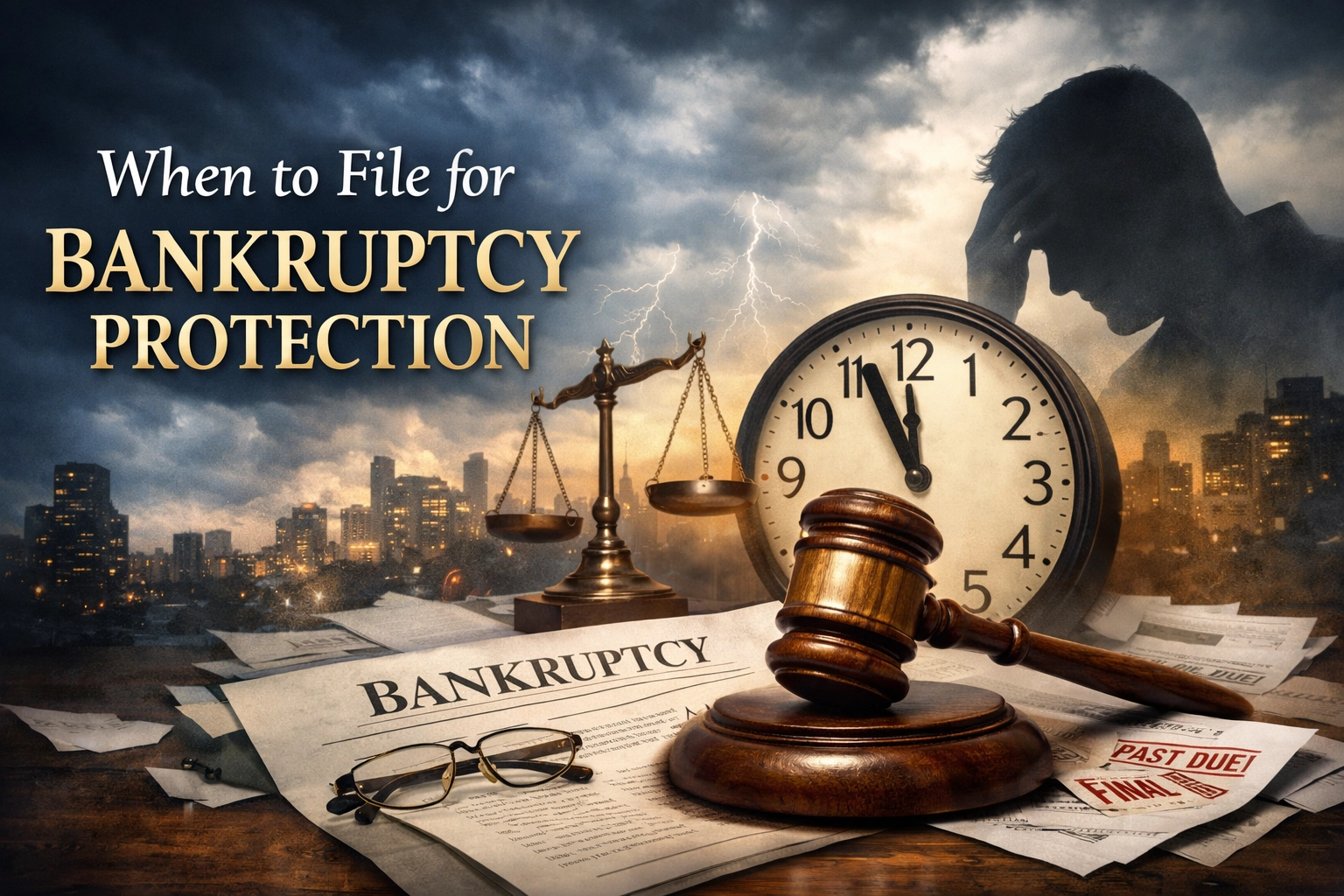
Do you feel like you are underwater? Not the fun kind of underwater where you see colorful fish and coral reefs. I mean the kind where you are struggling to breathe because of bills. Your mailbox is full of red letters. Your phone rings every ten minutes with numbers you don’t know.
When you owe a lot of money, it feels like a heavy backpack you can never take off. You might be wondering if there is a way to just drop the bag and start over. That way is called bankruptcy.
Many people think bankruptcy is a scary word. They think it means they failed. But at Ask The Money Coach, we look at it differently. Bankruptcy is a legal tool. It is a “reset” button for your life. It is there to help you when life gets too hard to handle on your own.
But how do you know if it is the right time to push that button? Let’s look at the signs that tell you it is time to look for a fresh start.
Sign 1: You are Playing “Credit Card Tag”
If you are using one credit card to pay for another credit card, you are in trouble. This is like trying to put out a fire with a cup of gasoline. You aren’t actually paying off the debt. You are just moving the fire from one corner of the room to the other.
If you find yourself using a credit card to buy milk, bread, or gas because your bank account is at zero, that is a big red flag. Credit cards should be for convenience, not for staying alive. When your debt is growing every month just so you can eat, it might be time for a $0 debt reset.
Sign 2: The “Minimum Payment” Trap
The bank loves it when you only pay the minimum. Why? Because of interest. Interest is the fee you pay to borrow money. If you owe $10,000 and only pay the minimum, you might end up paying $25,000 back over twenty years.
Think about that. You are giving the bank an extra $15,000 for absolutely nothing. That is money that could be in your retirement fund or your kid’s college fund. If you look at your bills and realize you will still be paying them when you are 80 years old, bankruptcy is a way to stop that waste of money right now.
Sign 3: The Phone Won’t Stop Ringing
Debt collectors can be very mean. They call early in the morning. They call late at night. They might even try to talk to your boss or your neighbors. This creates a lot of stress. Stress makes it hard to sleep, hard to work, and hard to be a good parent or friend.
If you are scared to answer your own phone, you are living in a cage. Filing for bankruptcy puts up a “Do Not Disturb” sign for your life. It is called an Automatic Stay. The second you file, the law says debt collectors must stop calling you. If they don’t, they get in big trouble with the judge. Imagine the peace and quiet of a phone that doesn’t ring with bad news.
Sign 4: They are Taking Your Paycheck
This is the most serious sign. If a debt collector sues you and wins, they can do something called “wage garnishment.” This means they take money right out of your paycheck before you even see it.
In many places, they can take 25% of your pay. If you make $4,000 a month, they take $1,000. Could you pay your rent and buy food if $1,000 was missing every single month? Most people can’t. If you are facing a lawsuit or your wages are already being taken, bankruptcy can stop it instantly. It protects your hard-earned money so you can use it for your family instead of a debt collector.
Understanding the Two Main Choices
When you talk to a professional at Ask The Money Coach, you will learn there are two main ways to file for bankruptcy. Think of them as the “Clean Slate” and the “Catch-Up Plan.”
Chapter 7: The Clean Slate
This is the most common type. It is fast. It usually takes about four to six months. In Chapter 7, the court looks at what you owe and basically says, “Okay, this debt is gone.” Credit cards, medical bills, and personal loans are wiped out.
To get this, you have to pass a Means Test. Don’t let the name scare you. It just means the court looks at your income. If you make less than the average person in your state, you usually pass. Even if you make a little more, you might still pass if you have high expenses like a mortgage or car payments. It is a way to make sure the “Clean Slate” goes to the people who truly need it.
Chapter 13: The Catch-Up Plan
Sometimes you have a house or a car that you really want to keep, but you have fallen behind on the payments. Chapter 13 lets you keep your stuff. You work out a plan to pay back some of your debt over three to five years. It is like a consolidated payment that fits your budget. Once you finish the plan, whatever debt is left over is erased.
Will Bankruptcy Ruin My Credit Forever?
This is the biggest myth out there! Many people wait years to file because they are afraid of their credit score. But here is the truth: If you are already missing payments and being sued, your credit score is probably already bad.
Bankruptcy will stay on your credit report for 7 to 10 years. However, you can start rebuilding your score almost immediately. Many people see their score go UP within a year of filing. Why? Because they no longer owe thousands of dollars. They have a fresh start.
Waiting to file can actually hurt you more. Every year you wait is another year of “bad credit.” If you file today, the clock starts ticking toward a better future today.
The Financial Anchor: The Cost of Doing Nothing
Let’s do some quick math. Let’s say you owe $30,000 in debt.
- If you try to pay it off slowly, you might spend $500 a month for the next 10 years. That is $60,000 total.
- If you file for bankruptcy, it might cost you about $1,500 to $2,500 in lawyer fees.
- The Saving: You save over $57,000 and 10 years of your life.
That is a huge Return on Investment (ROI). Bankruptcy isn’t free, but the “price” of staying in debt is much, much higher. You are buying your freedom.
How to Get Started
Filing for bankruptcy is a big deal, and you shouldn’t do it alone. You need to make sure it is the right move for your specific life.
- Stop and Breathe: You are not a bad person because you have debt. Life happens. Medical bills, job losses, and divorces are the main reasons people file.
- Gather Your Bills: Look at the total number. If it is more than half of what you earn in a year, you are a prime candidate for a reset.
- Find an Expert: You wouldn’t perform surgery on yourself, right? Don’t try to do bankruptcy alone. You need a good guide. We have a great guide on 6 Tips for Finding a Good Bankruptcy Attorney to help you pick the right person.
- Learn Your Rights: Sometimes debt collectors lie to keep you from filing. Don’t let them trick you. Check out our article on 6 Common Lies Debt Collectors Will Tell You.
Final Thoughts
Bankruptcy is not the end of the world. It is the beginning of a new one. It is a legal right that was created to help people get back on their feet so they can contribute to the world again.
If you are tired of the stress, the calls, and the empty bank account, it might be time to stop fighting a losing battle. Look at your numbers, talk to an expert, and decide if today is the day you claim your fresh start. You deserve to sleep peacefully at night knowing your financial future is safe.
Visit Ask The Money Coach for more tips on how to handle your money and build a life you love.
FAQs: When to File for Bankruptcy Protection
1. When should you consider filing for bankruptcy?
You may want to consider bankruptcy when your debts have become difficult or impossible to repay despite making reasonable efforts, especially if you are relying on credit for basic expenses, falling behind on payments, facing collection lawsuits, or dealing with wage garnishment. Bankruptcy is a legal process with significant consequences, so it is important to review your individual circumstances before filing.
2. What are the main warning signs that you may need bankruptcy protection?
Common warning signs include using one credit card to pay another, making only minimum payments while balances continue to grow, falling behind on essential bills, receiving frequent collection calls, facing a lawsuit or wage garnishment, and having little realistic ability to repay your debts within a reasonable period.
3. What is the difference between Chapter 7 and Chapter 13 bankruptcy?
Chapter 7 generally involves the liquidation of certain assets and can provide a discharge of qualifying debts. Chapter 13 generally involves a court-approved repayment plan lasting three to five years and may allow eligible borrowers to catch up on certain secured debts. Eligibility and outcomes depend on individual circumstances and applicable law.
4. Can bankruptcy stop debt collection calls and wage garnishment?
Filing bankruptcy generally triggers an automatic stay that stops many collection activities, including certain lawsuits, collection calls, and garnishments. However, the automatic stay has exceptions, and some debts and collection actions receive different treatment. A bankruptcy professional can explain how the rules apply to your situation.
5. How long does bankruptcy affect your credit?
Bankruptcy can have a significant negative effect on your credit history. In the United States, a Chapter 7 bankruptcy may generally remain on a credit report for up to 10 years, while a Chapter 13 bankruptcy may generally remain for up to seven years. The impact on an individual’s credit score varies, and responsible credit management can help rebuild credit over time.
AskTheMoneyCoach Staff is the collective byline for our editorial team. Founded by Lynnette Khalfani-Cox, The Money Coach®, and Earl Cox, AskTheMoneyCoach.com publishes practical, research-informed guidance on credit, debt, saving, consumer protection, and everyday money decisions. Our work follows the site’s editorial standards and helps readers understand their options and make informed choices.