Lynnette, with her long dark hair and gold necklace, smiles outdoors against a backdrop of trees and a winding road.

Lynnette Khalfani-Cox on The Daily Drum WHUR 96.3 Howard University Radio

Listen to Lynnette Khalfani-Cox, The Money Coach during her appearance on The Daily Drum with host Harold Fisher. The Daily Drum is broadcast on Howard University Radio, WHUR-FM 96.3 FM.  During this interview Lynnette talks about: How to eliminate your credit card debt How Lynnette got into debt? How Lynnette negotiated with her creditors How […]

Lynnette Khalfani-Cox on The Daily Drum WHUR 96.3 Howard University Radio Read More »

Cyber Monday

Top 10 Cyber Monday Tips for Safe Online Shopping

With each passing year, more people are heading online rather than to the mall to get their holiday shopping done. But online shoppers need to beware the dangers that come with the comfort of shopping from home, the Better Business Bureau warns. Cyber Monday (the Monday after Thanksgiving) has officially replaced Black Friday (the day

Top 10 Cyber Monday Tips for Safe Online Shopping Read More »

Image of a book titled "The Money Coach's Guide to Your First Million" by Lynnette Khalfani-Cox, featuring the subtitle: "7 Smart Habits to Building the Wealth of Your Dreams" and a portrait of the esteemed millionaire author.

Why You Should Put Your Financial Goals in Writing

No matter what your goals, you should know that writing your plans out gives you a far better shot at making them happen. In fact, written goal-setting is a phenomenally powerful act, as demonstrated by a number of high-profile cases. For instance, a 1953 study from Yale University surveyed the graduating class that year. Back

Why You Should Put Your Financial Goals in Writing Read More »

A stack of colorful sticky notes with the top note in green reading "WHO ARE YOU?" in bold black letters, sitting next to a small pile of coins.

Do You Have A Split Personality When it Comes to Money?

I don’t think that I’m alone in battling a split personality when it comes to money. I believe many of us have divided selves as it pertains to our finances. For instance, the Mr. Hyde in me will allow bills (and paychecks, believe it or not) to go unopened for days. The Hyde part of

Do You Have A Split Personality When it Comes to Money? Read More »

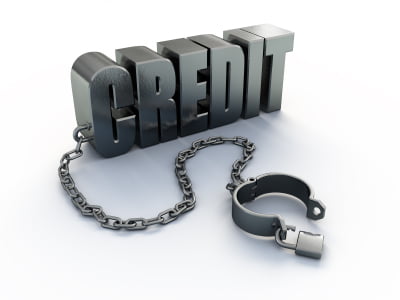
The word "CREDIT" is shown in large, metallic letters with a chain and opened handcuff attached, symbolizing the restriction or bondage related to debt.

Deep in Debt? You Could Get Locked Up!

If you had asked me before today if you could get get locked up for having outstanding credit card bills, I would have said: Absolutely not. After all, debtors’ prisons in the United States were abolished in the middle of the19th century. Unfortunately, however, a frightening and little-known occurrence is taking place in cities all

Deep in Debt? You Could Get Locked Up! Read More »

A man in a business suit holds a fan of cash in one hand and gestures with his other hand, offering his impressive collection of money.

How to handle harassment by a collection agency

Don’t pay them anything. Send a cease and desist letter in which you tell them to stop contacting you. Harassing people about debts (old debts, like yours, or current ones) is illegal under the Fair Debt Collection Practices Act.

How to handle harassment by a collection agency Read More »

Perfect

What To Do If Someone Filed A Tax Return In Your Name And Stole Your Credit Identity

If the person that is your spouse, you need to file a request for what the IRS calls “innocent spouse relief”. Get IRS form 8857 to do this. If not, you should still notify the IRS and Federal authorities that you have been the victim of fraud and identity theft. Lock down your credit reports by getting a credit freeze and putting a fraud alert on your credit files with Equifax, Experian and TransUnion.

What To Do If Someone Filed A Tax Return In Your Name And Stole Your Credit Identity Read More »

emotional spending

Eight Ways to Stop Emotional Spending

Leave the credit cards at home.

As a matter of practice, leave your credit cards at home more often than not. Having credit cards, charge cards, and department-store cards in your wallet or purse makes it easy to make spur-of-the-moment shopping trips. You’ll think more about your spending practices if you have to part with your hard-earned dollars versus whipping out a credit card. Moreover, people tend to spend more when they use plastic instead of cash.

Eight Ways to Stop Emotional Spending Read More »

timeshare

Are there any legitimate companies that I could work with to sell my timeshare?

I got a question from MH on Facebook. He wants to know if there are any legitimate companies that can help him sell his timeshare.

There is an organization called the Timeshare Users Group. They are known to be the first and largest timeshare owner network. When you visit their web site you find numerous articles, tips and advice on everything related to timeshare ownership including buying, renting and selling your timeshare. They will even let you advertise your timeshare on their free classifieds section.

Are there any legitimate companies that I could work with to sell my timeshare? Read More »

stafford loans

Should You Transfer Your Sallie Mae Student Loans?

When you say “Direct Loan,” I believe you are referring to the U.S. Department of Education’s Direct Loan Program (http://www.dl.ed.gov), where you can transfer and consolidate your federal education loans into a single, new loan which offers lower monthly payments. Whether or not it makes economic sense to transfer the loans depends on a host of factors, including: how manageable (or unmanageable) your monthly payments are; how many payments are left on your existing loan; the amount of time and interest you are willing to pay over time; and the interest rates on your current loans.

Should You Transfer Your Sallie Mae Student Loans? Read More »

Close-up of a typewriter with a sheet of paper showing the typed words "To Whom it May Concern:"—a classic opening for any consumer statement.

Should You Add a Consumer Statement to Your Credit Report?

Despite what some people may suggest to you, it’s best to refrain from adding a “Consumer Statement” to your credit files.

Consumer Statements in Your Credit Files

Under the Fair Credit Reporting Act, you are allowed to add a 100-word “Consumer Statement” to any of your credit reports if you have disputed an item in your credit files, but the item was not removed because it was verified by a creditor. Frequently, consumers think that taking advantage of this “right” to add a consumer statement is a good opportunity. After all, you would get a chance to divulge what happened, elaborate on the dispute, or perhaps explain why going through a divorce resulted in you not paying a bill or how being laid off for six months is what led you to default on a loan. In your mind, perhaps you think that your explanation will prove that something wasn’t your fault, or at the very least t show a lender that you had a “good” reason for failing to pay.

Should You Add a Consumer Statement to Your Credit Report? Read More »

children and financial literacy

How to Teach Your Children Financial Literacy

If you’re like most adults, you probably want your children, or any youngsters around you, to develop good financial habits. But if you’re like the typical American, you may also struggle when it comes to being a good financial role model for our youth. A study by Northwestern Mutual revealed that 71% of parents feel that children should begin learning about money no later than the 1st grade.

How to Teach Your Children Financial Literacy Read More »

minimum payments

Don’t Go Broke With Minimum Payments

Paying so-called minimum payments now actually ends up costing you more – a lot more – over the long haul. The math behind some of the calculations that determine your interest rate can be tricky. And I won’t get into all the complex, and sometimes mind-boggling formulas that are used to calculate your Annual Percentage Rate (APR). But suffice to say that for every $1,000 you owe, if you paid a minimum of say 4%, you’d only be paying $40 a month. With just $2,500 in debt on a card with an 18% interest rate, you’d spend 10 years paying it off and you’d pay more than $1,400 in finance charges on top of what you originally spent.

Don’t Go Broke With Minimum Payments Read More »

Scroll to Top